Cabinet painting in Simi Valley gives you a different-looking kitchen while keeping the cabinet boxes, counters, plumbing and layout you already have. If your stained oak or builder-grade cabinets are structurally sound, the boxes are usually worth keeping and only the finish needs to change.
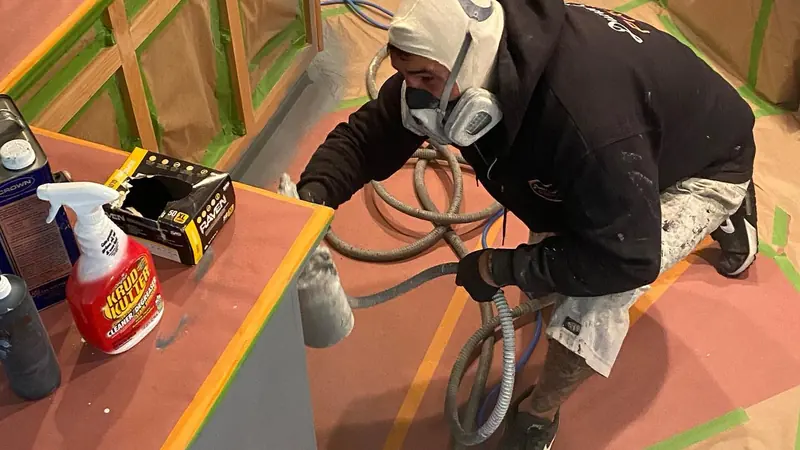
What separates cabinet paint that lasts from paint that chips in a month is preparation. Cabinets collect cooking grease, hand oils and cleaner residue that paint will not stick to. We strip that film, scuff the surface, lock it down with a bonding primer and spray the finish coats.
Bathroom vanities, laundry cabinets and built-ins get the same process. Every box, door and drawer front is listed on your itemized written estimate.
What Our Cabinet Painting Service Covers
Every box, door and drawer front on your estimate goes through the same steps, whichever room the cabinets are in.
Kitchen Cabinets
Counters, floors, backsplash and appliances are covered and the work area is masked off before anything comes apart. Doors, drawer fronts and hardware are removed and labeled so each piece returns to its own opening. Boxes, face frames and end panels are painted in place, and an island or open shelving can join the same scope.
Bathroom Vanities, Laundry Cabinets and Built-Ins
Vanities and laundry cabinets live with steam, splashes and cleaning products, so the edges near the sink and the bottoms of the doors get extra attention during prep. Built-in bookcases and desks follow the same steps as kitchen boxes. If the particleboard under a sink has swollen, we show you before starting, because paint will not fix it.
Degreasing, Sanding and Bonding Primer
Every surface is degreased and rinsed so primer bonds to the cabinet, not to cooking residue. We scuff-sand the old finish, fill dents and chips, and caulk open seams. A primer made for slick, previously finished surfaces goes on before any color. If your new pulls use different hole spacing, we fill the old holes at this stage.
Sprayed Finish Coats and Reinstallation
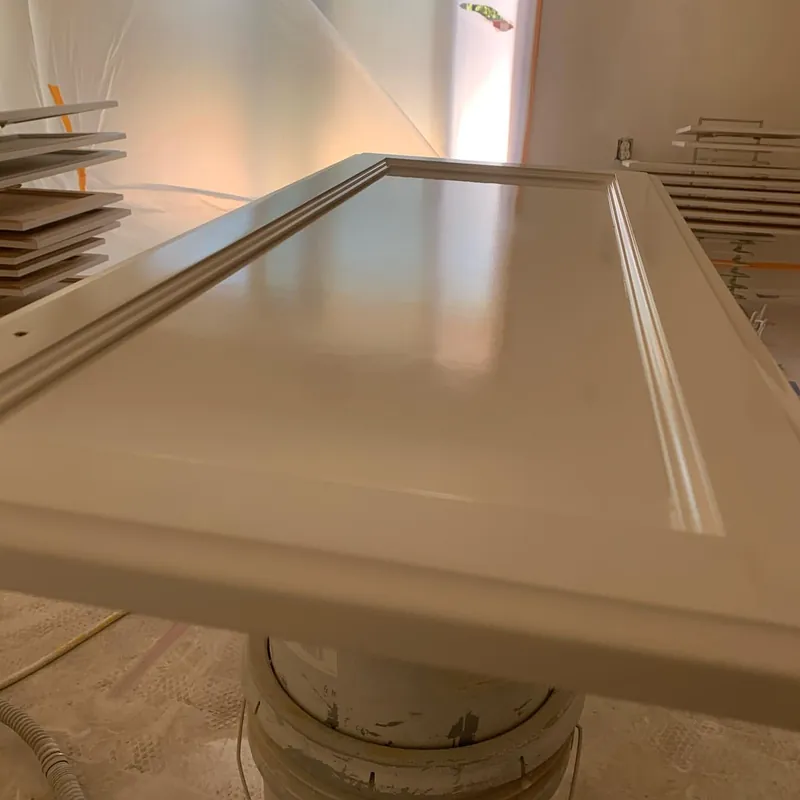
Doors and drawer fronts are sprayed for an even surface without brush lines, with light sanding between coats. Once the finish is hard enough to handle, hardware goes back on, hinges are adjusted so doors close evenly, and every piece is returned to the opening it came from.
Signs Your Cabinets Are Ready for Paint, and When They Are Not
Paint is a good fit when the boxes are solid and what bothers you is the color or the wear:
- Orange or yellowed oak finishes that date the kitchen
- Worn finish around handles, the sink base and the trash pull-out
- Blotchy touch-ups left from past repairs
- A layout you like, with a color that clashes with new floors or counters
Swollen particleboard under the sink, peeling thermofoil and boxes pulling apart need repair or replacement first. We point those out during the estimate instead of painting over them.
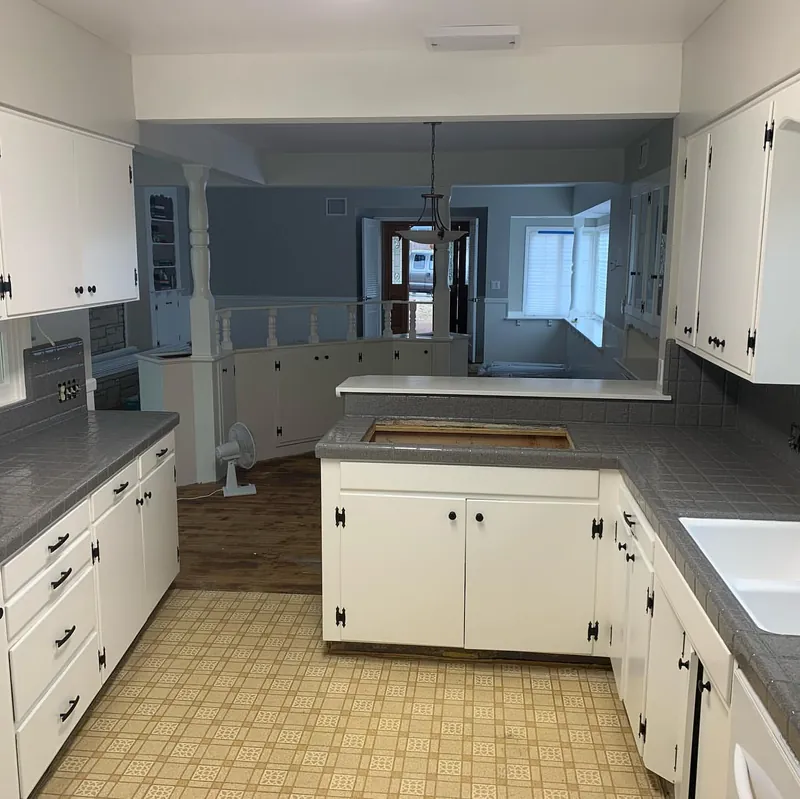 After
How We Paint Cabinets, Step by Step
- Walkthrough. We count doors, drawers and boxes and check the current finish.
- Color and sheen. We suggest satin or semi-gloss for kitchens because they wipe clean more easily than flatter sheens.
- Remove, label, degrease. Pieces are bagged by location, then every surface is degreased.
- Sand, prime, fill. Surfaces are scuffed and primed, and grain is filled if you want a smoother look.
- Spray. Finish coats go on with light sanding between coats.
- Reinstall and walk through. You inspect the kitchen with us before the final payment.
Painting vs. Refacing vs. Replacing Kitchen Cabinets
The 2025 Cost vs. Value report from the Journal of Light Construction gives two Los Angeles benchmarks. A midrange minor kitchen remodel, which keeps the cabinet boxes but replaces the doors and drawer fronts and adds new counters, appliances, sink and faucet, averaged $29,765. A midrange major remodel with new cabinets averaged $86,214. Painting changes only the finish, so the scope is much smaller.
| Option | What changes | Makes sense when |
|---|---|---|
| Cabinet painting | Color and finish on existing boxes and doors | Boxes and doors are solid and the layout works |
| Refacing | New doors and drawer fronts, veneer on boxes | You want a different door style |
| Replacement | New boxes and doors, often new counters | The layout fails or the boxes are falling apart |
We only do the painting. If refacing or replacement is the better call for your kitchen, we will tell you.
What Drives the Price of a Cabinet Paint Job
- Door and drawer count. Each piece is prepped and sprayed on both sides, so the count matters more than room size.
- Current finish. Heavy grease, glossy factory finishes and failing old paint take more prep.
- Grain filling. Oak grain shows through paint, and filling it adds labor.
- Extras. Cabinet interiors, open shelving, crown molding and an island add to the scope.
- Big color changes. Dark wood to white can need extra primer and finish coats.
Your estimate is itemized. You can see what each item adds and drop anything you do not need.
Cabinet Painting in Simi Valley: Local Factors
Local air rules shape what goes on your cabinets. Ventura County APCD Rule 74.2 has capped nonflat coatings at 50 grams of VOC per liter since July 2021, and South Coast AQMD Rule 1113 sets the same 50 g/L limit in the San Fernando Valley and the rest of its district. For cabinet painting in Simi Valley we use waterborne cabinet enamels that meet those limits, which also means less odor while you live in the house during the job.
Summers here are hot and dry. We control spray conditions and drying space for doors, which helps the finish level out instead of drying rough.