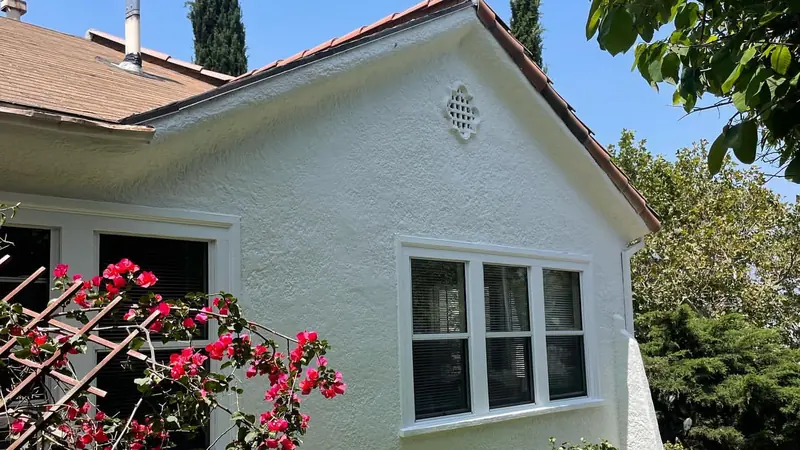
Stucco painting in Simi Valley starts with the walls, not the paint can. Most homes in the area are stucco, and each one has its own mix of hairline cracks, old patches, chalky paint and sprinkler stains. Paint applied over those problems tends to outline them instead of hiding them.
We inspect each wall, separate cosmetic cracks from ones that suggest a moisture problem, and repair and texture-match the patches. Then we choose a coating that suits the wall, usually a breathable exterior acrylic and sometimes an elastomeric, based on the cracks, how the wall handles water and what is already on it.
What Stucco Repair and Painting Includes
Every stucco job starts with a wall-by-wall inspection for cracks, hollow spots, efflorescence, chalking and failing paint, then washing to remove dirt, chalk and mineral deposits.
Crack Repair Sized to the Crack
Fine hairline cracks are sealed with a stucco-compatible filler or bridged by the coating. Wider cracks are opened up, cleaned out and filled so the repair bonds to sound material instead of crumbling edges. Stepped or growing cracks, and any with bulging nearby, are flagged before patching, since they can point to water or movement behind the wall.
Texture Matching for Smooth, Sand and Lace Finishes
A flat patch in the middle of a sand finish wall shows from the street, even under fresh paint. We rebuild the texture over every repair, using the surrounding wall as the guide, and let the patch cure before it is primed. The finish comparison below explains why smooth walls need a different plan.
Efflorescence and Mineral Stain Treatment
White salt bloom and rust-colored rings near the base of a wall mean water is moving through the stucco or hitting it every morning. We brush and wash the deposits off, then trace the source, such as a sprinkler head, a downspout emptying against the wall or soil piled up over the weep screed. Treated areas dry fully before primer, because coating damp, salty stucco invites blistering.
Fresh patches and problem areas get an alkali-resistant primer, then finish coats go on the stucco, plus trim and eaves when they are in your scope (see exterior house painting). Windows, plants and hardscape are protected, and the weep screed at the base of the wall stays open so water can drain.
Signs Your Stucco Needs Repair Before It Needs Paint
- Chalk on your hand when you rub the wall. Latex paint will not stick to chalky areas until they are cleaned and primed.
- Hairline cracks fanning out from window and door corners.
- Wide, stepped or growing cracks, bulges or hollow-sounding spots, which can mean water behind the stucco.
- White, powdery deposits called efflorescence: salts left behind when water moves through the wall and evaporates at the surface.
- Rust-colored or mineral stains where sprinklers hit the wall.
- Blistering or peeling paint, often a sign of moisture trapped behind a coating.
National Park Service stucco guidance traces most stucco deterioration to water getting into the wall. If we see signs of that, we tell you before painting.
Our Stucco Repair and Painting Process
- Inspect and map. We note cracks by size and location and tap for hollow spots.
- Water first. If a sprinkler, downspout or flashing problem is feeding a crack, we show you so it can be corrected before we patch.
- Wash and dry. Chalk, dirt and loose material come off, then the walls dry.
- Repair and texture. Cracks are sealed or cut out and filled, and each patch is textured to match.
- Cure and prime. Patches cure, then get an alkali-resistant primer.
- Paint. Finish coats go on by spray, brush and roller.
- Walk through. Final payment comes after we inspect the house with you.
Elastomeric vs. Acrylic Coatings on Stucco
| Question | Exterior acrylic | Elastomeric coating |
|---|---|---|
| Film | Standard paint film | Much thicker, rubbery film |
| Cracks | Covers hairline cracks once repaired | Stretches to bridge small cracks that keep moving |
| Breathability | Lets water vapor escape the wall | Lower vapor permeability, can trap moisture and blister |
| Future color changes | Easy to repaint | Harder to remove or recolor later |
| Best fit | Most sound, well-drained stucco | Badly cracked walls with good flashing and drainage |
Building Science Corporation research found that acrylic latex generally outperforms elastomeric paint over stucco and recommends saving elastomerics for severely cracked walls. The Northwest Wall and Ceiling Bureau also warns against using an elastomeric to cover up a water intrusion problem. Your written estimate says which coating we recommend and why.
Smooth vs. Sand Finish
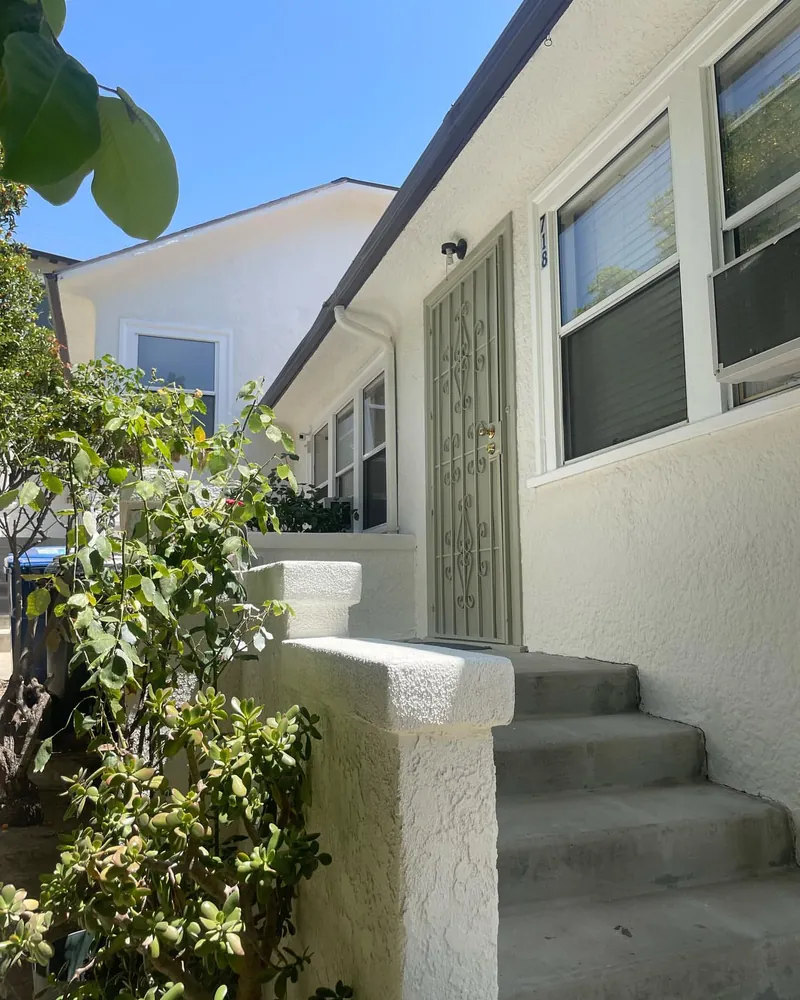
Smooth stucco shows every patch, so scattered repairs usually mean painting the whole wall. Sand and lace finishes hide repairs better when the texture is matched carefully.
What Affects the Cost of Stucco Repair and Painting
- Wall area and height, including second stories and gable ends.
- Number and size of cracks, plus how much texture matching they need.
- Coating choice. Elastomerics go on much thicker than paint, so they use more material and labor.
- Condition of the old paint. Heavy chalking, peeling or efflorescence adds washing and priming.
- Color change. A big jump from dark to light, or light to dark, can take an extra coat.
- Trim and extras such as fascia, eaves, garage doors and railings.
Stucco Painting in Simi Valley: What We See on Local Homes
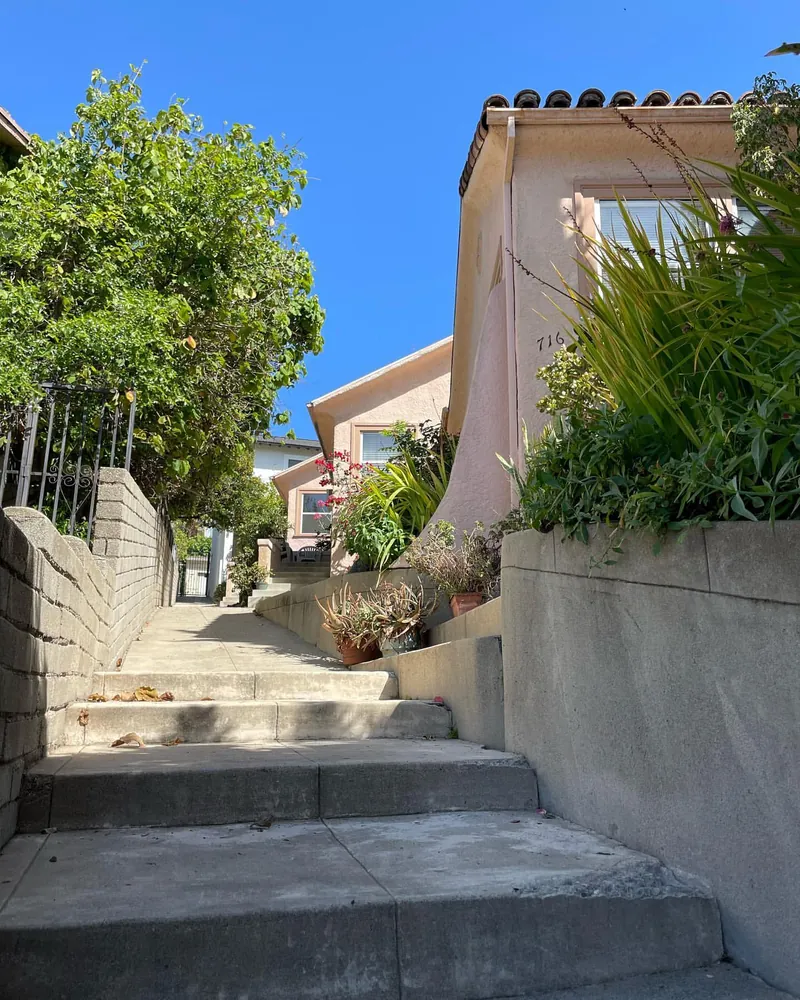
Much of Simi Valley was built during the housing boom of the 1960s and 1970s, and many of those stucco walls have been patched and repainted several times since. Parts of the city were damaged in the 1994 Northridge earthquake, and decades of settling and smaller quakes leave hairline cracks around windows and corners.
Hot, dry summers bake south and west walls, which chalk and fade first, while sprinklers aimed at planters leave mineral stains near the base. For stucco painting in Simi Valley neighborhoods with HOAs, such as Wood Ranch, we confirm the approved color scheme before the first coat.