Smoke damage painting in Simi Valley is work we approach with care, because it usually follows a hard stretch for the people living in the house. Smoke from a nearby wildfire, a kitchen fire, a poorly drafting fireplace or years of indoor smoking leaves a film on walls and ceilings that paint alone will not cover. Our job is to clean that film off, seal what cannot be washed away, and repaint so stains and odor stay locked under primer instead of bleeding through.
We are painters, not a fire restoration company. If a home has structural fire damage, wet insulation or smoke in the ductwork, those need specialists first. Once surfaces are safe and ready, we take it from there.
What Our Smoke Damage Repainting Covers
Each room starts with an assessment, including a white-cloth wipe test to gauge the residue, and the scope is written room by room.
Dry Soot Removal and Washing
Loose soot comes off first with dry cleaning sponges and HEPA vacuuming, before any water touches the surface. Painted walls, ceilings and trim are then washed, rinsed with clean water and left to dry completely. On heavier jobs, this cleaning stage is a large part of the labor.
Nicotine Stains From Household Smoke
Years of indoor smoking leave a sticky yellow-brown film that collects on ceilings and in the rooms where people smoked most. It bleeds through ordinary paint, so these rooms get a thorough wash and usually a solvent-based stain-blocking primer, as the comparison below explains. Smoke-yellowed kitchens can add cabinet painting to the scope.
Odor- and Stain-Blocking Primers
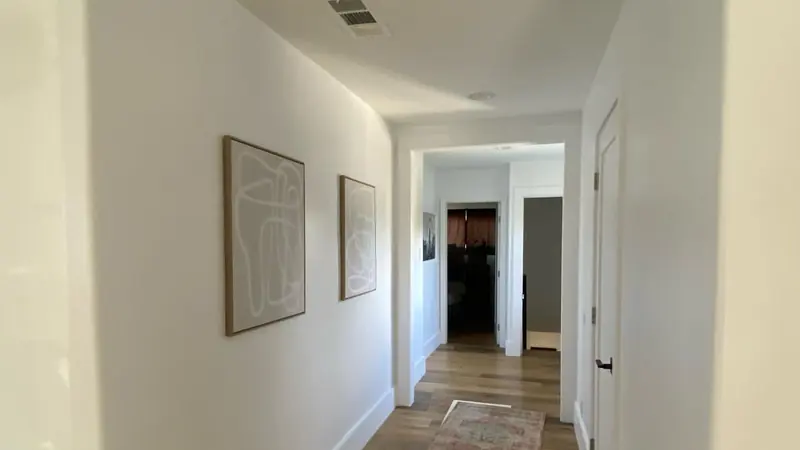
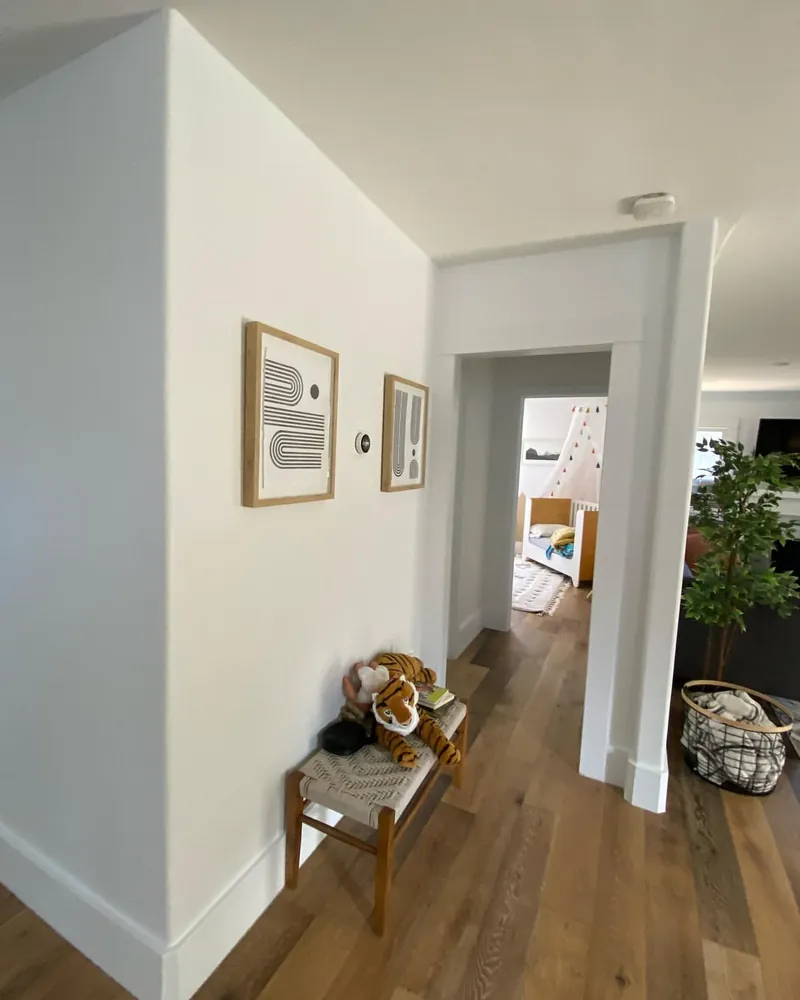
Once surfaces are clean and dry, a primer matched to the residue seals in what washing could not remove, so odor and discoloration stay under the paint instead of returning on a warm day. Finish coats then go on walls, ceilings, trim and doors in the colors and sheens you choose.
Outside, ash cleanup and repainting of stucco, eaves and trim are handled as part of an exterior painting project.
Signs Smoke Has Settled Into Your Walls
- A gray or yellow film comes off on a white cloth wiped across the wall.
- Yellowed ceilings above where someone smoked or near a fireplace.
- Dark shadow lines on ceilings and around vents and light fixtures.
- A smoky smell that returns on warm days or when the air conditioning runs.
- Stains bleeding back through a fresh coat of regular paint.
- Fine gray ash on window sills, stucco ledges and eaves after a nearby fire.
How We Clean, Seal and Repaint After Smoke
- Ventilate and assess. We air the space out, check each surface and agree with you on which rooms come first.
- Protect the house. Floors, furniture and fixtures are covered so loosened soot does not spread.
- Remove dry soot first. Dry sponges and HEPA vacuuming lift loose residue, since dry soot can smear if it is wiped wet.
- Wash from the floor up. Following Los Angeles County public health guidance, walls are washed in small sections from the bottom up to avoid streaks, rinsed with clean water, and ceilings are washed last.
- Let everything dry. The same guidance says walls and ceilings should not be repainted until they are completely dry.
- Seal with the right primer over every affected surface, not only the visible stains.
- Apply finish coats and walk the rooms with you before final payment.
Primers for Smoke Stains and Odor, Compared
| Primer type | Good for | Things to know |
|---|---|---|
| Water-based stain-blocking primer | Light smoke film after thorough cleaning | Low odor and easy cleanup; may not hold back heavy nicotine or soot stains |
| Oil-based stain-blocking primer | Nicotine yellowing, heavier smoke staining, old water stains | Strong stain blocking; longer dry time and solvent odor while it cures |
| Shellac-based primer | Heavy smoke odor and stains near the fire source | Seals odor well and dries fast; strong fumes, so ventilation matters |
Los Angeles County public health guidance notes that where staining cannot be washed off, coatings with anti-bleed properties, typically lacquer- or oil-based, are the usual answer. We choose primer room by room, not one product for the whole house.
What Shapes the Cost of Smoke Damage Painting
We price smoke damage painting in Simi Valley after seeing the rooms, because cost depends on:
- Severity. A light film from a distant fire needs far less cleaning than heavy residue from a kitchen fire.
- Cleaning time. Washing and drying can be a large share of the labor on smoke jobs.
- Primer type. Solvent-based primers cost more and need more ventilation and setup.
- Ceilings. Popcorn texture traps smoke and cannot be washed well, so some homeowners add popcorn ceiling removal to the repaint.
- Scope. The number of rooms, cabinets, trim and doors, and whether the exterior needs ash cleanup and paint.
Wildfire Ash: Safe Cleanup Before Painting
Public health agencies treat wildfire ash with caution. EPA advises misting surfaces before sweeping to keep dust down, using a damp cloth or wet mop on lightly dusted areas, using a HEPA vacuum when available, and never using a leaf blower. It also recommends a NIOSH-approved N95 or P100 respirator, gloves, long sleeves and eye protection.
Outside, we wash gently instead of blowing dry ash around. Heavy debris, burned materials, or damage to the structure or HVAC system call for professional cleanup first, as EPA also advises.
Smoke Damage Painting in Simi Valley After Local Wildfires
Wildfire is a familiar risk in the hills around Simi Valley. The Sandy Fire started off Sandy Avenue on May 18, 2026 and burned 2,183 acres. The Easy Fire burned 2,375 acres in Simi Valley in October 2019, and the Woolsey Fire, which started south of the city in November 2018, burned 96,949 acres across Ventura and Los Angeles counties.
The Mountain Fire near Somis in November 2024 and the January 2025 Palisades and Eaton fires also sent smoke across the region. Homes far from any flames can still collect fine ash and smoke odor, and smoke damage painting in Simi Valley often starts with exactly that kind of residue.