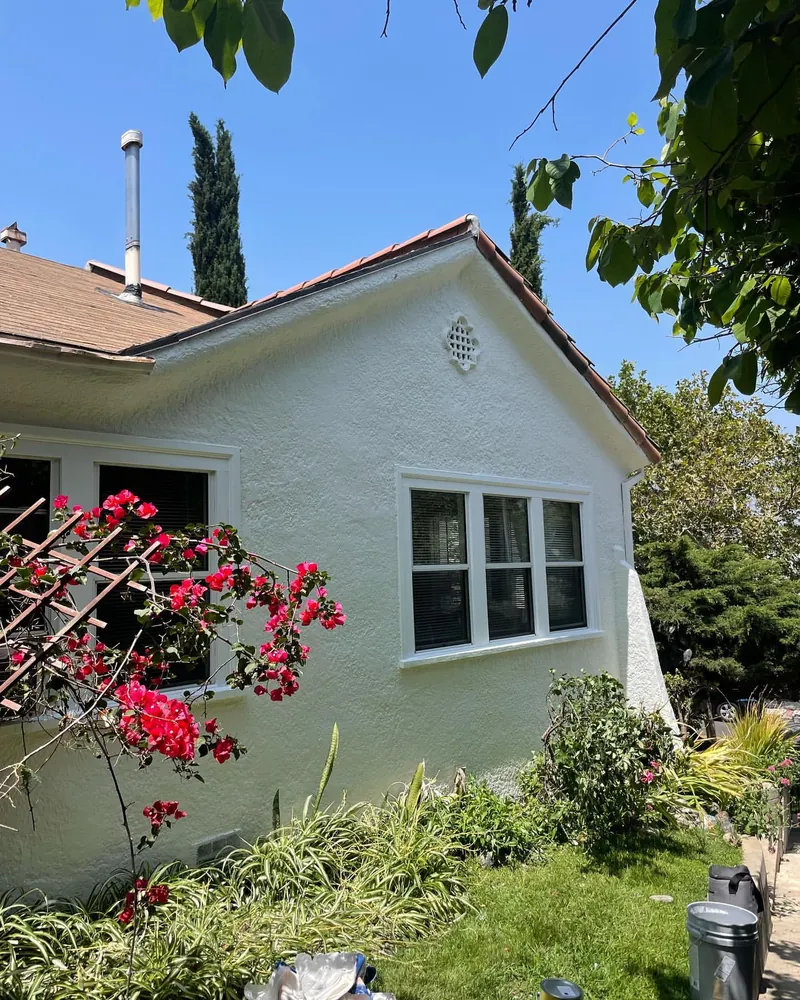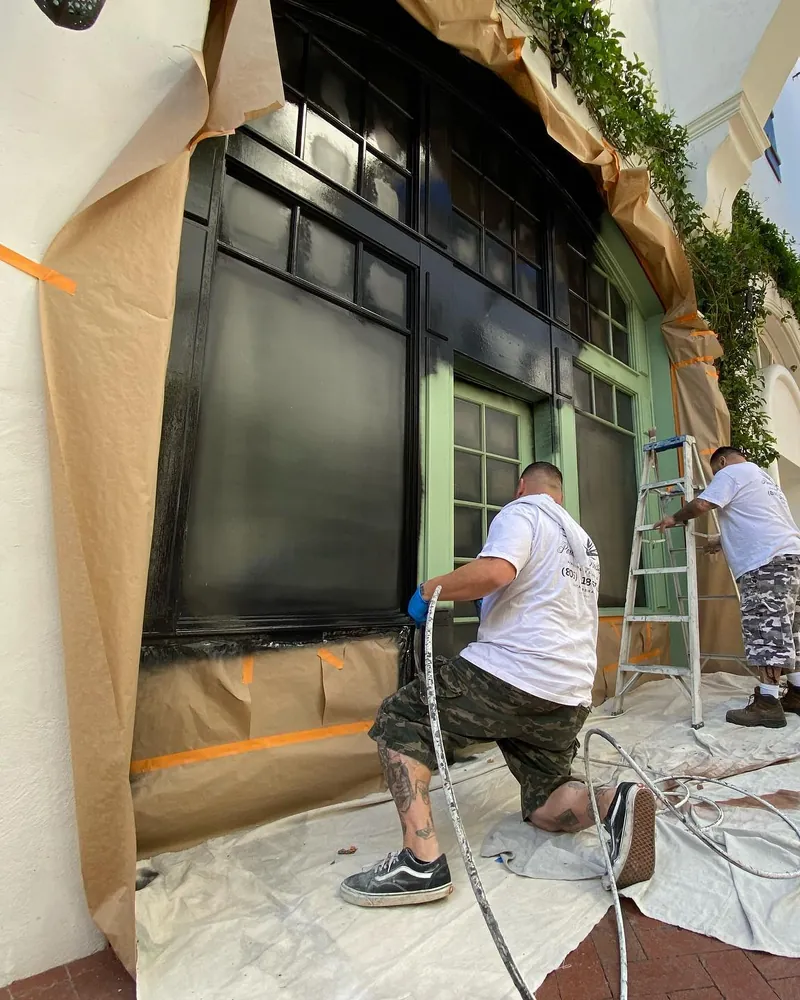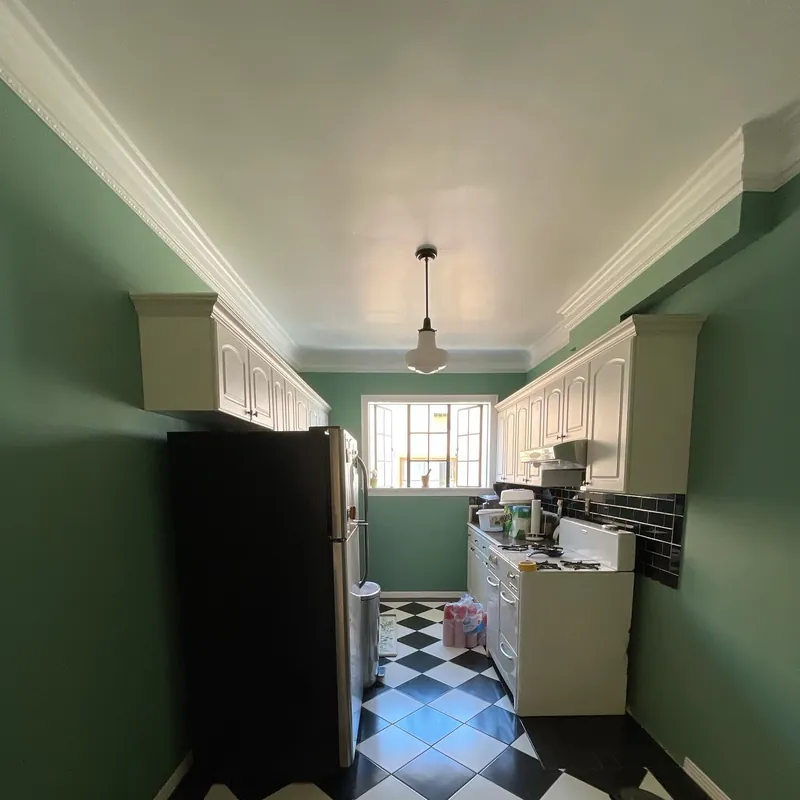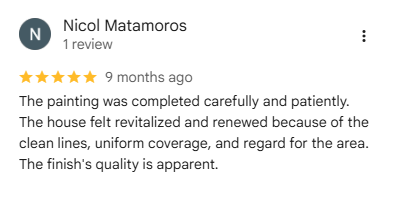
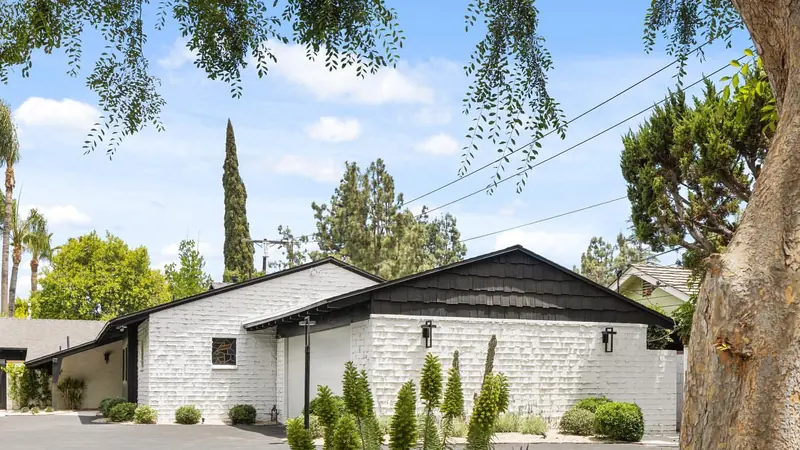
Exterior house painting in Simi Valley has to hold up to strong summer sun, dry Santa Ana winds, sprinkler spray and the slow ground movement that cracks stucco. Best Top Painting paints home exteriors across Ventura County and Los Angeles County, and we put most of our effort into the part you will not see once the job is done: preparation.
Every project starts with an itemized written scope that lists each surface, the repairs, the primer and the number of finish coats. We leave the site clean at the end of every workday and take final payment only after you walk the finished house with us.
What Our Exterior Painting Covers
We paint the full exterior of single-family homes, and pressure washing is part of the prep on every one. Here is what the job covers, surface by surface.
Stucco Walls
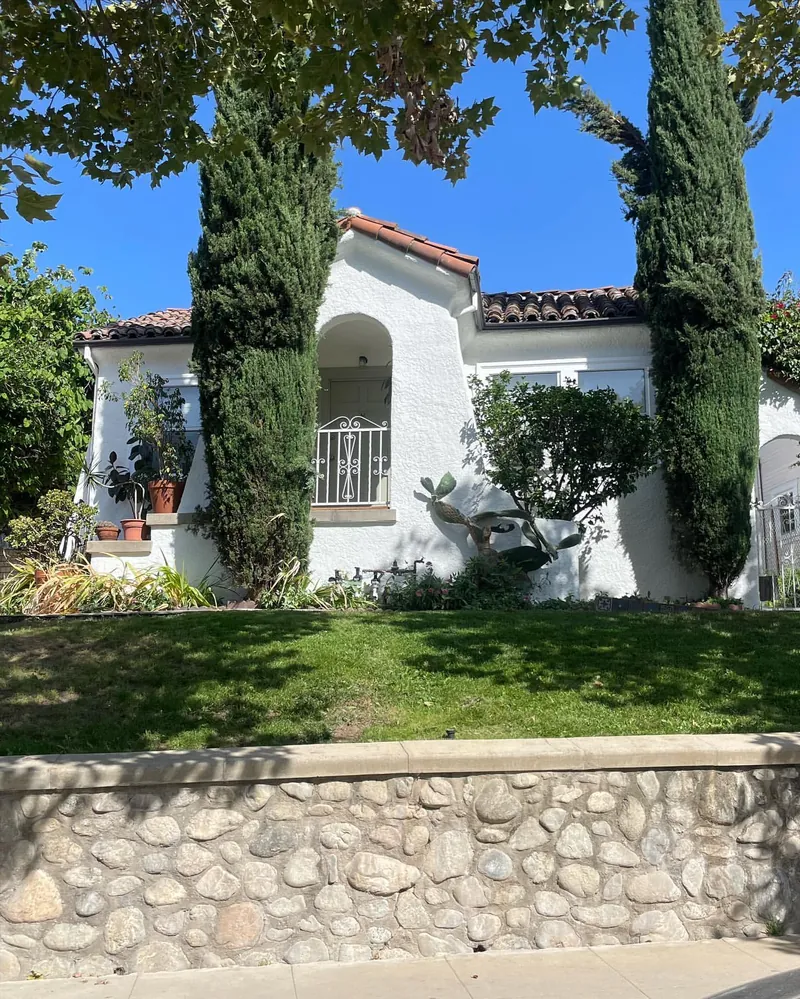
Most houses we paint have stucco walls in a smooth or sand finish. We fill cracks with a flexible patch, rebuild the texture so repairs blend in, and prime every patch before the finish coats. Walls that keep cracking may suit an elastomeric coating, which the comparison below explains. Our stucco repair and painting page goes deeper.
Wood Siding
Lap, shiplap and board-and-batten siding is scraped to a sound edge, sanded where old paint meets bare wood, and spot primed. We recaulk gaps at corner boards and butt joints so water stays out of the boards. Rough-sawn siding can take a solid-color stain instead of paint, which keeps more of the wood texture visible.
Trim, Eaves and Fascia
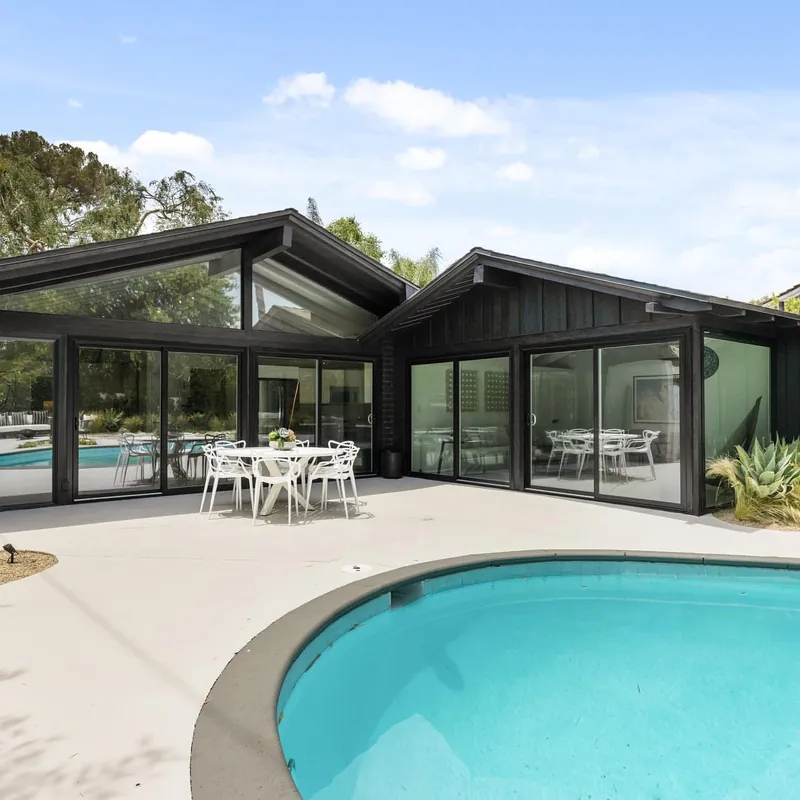
Window and door trim, eaves, fascia and rafter tails take the most sun and water, so that is usually where exterior paint fails first. We probe soft spots, handle rotted sections through our dry rot and trim repair prep, and caulk open joints before priming. Trim usually gets a satin or semi-gloss finish that sheds dirt and sets off the body color.
Garage Doors and Front Doors
Doors are the surfaces people see up close and touch every day. We remove or mask hardware, clean handle and kick areas, and scuff glossy old finishes so the new coat bonds. Garage doors that face the lawn often carry hard-water rings from sprinklers along the bottom panels, and we clean those off first. A front door is also a good place for a bolder accent color.
Shutters, Railings and Gates
Shutters, railings, gates and metal trim are cleaned and primed with a rust-inhibiting primer where needed, then finished to match or accent the trim.
Signs Your Exterior Needs Fresh Paint
- Chalky powder comes off on your hand when you rub the wall.
- South and west walls look noticeably lighter than shaded sides.
- Paint is peeling on fascia, window trim or the bottom of the garage door.
- Caulk has shrunk away from trim joints and window frames.
- Stucco cracks have widened or reopened.
- Bare wood has turned gray, or trim feels soft when you press it.
Bare wood is the one to act on quickly. In Forest Products Laboratory tests, paint on cedar boards left in the sun for 16 weeks before priming peeled within 3 years, while boards exposed for only 1 week held paint for 13 years.
How We Paint a Home Exterior, Step by Step
- Inspect and write the scope. We walk every side of the house, note cracks, rot, failing caulk and sprinkler damage, and put the full plan in writing.
- Protect. Plants, walkways, windows, light fixtures and roof edges are covered or masked before washing or spraying.
- Wash. We pressure wash to remove dirt, chalk and mildew, use lower pressure on wood, and let stucco dry fully before coating.
- Repair. We scrape loose paint to a sound edge, sand transitions, fill stucco cracks, replace rotted trim and recaulk open joints.
- Prime. Bare wood, patches and chalky areas get primer. Redwood and cedar get a stain-blocking primer so tannins do not bleed through.
- Apply finish coats. Two finish coats is our standard on body and trim, applied within the label's recoat window and kept off sun-baked walls in the afternoon.
- Clean up and walk through. We pull masking, touch up, clean the site and walk the house with you before final payment.
Exterior Coatings Compared
The right coating depends on the surface and how much it moves. Here is how the main options compare.
| Coating | Best for | Strengths | Trade-offs |
|---|---|---|---|
| Premium exterior acrylic | Most stucco, siding and trim | Flexible, breathable, holds gloss well | Will not bridge active cracks on its own |
| Elastomeric coating | Stucco with recurring hairline cracks | Thick, stretchy film that bridges fine cracks and sheds water | Less breathable, needs a dry, sound wall, a poor fit for wood trim |
| Solid-color stain | Rough-sawn wood siding and fences | Shows wood texture, easy to recoat | Wears quickly on walking surfaces such as deck boards |
Sheen matters too. Flat or low-sheen finishes soften texture variation on stucco walls, while satin or semi-gloss on trim and doors wipes clean more easily. The Forest Products Laboratory notes that acrylic latex paints resist weathering and keep their gloss better than oil-alkyd paints.
What Affects the Cost of Exterior Painting
- Size and height. Square footage, second stories and sloped lots change labor and access.
- Prep needed. Crack repair, dry rot replacement and heavy scraping add time.
- Surface and coating. Rough stucco absorbs more paint than smooth siding, and elastomeric goes on far thicker than acrylic.
- Colors and detail. More colors, shutters, railings and decorative trim mean more cutting in.
Every estimate we write for exterior house painting in Simi Valley is itemized by surface, so you can see where the cost goes and compare bids line by line. If any line is unclear, we walk you through it before you sign.
Exterior House Painting in Simi Valley: Local Factors
Simi Valley sits inland, so homes here get more heat and ultraviolet exposure than coastal Ventura or Oxnard, and sun-facing walls fade and chalk first. Fall Santa Ana winds can also blow grit into wet paint, so we watch the forecast and hold spraying on windy days.
Much of the housing stock has a few decades behind it: American Community Survey data shows about 86 percent of homes in the Simi Valley Unified School District area were built before 2000. That often means several old coats, aging caulk and stucco that has seen ground movement. Communities such as Wood Ranch may require HOA approval for color changes, and Ventura County APCD Rule 74.2 limits the VOC content of the coatings we apply.