House painting in Culver City starts with homes that are older than many people expect: 59 percent were built before 1970, and the city was almost fully built out by about 1980. Fire exposure is narrow, with only about 2 percent of the land recommended Very High on the state's 2025 maps, mostly in Blair Hills.
From our Simi Valley base, we have painted homes since 1988. We come to the property, look at every wall and write out each step of prep and painting before work begins.
Studio Tracts, Postwar Annexations and Ocean Air
The city incorporated in 1917 on 1.2 square miles around Main Street, and residential tracts filled in through the 1920s as three film studios made it the heart of screenland. Population climbed from 503 in 1920 to 19,720 by 1950, and 33 annexations between 1948 and 1977 account for the irregular boundary.
The SCAG age chart puts 20.1 percent of homes in the 1950s and 25.5 percent in the 1970s, the decade Fox Hills filled with large condo and apartment complexes. Detached houses make up 39.4 percent of the 17,578 units, and 38.5 percent sit in buildings of five or more.
A few miles inland from Santa Monica, Culver City runs up to about 10°F warmer in summer but stays strongly moderated by the ocean, with a persistent marine layer and early-summer June Gloom. Mean highs reach 79.1°F in August, and most of the 14.05 inches of yearly rain arrives from December through February.
The Newport-Inglewood Fault Zone crosses the northern part of the city, and most of Culver City is mapped for elevated liquefaction risk. In 1994 the Northridge earthquake put the city in the MMI VII shaking band and brought down the Santa Monica Freeway over La Cienega Boulevard.
Blair Hills, Culver Crest, Fox Hills and Carlson Park
The city recognizes 15 neighborhoods. Blair Hills and Culver Crest are its hillside areas, both with elevated landslide risk, and Blair Hills holds the core of the Very High fire zone. Fox Hills, annexed in 1964 when it was open land, stables and golf courses, filled with condos and apartments in the 1970s.
Beside Ballona Creek, the Studio Village Townhouses of 1965 were the city's first condominium complex. Carlson Park surrounds the city's first park, dedicated in 1927, and Lindberg Park has its own neighborhood association. The three historic districts sit on Braddock Drive, Lafayette Place and McConnell Boulevard.
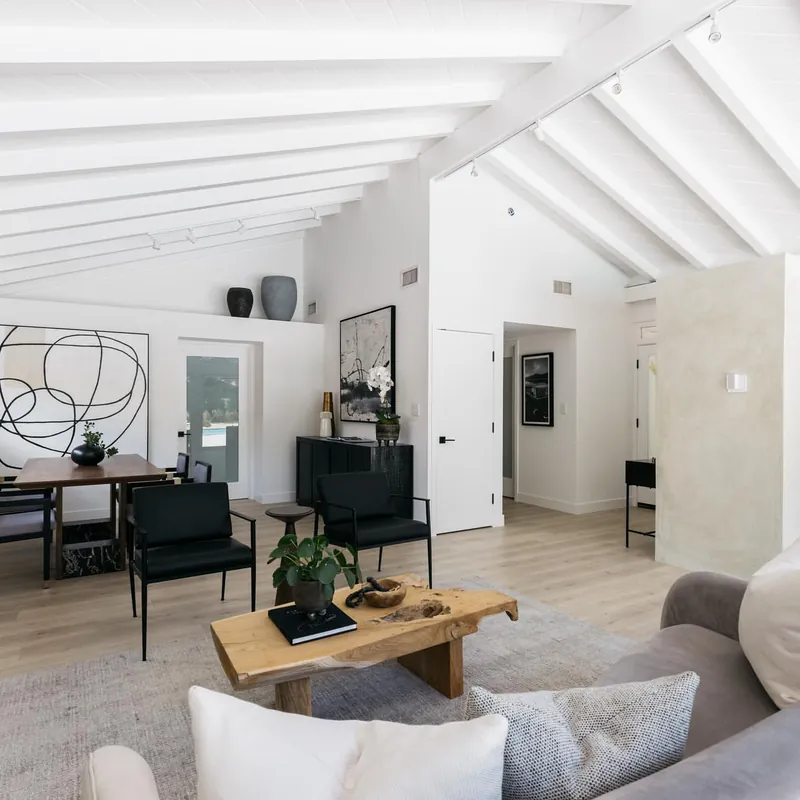
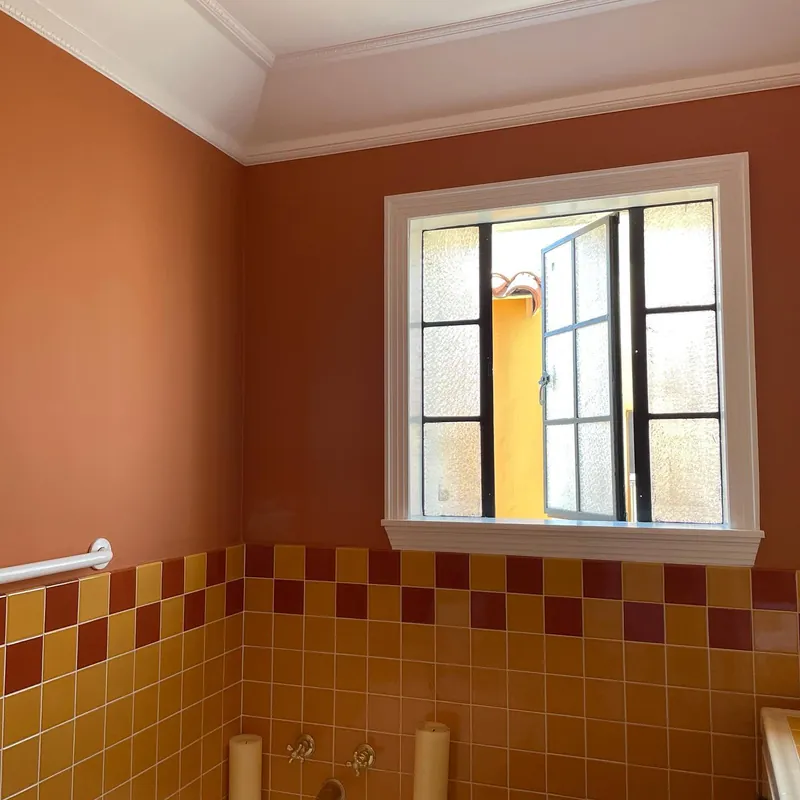 After
House Painting in Culver City, Service by Service
These services match the age of Culver City homes, the ocean air and the city's preservation program. Most projects combine two or three.
Marine Layer Exteriors
Ocean air keeps Culver City mild, but morning overcast can keep shaded walls damp well into the day. We wash and let surfaces dry fully, start on sunny sides once the marine layer lifts and finish shaded walls while temperatures hold. Our exterior house painting covers stucco, wood trim, eaves, garage doors and front doors, with caulking and spot priming first.
Stucco Crack Repair
With a state-mapped fault zone along the north end of town and liquefaction risk across most of it, stucco on 1950s houses and 1970s buildings can carry hairline and wider cracks. We open, clean and fill each one, match the sand or smooth finish and prime the repairs. Our stucco repair and painting then uses elastomeric or acrylic, depending on how much the wall moves.
Condo Interiors in Fox Hills and Studio Village
The 1970s condo boom in Fox Hills and the 1965 townhouses in Studio Village mean many owners here live in attached units. We paint inside your unit, protect floors and fixtures and follow the building's rules on work hours. Exteriors owned by an association are not part of our residential work. Book interior house painting by the room or unit.
Landmark Color Consultation
Culver City's preservation program, set up in 1991, ranks buildings as Landmark, Significant or Recognized, and 50 structures hold one of the top two levels. Exterior changes to those buildings get Cultural Affairs staff comment and may need a Certificate of Appropriateness, while Recognized status is honorary. Our color consultation, offered case by case, helps you settle a palette before calling Cultural Affairs.
Painting Before Selling
Sellers must disclose fire hazard severity zone status, so listings in parts of Blair Hills and Culver Crest already carry that paperwork. A clean, neutral repaint gives buyers less to question on the walls themselves. We schedule around your listing date through our painting before selling service, from single rooms to the street-facing exterior.
Smoke Residue Repainting
The city's Safety Element says regional fires such as the 2019 Getty, 2003 Padua and 1993 Topanga fires have not affected Culver City directly, which mostly receives their smoke and poor air. When residue settles on walls and trim, our smoke damage repainting washes it off, seals stains under a stain-blocking primer and finishes with fresh coats.
Culver City Permits, Preservation and Fire Zones
The Building Safety Division at City Hall, 9770 Culver Boulevard, issues permits through the city's Accela portal, and its permit list says interior or exterior painting needs no building permit. Re-roofing, new windows and vinyl siding that removes stucco or bracing do need one.
The State Fire Marshal's 2025 recommendations show 60 acres Very High, 295 High and 102 Moderate. On July 14, 2025, the city adopted its own zones, keeping earlier Very High lines in Blair Hills and placing more of Blair Hills and Lower Culver Crest above the state's recommendation, so final zoned acreage may run higher. Codes in effect from January 1, 2026 include Title 24, Part 7, the California Wildland-Urban Interface Code that replaced CBC Chapter 7A, and the city applies its rules to work in High and Very High zones.