House painting in Thousand Oaks mostly means repainting homes from the city's biggest building decades. The city's Housing Element counts about a third of local homes from the 1970s and roughly 77 percent from before 1990, so many houses here carry layers of old coatings, aging caulk and stucco with decades of settling behind it.
Best Top Painting has painted homes since 1988 and works across the Conejo Valley from our base in Simi Valley. Each job begins with a walk around the house and an itemized written estimate.
Valley Heat and a 1970s Building Peak
Central Thousand Oaks sits on a valley floor at about 900 feet, ringed by the Santa Monica Mountains, Conejo Mountain, Mountclef Ridge and the Simi Hills. Mean highs run from about 67°F in winter to about 91°F in August, and January nights average about 36°F. South- and west-facing walls absorb that full swing year after year, which is why those sides tend to chalk, fade and crack first.
Some ocean air reaches the valley through gaps in the hills, but far less of it gets to the center than to the west side: Newbury Park summer highs average about 80°F, against roughly 90°F here. On hot days we paint the sunny sides early and shift to shaded walls as the afternoon heats up.
Age matters as much as weather. The Housing Element counts 33.5 percent of homes from the 1970s, 19.9 percent from the 1960s and 19.5 percent from the 1980s, with the oldest near the SR-23 and US 101 interchange.
From the City Center to Westlake, North Ranch and Lang Ranch
The city spread outward from US 101 and Moorpark Road in the 1950s and 1960s, growing from about 3,500 residents in 1957 to more than 103,000 by 1989. The neighborhoods around Thousand Oaks Boulevard, home to The Oaks, Janss Marketplace and the Civic Arts Plaza, hold some of the oldest housing.
The Thousand Oaks side of Westlake was annexed in 1968 and 1972, and North Ranch, bordering Oak Park and a 2,595-acre open space, followed in 1973. Lang Ranch, Rancho Conejo and Rancho Potrero were laid out through specific plans, and many tracts are enclosed by walls, so we confirm gate access before day one.
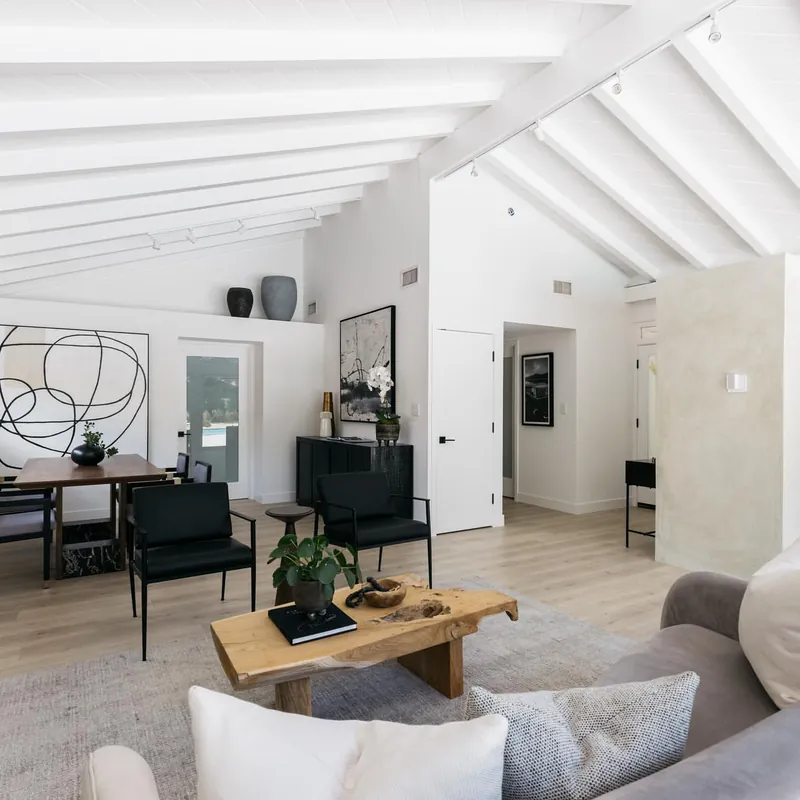
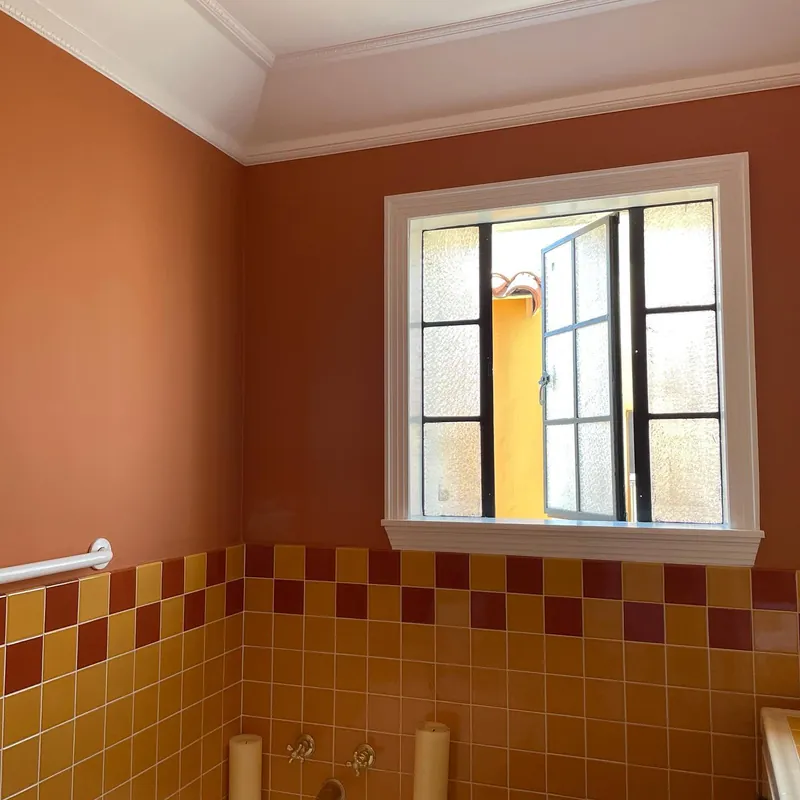 After
House Painting in Thousand Oaks: Services for Older Tracts
These four services fit the way Thousand Oaks houses have aged.
Oak-Safe Exterior Repaints for 1960s and 1970s Tracts
More than half of Thousand Oaks' homes date from the 1960s and 1970s. Our exterior house painting on those houses means washing off decades of chalk, scraping to sound paint, replacing split caulk and priming bare wood before the finish coats, all set up so ladders, tarps and overspray stay clear of the oaks the city protects.
Stucco Crack Repair and Elastomeric Coatings
Stucco that has settled for 40 or 50 years usually carries a web of hairline cracks and older patches that show through each repaint. Through stucco repair and painting, we clean out and fill those cracks, rebuild the texture so the patches disappear, and prime before color. Then we compare a standard exterior acrylic with a thicker, more flexible elastomeric coating for walls where fine cracks return.
Smoke Damage Repainting After the Woolsey and Hill Fires
The Woolsey and Hill fires both started on November 8, 2018, and Woolsey damaged and destroyed dozens of Thousand Oaks properties while displacing hundreds of residents for a time. Houses that came through nearby can carry ash and smoke film on eaves, vents and stucco. Our smoke damage repainting cleans that residue, seals stains under a stain-blocking primer and then applies fresh color.
Interior Patch and Tone Correction
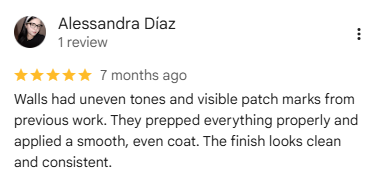
Decades of picture hooks, repaired cracks and touch-ups leave many older Thousand Oaks interiors with patch marks and walls in slightly different tones, which our reviewers mention us correcting. Our interior house painting sands and primes every patch so it stops flashing through, then repaints walls, ceilings, trim and doors in full sections so the color reads evenly from corner to corner.
Working Around Protected Oaks
Thousand Oaks requires a Protected Tree Permit to cut, remove or relocate any oak on public or private property, and a landmark tree ordinance covers California sycamore, bay laurel, black walnut and toyon. We set up ladders, drop cloths and spray work so those trees are left alone, and if a limb rubs the eaves, we point it out so you can check with the city before anyone cuts it.
Walls under big canopies stay shaded and damp longer and collect leaf litter and sticky residue, so we clean them thoroughly and let them dry before primer.
Permits, County Islands and Fire Zones
Inside city limits, permits, inspections and records go through the Thousand Oaks Building Division at City Hall, 2100 Thousand Oaks Boulevard, and its TO/24 online portal. Four unincorporated pockets surrounded by the city, Casa Conejo, Ventu Park, Rolling Oaks and Lynn Ranch, answer to Ventura County instead. If our prep uncovers damage needing a permit, such as rotted framing, we stop and tell you before going further.
The 2045 General Plan says Very High Fire Hazard Severity Zones cover a majority of the city. Hillside Planned Development zones use a Hillside Development Permit. If your tract has an association, its rules decide which colors you can choose, so check them before we order paint.