House painting in Bellflower mostly means repainting postwar tract houses built over what had been small dairy farms. The city's Housing Element puts 59 percent of homes in the 1950 to 1969 window, and about 90 percent predate 1990.
Best Top Painting has painted homes since 1988, and we make the drive from Simi Valley to see your house before quoting. Every estimate is written and itemized, and the final payment is due after you and our crew walk the completed work.
From Somerset Ranch Farms to Postwar Subdivisions
Bellflower began as Somerset Ranch, a 1,000-acre property divided into one-acre farms worked by dairy farmers. The post office opened in 1909 as Bellflower after postal officials turned down the name Somerset, a choice usually traced to a Bellefleur apple orchard.
After the war, rising property values pushed most farmers east toward Dairy Valley, today's Cerritos, La Palma and Cypress, and the farms became subdivisions. Aerials from 1952 and 1953 show large tracts in the south of the city, with tracts and farmland still mixed in the north until houses replaced the last farms. Lots are small today, with a median of 0.16 acre.
The Long Beach Airport station, about five miles away, records August highs near 83°F and roughly 12 inches of rain a year, mostly from December to February. Ground shaking is the main earthquake risk, from the Puente Hills Blind Thrust under the city and the Newport-Inglewood Fault among others, so cracks in stucco and drywall get a close look on every estimate.
Bellflower Boulevard, the South Tracts and the North Side
Bellflower Boulevard was the main street and a busy shopping strip from the 1950s through the late 1960s, until the Artesia Freeway, built in the mid-1970s, cut downtown in half. A 1938 aerial shows the original core along the boulevard with farm neighborhoods to the south.
The south side filled first with large tracts, while the north side kept farmland among its tracts a little longer. The San Gabriel River marks the eastern edge, now a channel built for a 100-year flood, and the Housing Element flags a mainly residential area south of Alondra Boulevard and west of Lakewood Boulevard where storm drain shortfalls raise flood risk, so low walls there get checked for water staining.
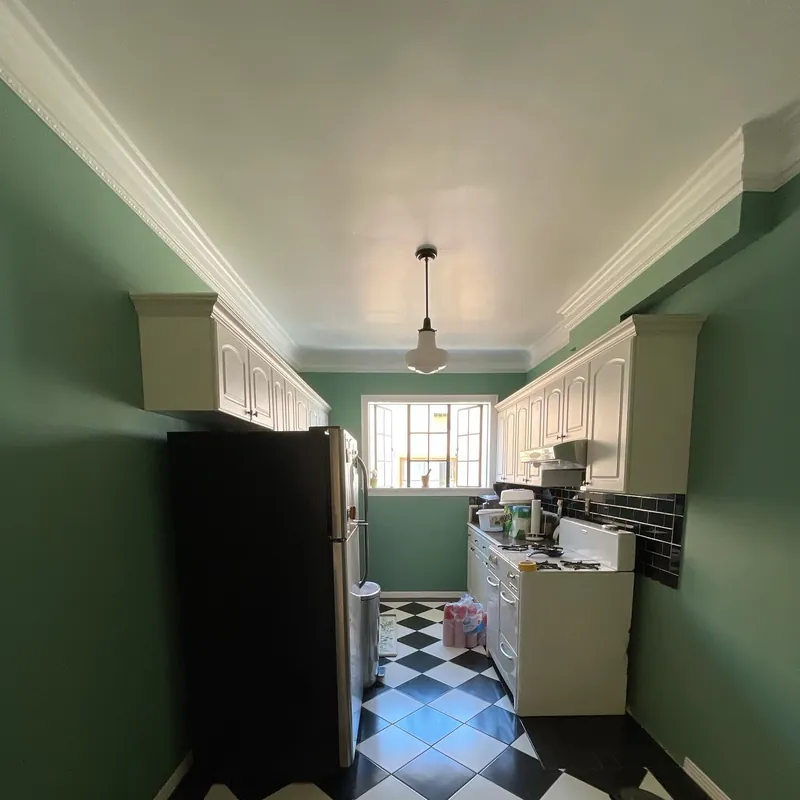 After
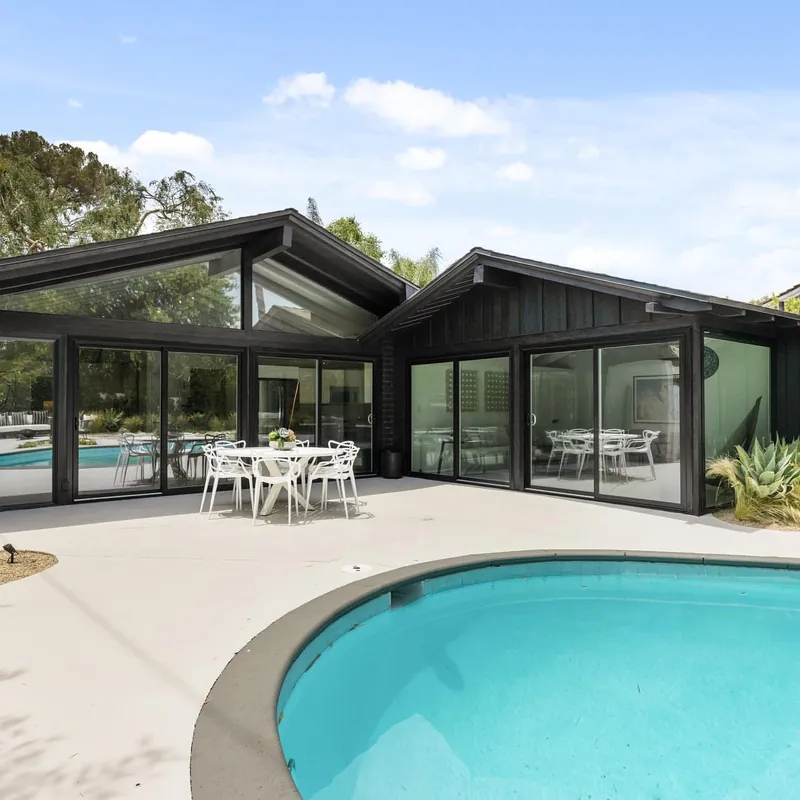
House Painting in Bellflower for Midcentury Tracts
Five services cover most Bellflower repaints, and all of them are shaped by the age of the postwar stock. Repair work here is always part of a painting project.
Postwar Tract Exteriors on Former Dairy Land
Houses from the 1950s and 1960s usually carry many coats of exterior paint, and the oldest layers are often the first to let go. Our exterior house painting pressure washes each wall, scrapes and sands failing areas, recaulks around windows and doors and primes bare spots. Stucco, siding, eaves, garage doors and trim are then finished in smooth, even coats.
Stucco Crack Repair Before Paint
With the Puente Hills Blind Thrust beneath the city and liquefaction zones in its northwest, southwest and southeast parts, decades of minor movement can show up as cracks in stucco. Our stucco repair and painting separates hairline cracks from wider ones, fills them with a flexible patch, matches the texture and primes each repair. The coating choice, elastomeric or acrylic, follows how much each wall is still moving.
Siding and Trim Dry Rot Prep
Wood siding, fascia and window trim on older tract houses tend to rot where water sits, at bottom edges and joints. As prep for the repaint, our dry rot repair fills soft spots with epoxy and replaces individual boards that are too far gone. The city's permit handout lists siding replacement as work that needs a permit, so if the damage runs to whole sections, we tell you before the scope changes.
Drywall Patching Before Interior Paint
Interior walls in a house this age collect nail pops, settling cracks and patch marks from decades of changes. Before any color goes on, our drywall repair and texture matching tapes cracks, resets popped nails, matches the surrounding texture and primes every patch so it disappears under the finish. We do this only as part of painting the room, never as a separate job.
Color Consultation With Planning Review in Mind
Bellflower's permit handout says painting needs no building permit but notes that Planning Division review is still required for zoning compliance, without spelling out what that review covers for paint. Our color consultation, offered case by case, settles your palette early so you can ask Planning about it before work starts. Sample patches go on sunny and shaded walls, and the final colors are written into the scope.
Bellflower Permits and Planning Review
Building and Safety and Planning both work from City Hall at 16600 Civic Center Drive. The city's permit handout, revised February 18, 2026, lists painting, papering and similar finish work as needing no building permit, with a footnote that Planning review still applies for zoning compliance. Siding and window replacement do need permits.
For larger projects, plans go to the Planning Division first and then to Building and Safety, and residential reviews take about 10 business days. If a repaint is paired with new windows or siding, we build that review time into the schedule.
We found no historic districts or design review board in Bellflower. No fire hazard zones were recommended for the city either, so California's Wildland-Urban Interface Code (Title 24, Part 7), which replaced CBC Chapter 7A on January 1, 2026, plays almost no role in a Bellflower repaint.