House painting in Lakewood is mostly work on one generation of houses. About 17,500 homes rose on former farmland from 1950 to 1953, and 54.6 percent of the city's housing still dates from the 1950s.
We have painted homes since 1988 and travel from our Simi Valley base to walk each property before writing a scope. Every estimate lists surfaces, prep and coats line by line, and you settle the last payment only after we review the finished house together.
A Whole City Built in Three Years
Ground was broken in February 1950, and the city's own history describes crews finishing a house about every seven and a half minutes, with a one-day record of 110. Workers moved up one side of a street and down the other on a set schedule, using materials that arrived pre-cut.
The houses came as two- and three-bedroom models. The originals came with a garage, a bay window, trim shutters and a trellised porch, and the first phase offered 13 floor plans in four variations so identical designs stayed apart. Many owners later expanded instead of moving, so an original wall may now meet a much newer room.
The weather is mild. At the Long Beach Airport station, about three miles away, August highs average 83.2°F and July through September each see under a tenth of an inch of rain. That long dry stretch suits exterior work, and we schedule sun-facing walls for the cooler hours.
Lakewood Park, Mayfair and the Older Tracts
The big build ran in three phases: Lakewood Park, where sales opened March 24, 1950 with seven model houses, then Lakewood Mutual Homes and a tract called Carson Park, which belongs to Lakewood, not the City of Carson. Mayfair, between Ashworth and South streets, is informally called Radio Park because its streets were named after radio stars.
A few areas predate 1950. Lakewood Gardens, begun in 1946 west of Lakewood Boulevard, had just under 500 homes, and most houses in Lakewood Country Club Estates went up between 1936 and 1960. Those older houses can carry more layers of paint and more varied trim, so we price them after a closer look.
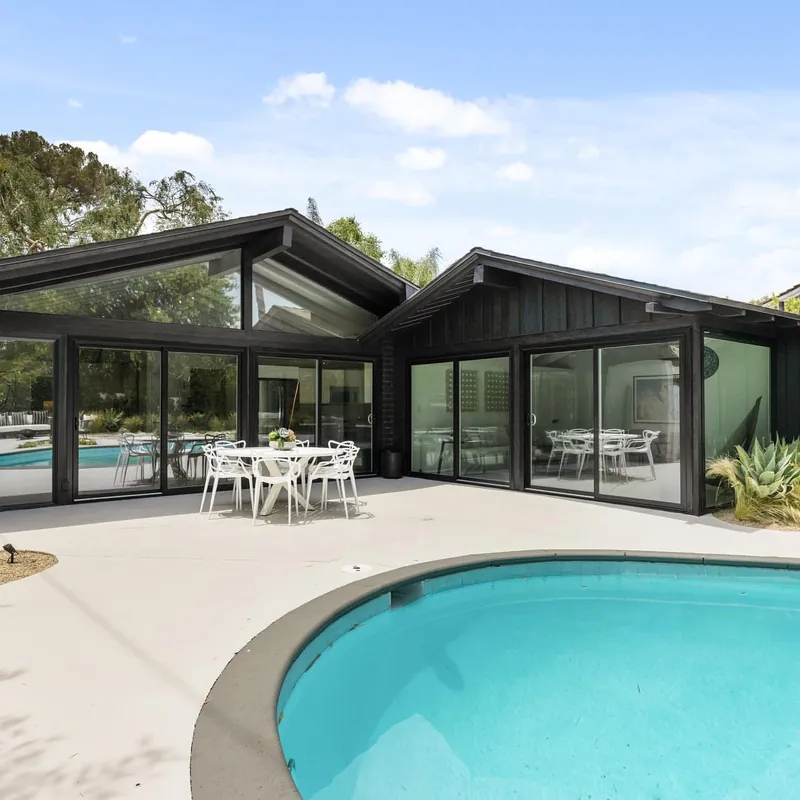
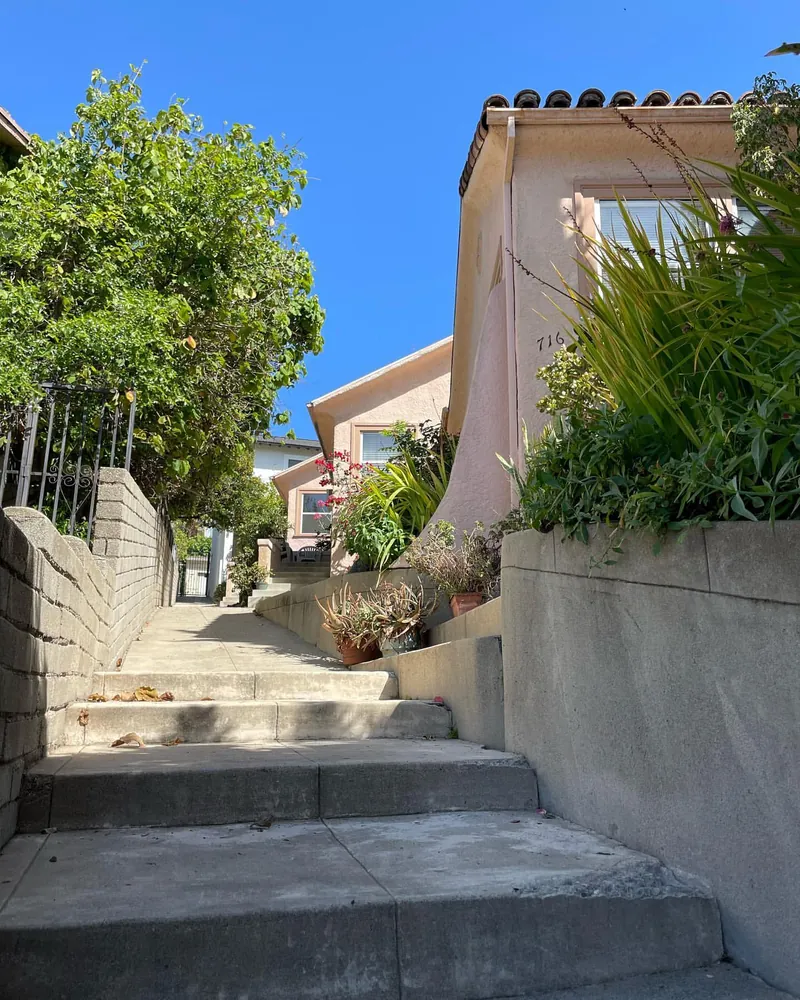
House Painting in Lakewood for 1950s Houses
Most projects here start from the same 1950s blueprint, then split according to what owners changed later. Any repair below happens only within a painting job.
Red Front Door Colors and Color Consultation
Every original Lakewood house had its front door painted red, and the first phase mixed 39 color combinations across its trim and siding treatments. A repaint is a chance to bring that red back or to pick a palette that ties an addition to the original front. Our color consultation is available case by case: we brush samples on the door, trim and body, view them in morning and afternoon light and write the final colors into your scope.
Exteriors for 1950s Tract Houses
These houses are about 75 years old, and the city's residential manual requires owners to keep buildings, roofs, paint, fences and walls continuously maintained. Our exterior house painting washes the walls, scrapes failing paint, recaulks gaps at windows and doors and primes bare spots before the finish coats. Garage doors and eaves get the same care, and roof-mounted equipment can be painted to blend with the roof, as the manual asks.
Shutter and Trim Dry Rot Prep
Trim shutters, trellised porches and fascia came with the original houses, and after seven decades of winter rain, the bottom edges and joints of that wood are where rot tends to start. As part of the repaint, our dry rot repair probes each piece, fills sound wood with epoxy and replaces boards or slats that have gone soft, matching the old profile. Everything is primed so the finish has a firm base.
Addition Texture Matching Before Interior Paint
Plenty of Lakewood owners added space rather than move, so a 1950s wall may now run into a family room built decades later. The two sections often differ in texture, and paint alone makes the seam obvious. Before interior painting, our drywall repair and texture matching closes cracks at the joint, patches nail pops and blends the texture across both, then primes the repairs.
Fence Staining Under the City's Upkeep Rules
Lakewood's code puts fences and walls on the same upkeep list as roofs and paint. Where a lot has a wood fence, our deck and fence staining cleans and brightens the boards, lets them dry fully and applies a penetrating stain, from semi-transparent to solid, chosen to sit well with the house colors. Gates and posts are done in the same pass.
Permits and Upkeep Rules in Lakewood
Building and Safety works out of City Hall at 5050 Clark Avenue, and plans, permits and inspection requests go through the city's OpenGov portal. The city's home improvement guide sends window changes that alter openings, and exterior additions, to Planning first, while retrofit windows in unchanged openings go to building plan check.
We found no historic districts or design review board in Lakewood. If painting is part of a larger remodel, the plans must show exterior materials and colors, and every dwelling on a lot must match in roof style and eaves.
The city sits outside any recommended fire hazard zone, and its hazard plan rates wildland fire risk as nonexistent. That leaves California's Wildland-Urban Interface Code (Title 24, Part 7), which replaced CBC Chapter 7A on January 1, 2026, with almost no bearing on a Lakewood repaint.