House painting in Gardena starts without a trip to City Hall, since the city's Building Services page lists painting and papering among the finish work that needs no permit. The houses take more thought: about 33.2 percent were built in the 1950s and another 28 percent in the 1940s and 1960s.
We drive in from Simi Valley and have been painting homes since 1988. Your estimate lists every wall, ceiling and trim run in writing, and the final payment is due after you have walked the finished job.
Berry Farms, a 1950s Boom and Mild Weather
Gardena began as farmland nicknamed Berryland for its strawberries, raspberries and blackberries, and it incorporated in 1930 by joining Gardena, Moneta and Strawberry Park. The fastest growth came in the 1950s, when the population more than doubled and housing units grew by more than 150 percent, partly through annexing the city's northwest portion. New tract homes went up as the suburb spread.
Housing was almost entirely single-family at first, and denser buildings followed once vacant land ran out. Nearly 89 percent of today's stock predates 1990. Newer pockets are small, such as 159 homes under the Emerald Square Specific Plan in 1999 and 101 under the Carnelian Specific Plan in 2004.
The weather is gentle on a work schedule. Torrance Airport, just across the border, averages a high of 71.9°F and 13.64 inches of rain a year, with February and January the wettest months, which leaves most of the year open for exterior work.
Moneta, Strawberry Park and the Vermont Avenue Core
Downtown has centered on Vermont Avenue and 166th Street since the railway came down Vermont around 1890. Moneta and Strawberry Park were two of the three communities joined at incorporation, and Hermosillo is another named neighborhood.
What sits underground also shapes the job. A state liquefaction zone follows Artesia Boulevard and the Dominguez Flood Control Channel along the south edge, and an Alquist-Priolo Earthquake Fault Zone on the Newport-Inglewood system crosses the northeast near El Segundo Boulevard and Vermont Avenue. On houses in either area, we take a closer look at stucco and drywall cracks before quoting.
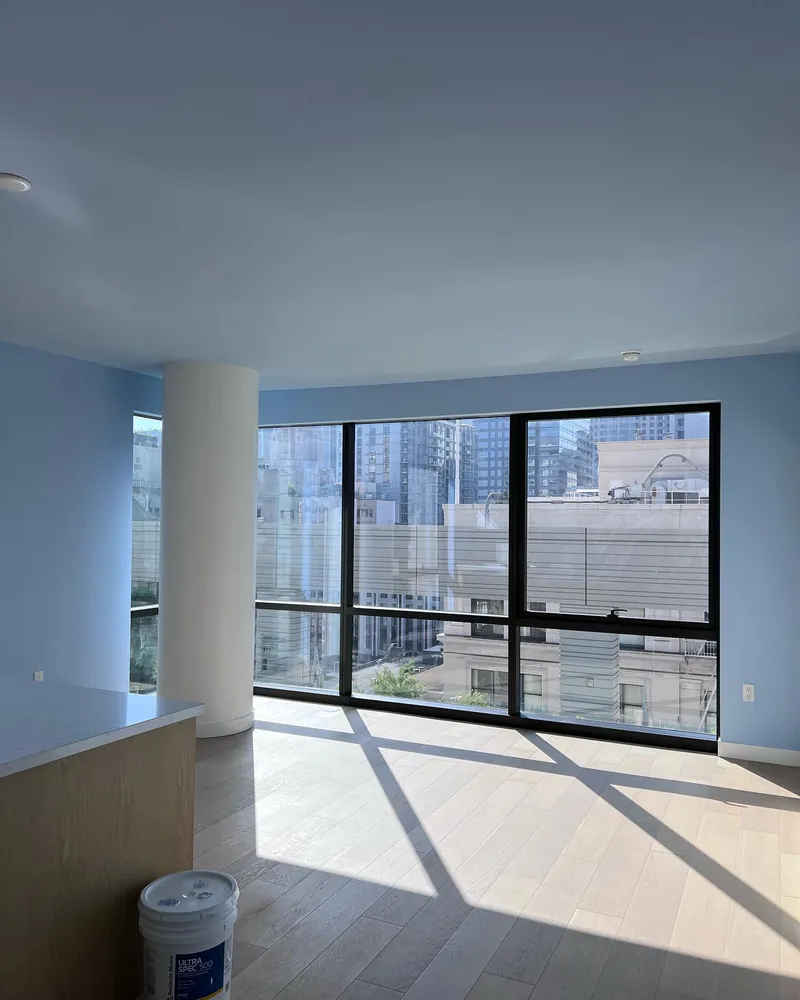
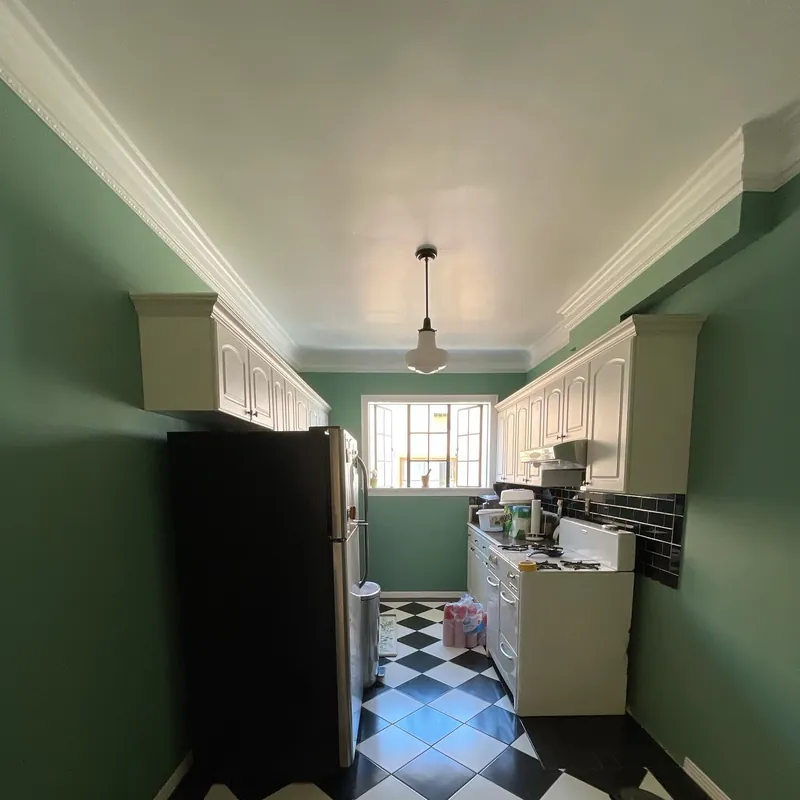 After
House Painting in Gardena, From Boom Houses to Manufactured Homes
The five services below follow Gardena's housing mix. Stucco and wall repairs happen only as preparation for paint.
1950s Boom House Interiors
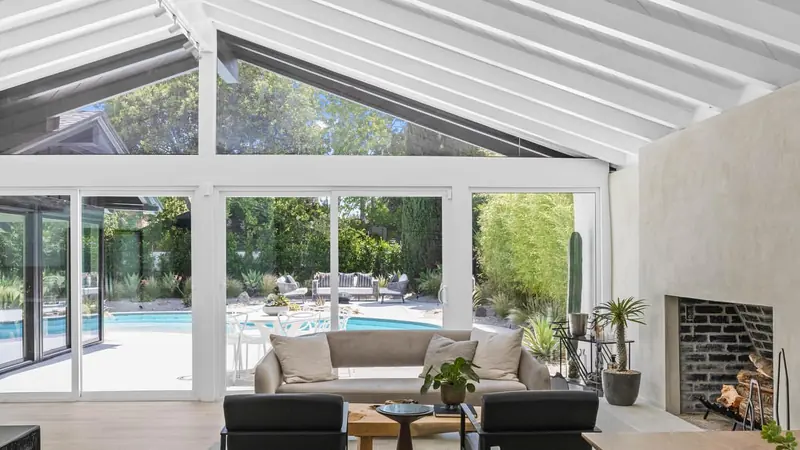
A house from the 1950s has had about 70 years of patching, repainting and furniture bumps. Our interior house painting fills dents and nail holes, sands patch edges flat, spot-primes stains and finishes walls, ceilings, baseboards and doors in even coats. When you are living in the house, we work a few rooms at a time so the kitchen and a bathroom stay usable.
Mobile and Manufactured Home Exteriors
Gardena has 1,245 mobile homes, 5.7 percent of local housing against 1.6 percent countywide. Siding on these homes can be metal, wood composite or vinyl, and each takes its own cleaning and primer step. Our exterior house painting starts by identifying the siding, and if your home sits in a park with color rules, we review them with you first.
Fault Zone Stucco Repair
Hairline cracks at window corners show up on older stucco everywhere, and houses near the fault zone or the liquefaction area deserve a careful look. With stucco repair and painting, we clean out each crack, fill it with a flexible patch, match the texture and prime before color. Wide, stepped or growing cracks get pointed out for a structural opinion before we paint over anything.
Fence Staining
Building a new fence in Gardena takes a permit. Staining an existing one is surface finish work, and the city's Building Services page lists painting and similar finish work as exempt. Through deck and fence staining, we wash and brighten weathered boards, let them dry fully and choose between clear-toned, semi-transparent and solid stain with you, covering posts and gate frames along with the panels.
Pre-Sale Repaints
Because paint needs no permit here, a pre-listing repaint can start as soon as the scope is signed. Our painting before selling service focuses on what buyers see first: the front of the house, the entry, living areas, the kitchen and bathrooms. We suggest neutral colors, plan around your listing agent's timeline and finish before photos are taken.
Building Services, Seismic Zones and Historic Status in Gardena
Gardena's Building Division in City Hall issues permits, and simple ones can be handed out over the counter the same day. Re-roofs, window change-outs and fences need a permit, while painting does not, and plan-check projects are also reviewed by Planning and the LA County Fire Department. Manufactured homes are allowed in every residential zone, with mobile home parks conditionally permitted in the R-3 and R-4 zones.
The city has no historic preservation ordinance, and its only citywide survey dates to 1981, so no landmark color review applies. Gardena does not appear in the State Fire Marshal's 2025 table of recommended fire hazard zone acres, and it is not among the LAX sound insulation program areas.