House painting in Torrance is mostly about the 1950s and 1960s. Those two decades hold about 60 percent of the city's housing units, built when developers put up tracts of 200 to 500 homes at a time on an assembly-line model.
The oldest blocks tell a different story, with Craftsman and Mission Revival houses in Old Torrance. We serve the whole city, from Walteria to the Hollywood Riviera, out of our Simi Valley base. We have painted homes since 1988, and every Torrance job starts with an itemized written scope and ends with a walkthrough before the final payment.
A Tract-Built City With Three Microclimates
Torrance was founded in 1912 on an Olmsted plan of 109 city blocks, but a World War I era recession stalled building and left much of that plan unfinished. The real boom came after World War II, when the population grew from about 20,000 to more than 100,000 in a single decade. Today the 1950s hold 32.6 percent of units and the 1960s another 27 percent, while only about 8 percent predate 1950.
Weather shifts across the city. Most of Torrance lies in Sunset Zone 22, a basin where cold air pools near the airport with frost risk six months of the year, while a Zone 23 thermal belt runs upslope to the south and the western blocks near the beach cities fall in Zone 24, where marine influence dominates.
Torrance Airport normals show highs of about 66.8 degrees in January and 78.1 in August, with 13.64 inches of rain a year, mostly from November through March, and records there run from 23 to 111 degrees. The regional May Gray and June Gloom pattern adds morning cloud in May and June. On cold basin mornings and gray coastal ones alike, we wait for surfaces to warm and dry before finish coats go on.
Old Torrance, the Hollywood Riviera and Walteria
Old Torrance, the Olmsted Tract, was laid out on a diagonal so Pacific breezes would carry industrial pollution away from homes and shops, and Gramercy and Andreo were its first residential avenues. A city survey of the Olmsted District found Craftsman and Mission Revival the most common contributing styles, with the 1920s the most common building decade.
The Hollywood Riviera began as a 1920s tract in a French Riviera style, and its vacant view lots drew developers in the 1950s. Walteria started as an 1887 paper town and joined the city in 1928, Southwood Riviera Royale dates from 1962, and Country Hills went up in 1976 and 1977 on a former quarry. Building dates that far apart call for very different prep, so we price each Torrance home after seeing it.
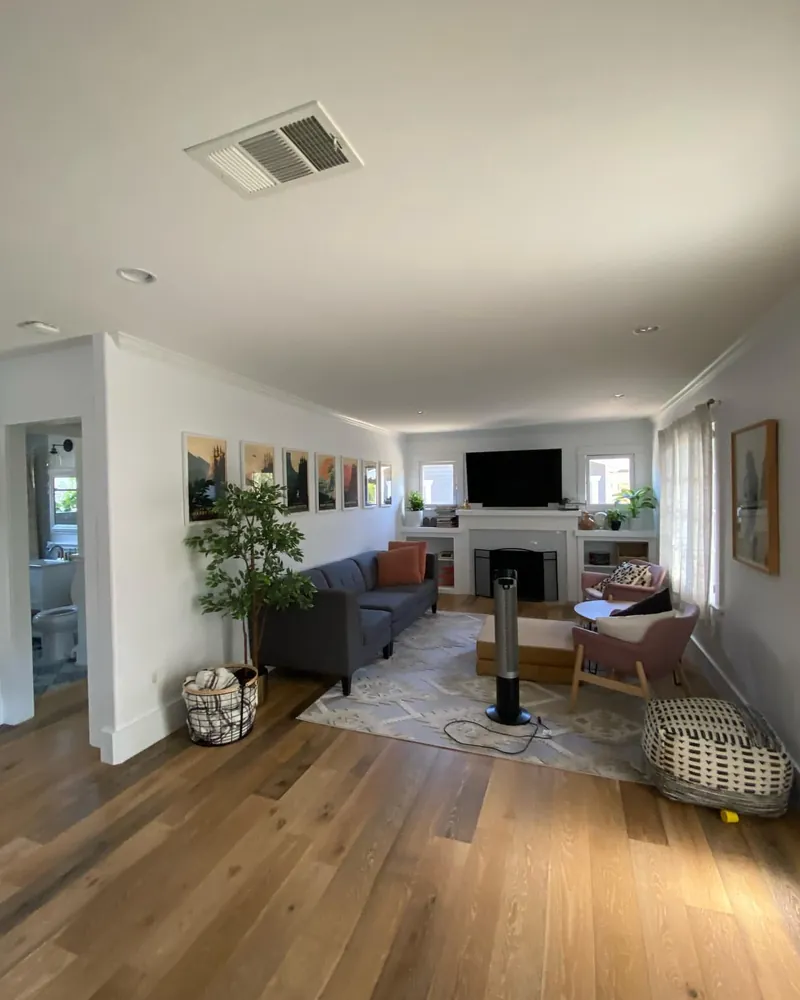
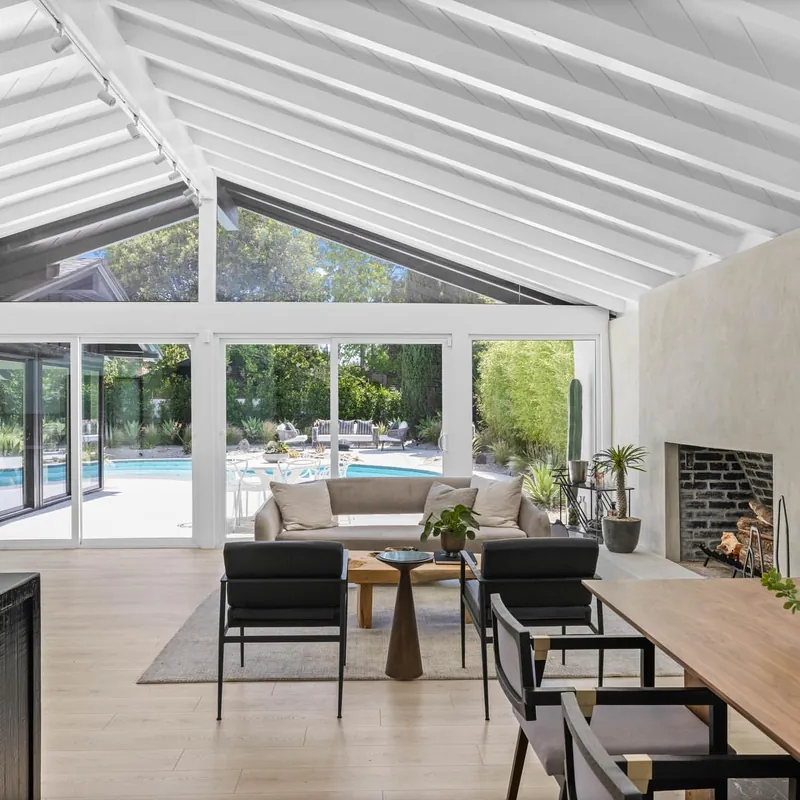
House Painting in Torrance, From Tracts to Landmarks
These four services cover what Torrance housing tends to need. They run from postwar tracts to century-old wood.
Exteriors for 1950s and 1960s Tract Homes
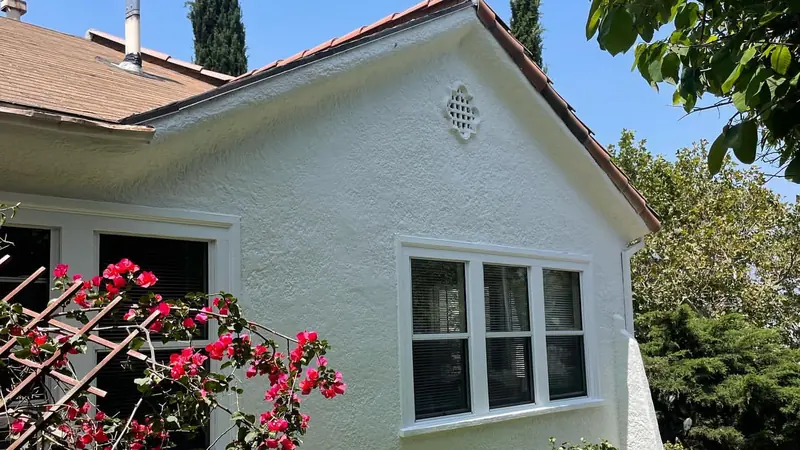
Tract houses from the boom years were built quickly and in volume, and most have likely been repainted several times since. Our exterior house painting washes off chalk and dirt, scrapes and sands failing coats, primes bare spots and caulks gaps at windows and trim. Garage doors, fascia and eaves get the same prep as the walls, since older paint often gives out there first.
Craftsman Siding and Dry Rot Prep in Old Torrance
The city's Craftsman guideline describes clapboard or wood shingle siding, painted or stained, with brick, stucco or river rock at the porch. Many houses on Gramercy and Andreo passed 100 years old in 2012, and wood that age can hide soft spots. During an exterior repaint, our dry rot and trim repair probes siding, sills and rafter tails, fills small soft areas with epoxy and replaces boards that cannot be saved.
Color Consultation Under the Historic Design Guidelines
From October 2022 to June 2026 the city designated ten local landmarks, including properties on Acacia, Andreo and Gramercy avenues, under its 2017 Historic Preservation Plan and Ordinance. Its design guidelines include style sheets from Queen Anne to Ranch. Our color consultation, offered case by case, matches schemes to those style sheets with sample patches; if your house is designated, ask planning staff whether a color change needs review.
Interior Repaints in Tract-Era Houses
In a lived-in tract house, nearly every room tends to be in daily use, so order matters. Our interior house painting moves room by room, covers floors and furniture, and leaves bedrooms usable each night. Reviewers often describe smooth, even coats and walls where old patch marks and uneven tones no longer show.
Permits, Landmarks, Coastal Review and Fire Zones in Torrance
Building permits run through the Community Development Department's Permit Center at 3031 Torrance Boulevard. Applicants start with a Zoning Screening and then file through the Accela Citizen Access portal, and since January 5, 2026 every plan review and permit submittal has to be electronic. Historic work falls under the 2017 ordinance and the Torrance Tract Overlay, and designation needs the owner's written consent and opens the door to Mills Act contracts.
West of Palos Verdes Boulevard lies the coastal zone, where the city has no certified Local Coastal Program and the Coastal Commission reviews permits. The State Fire Marshal's March 24, 2025 maps recommend 56 Moderate, 42 High and 26 Very High acres in the city's local responsibility area, and in those zones California's Wildland-Urban Interface Code (Title 24, Part 7), which replaced CBC Chapter 7A on January 1, 2026, sets the construction rules.