House painting in Palos Verdes Estates starts with paperwork, not a ladder. Deed restrictions filed in 1923 bar any change to the exterior color of a house without approval from the Palos Verdes Homes Association Art Jury, and that review runs separately from anything the city requires.
We have painted homes since 1988 and drive down to the peninsula from Simi Valley to see each house before pricing it. The estimate itemizes every surface we will touch, and the final payment waits for a walkthrough of the finished work with you.
Architectural Districts, Light Tones and Postwar Growth
The Homes Association was founded in 1923, years before the city incorporated in 1939, and its restrictions still sort lots into architectural districts. Type I is Mediterranean-derived California architecture with arched windows, arcades, thick walls and smooth bull-nosed plaster. Type V is a low, rambling California Rancho, and Type VI is horizontal with low or nearly flat roofs.
Those types steer the palette: the handbook calls for colors generally light in tone in Type I and II districts and for pastels in Type VI. Only about 4.6 percent of homes predate 1940. Roughly 32.7 percent went up in the 1950s and 23.8 percent in the 1960s, as the population grew from 1,963 in 1950 to 13,631 in 1970.
The city calls its climate sunny, dry and temperate, with Pacific breezes. The General Plan of neighboring Rancho Palos Verdes notes more fog, low clouds and humidity below the 500 to 700 foot line, so lower lots near the bluffs can stay damp into the morning.
Malaga Cove, La Venta and the Streets Beyond
Malaga Cove Plaza, with its Neptune fountain, is the city's Mediterranean revival centerpiece and sits on the National Register. La Venta Inn, the first building in the city in 1923, takes the form of a Spanish villa, and the 1930 bathhouse of the Palos Verdes Beach and Athletic Club on Malaga Cove is Mediterranean revival as well.
Away from those landmarks the range widens, since the Art Jury has approved Spanish Colonial, Tuscan, French, Craftsman, Ranch and Post and Beam Modern designs. A post-and-beam house shows far more wood than a plaster villa, so its prep leans on sanding and priming trim, beams and siding. We price each house by what it is built from, not by its street.
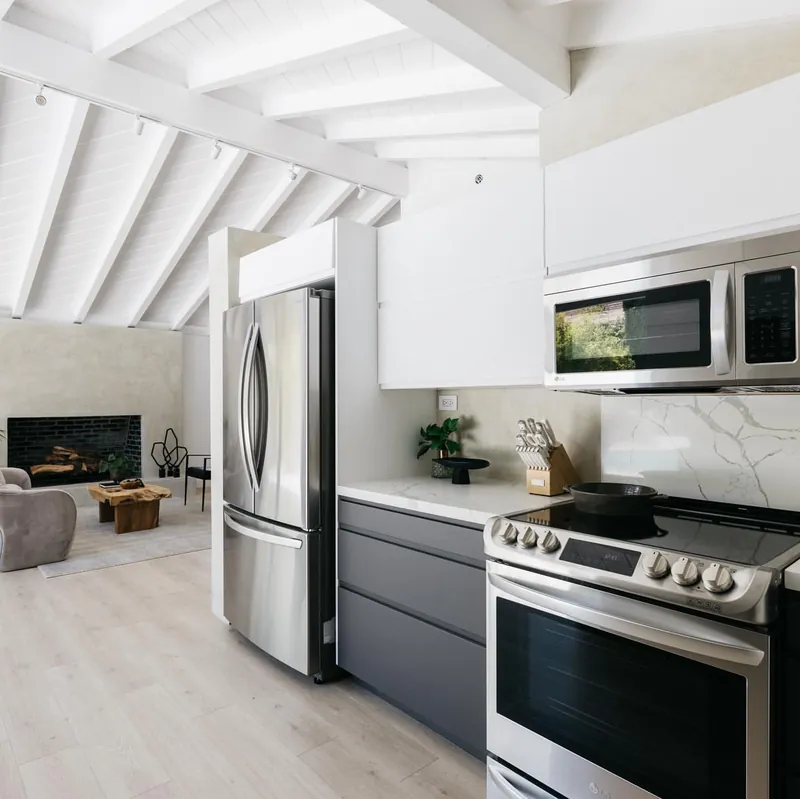
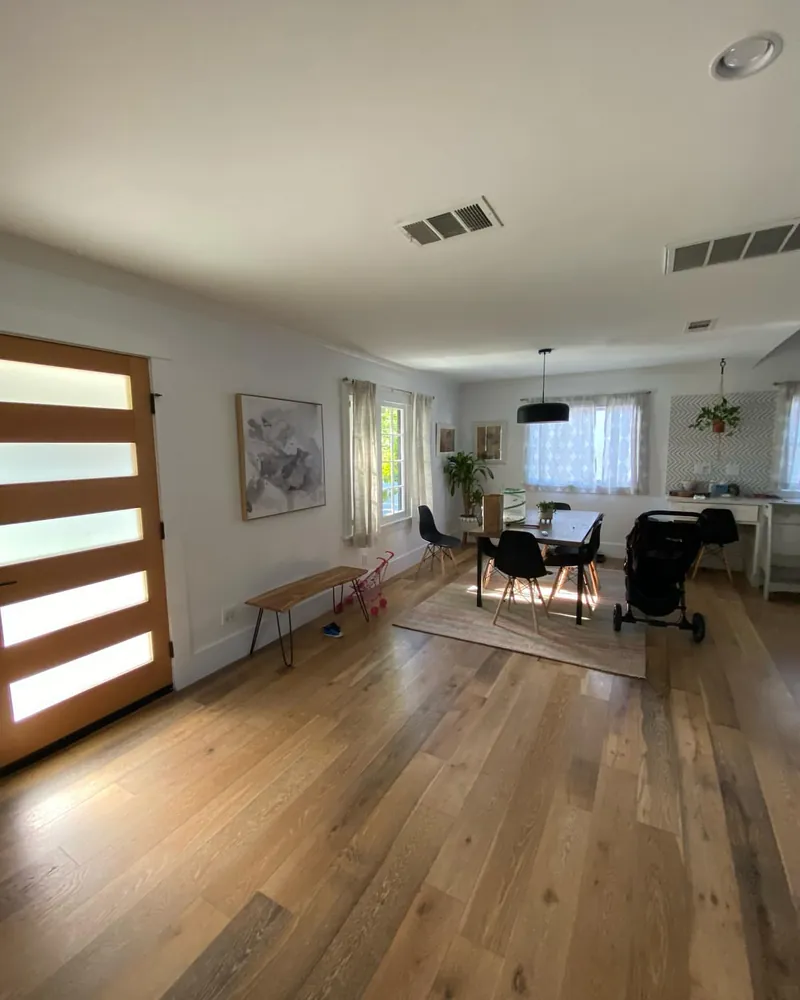
House Painting in Palos Verdes Estates, Approved Before It Starts
Every service starts from your district type and approved colors. Stucco and wood repairs happen only as prep for paint.
Art Jury Color Approval and Color Consultation
The Exterior Colors Application asks for samples of nearly every painted surface, from stucco, stone and chimney to doors, shutters, sash, fascia, eaves, rafter ends, trellis, gutters and downspouts. Our color consultation is available case by case to narrow a scheme that suits your district and organize those samples. Rotating jury members review minor projects every two weeks, and we set a start date once approval is in hand.
Spanish Colonial and Mediterranean Exteriors
Smooth plaster, arcades and rounded arches leave nowhere for an uneven coat to hide. On these houses, our exterior house painting keeps the body color uniform around every curve and cuts a clean line where plaster meets wood trim, doors and shutters. Roof vents are painted to match the roof or the surface beside them, as the Homes Association asks.
Smooth Stucco Painting and Patch Matching
Patches have to land in a texture the Art Jury accepts: fine sand or float, smooth troweled or Santa Barbara. Lace or skip trowel, cat face, worm or swirl and dash finishes sit on its not-permitted list. With stucco repair and painting, we fill hairline cracks, float each patch to the wall around it and prime it so the color reads evenly from the street.
Rafter End and Trellis Dry Rot Prep
Rafter ends, fascia, posts and trellises each get a line on the color application, and they are where exterior wood takes the most weather. As part of the paint job, our dry rot repair probes each exposed piece, fills small soft areas with epoxy and replaces boards that are too far gone. We offer this repair only as preparation for painting, never on its own.
Interior Repaints for 1950s and 1960s Houses
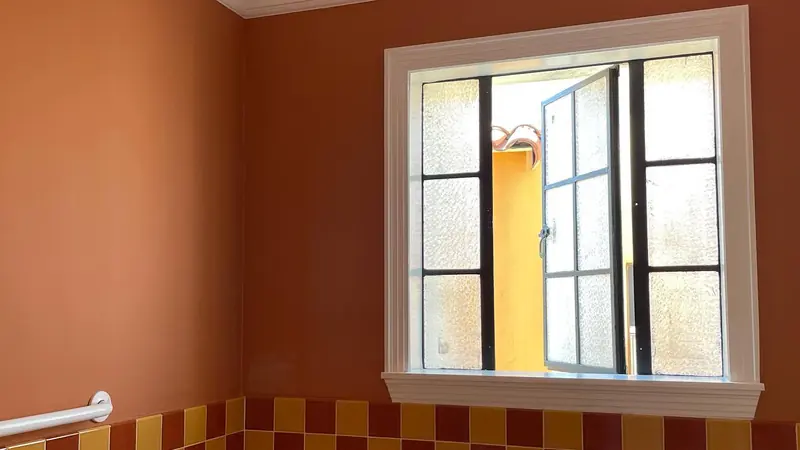
Interior color is not among the exterior changes the Homes Association lists for review, so indoors the palette is yours. Rooms from the city's two busiest building decades have had well over half a century to collect nail pops, settling cracks and old coats. Our interior house painting fills and sands those flaws, spot-primes each repair so it does not flash through, and finishes ceilings, walls, trim and doors.
Homes Association Review, City Permits and Fire Maps
The Homes Association is a private nonprofit, separate from the city, and its Art Jury reviews exterior changes, paint color included, for title holders here and in the original Miraleste area. The city's Department of Building and Safety notes that this approval is also required for most projects.
The State Fire Marshal's March 2025 recommended maps place 1,085 acres of the city in a Very High Fire Hazard Severity Zone, down from 3,052 on the 2011 map. Building work in mapped zones falls under California's Wildland-Urban Interface Code (Title 24, Part 7), which replaced CBC Chapter 7A on January 1, 2026. LA County's notes on that code say paints, coatings and stains are not an approved protection method, so we never sell paint as fire protection.