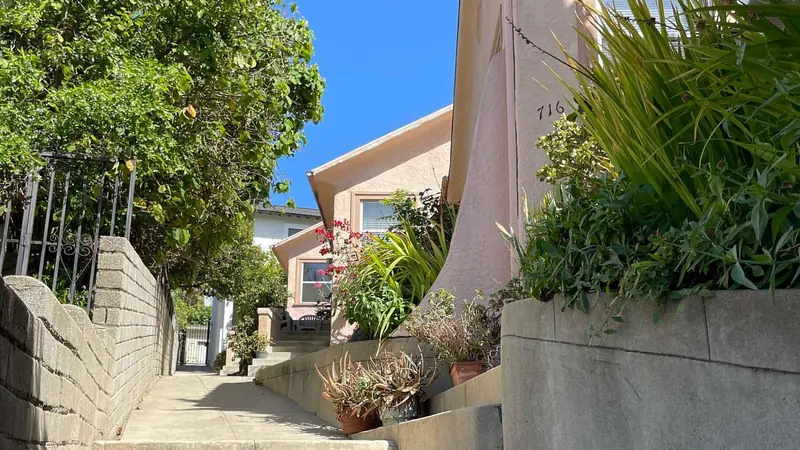
House painting in Norwalk mostly means working on houses from a single decade: 51.7 percent were built in the 1950s, and 79.2 percent before 1970. With a median build year of 1957, many walls and eaves have taken close to 70 years of sun.
We have painted homes since 1988 and come out from Simi Valley to look at the whole house before pricing it. The written estimate breaks out every prep step by surface, and you settle the final balance only after a walkthrough of the finished job.
Sugar Beets, the 1933 Earthquake and the Miracle City Years
Norwalk began as part of Rancho Los Nietos, and by about 1900 dairy and sugar beets were its main products, grown on some of the largest beet farms in Southern California. The railroad arrived in 1873, and Front Street grew into the town's first commercial core.
The Long Beach earthquake of March 10, 1933, destroyed much of that historic core, and business moved from Front Street to Firestone Boulevard. Two Victorian houses older than the quake, from 1870 and 1891, still stand today as museums. Shaking returned in 1987, when USGS instruments at a seven-story building on Imperial Highway recorded a peak ground acceleration of 0.21 g during the Whittier Narrows earthquake.
Then came the boom. The town grew fast between 1948 and 1950, the Norwalk Manor subdivision went up from 1947 to 1949, and a 1950 newspaper called Norwalk the "Miracle City" of Southern California. The city incorporated in 1957, the same year as its median home.
The basin climate is semi-arid, with mild winters and warm summers broken now and then by extreme heat, winter storms or Santa Ana winds. A shallow marine layer keeps the air moist, and a Whittier rain gauge about six miles northeast averages about 13 inches a year, with February the wettest month.
Norwalk Manor, Norwalk Hills, Studebaker and the Museum Houses
The original Norwalk Manor subdivision of 1947 to 1949 is distinct from today's Norwalk Manor neighborhood in the southeast. Other commonly listed areas include Norwalk Hills and Studebaker in the north, Carmenita and South Norwalk in the south, and the Civic Center in the middle. Across all of them, prep depends more on each house's upkeep history than on the neighborhood name.
To see how far back Norwalk's housing goes, visit the Sproul Museum in Norwalk Park, an 1870 farmhouse with Stick Style influences that was moved there in 1962, and the Hargitt House Museum, an 1891 Eastlake Victorian. The 1954 Norwalk Town Square sign and Little Lake Cemetery, founded in 1843 on the Santa Fe Springs border, mark other points on the timeline.
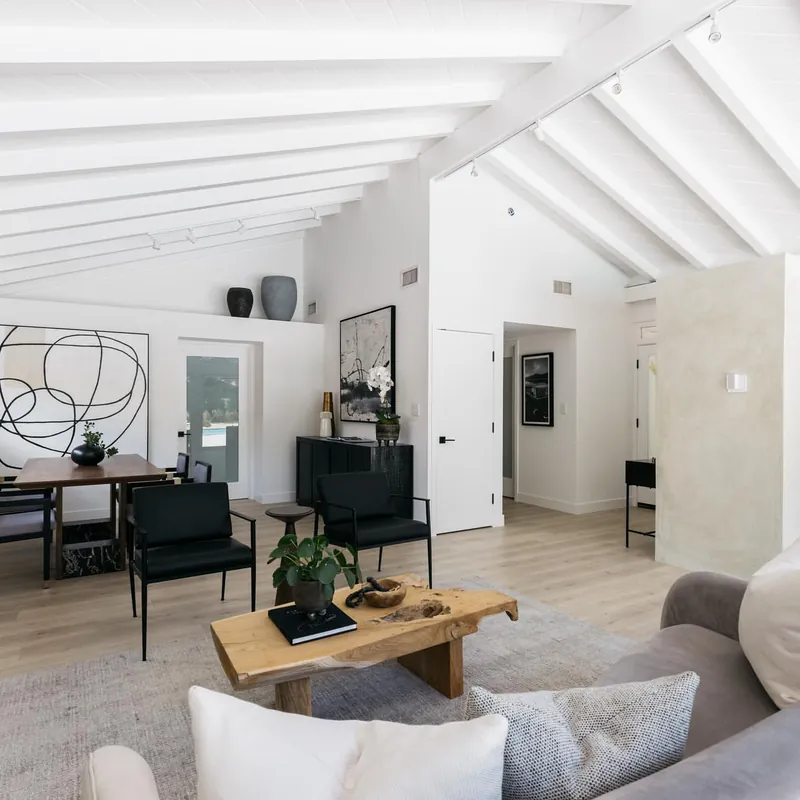
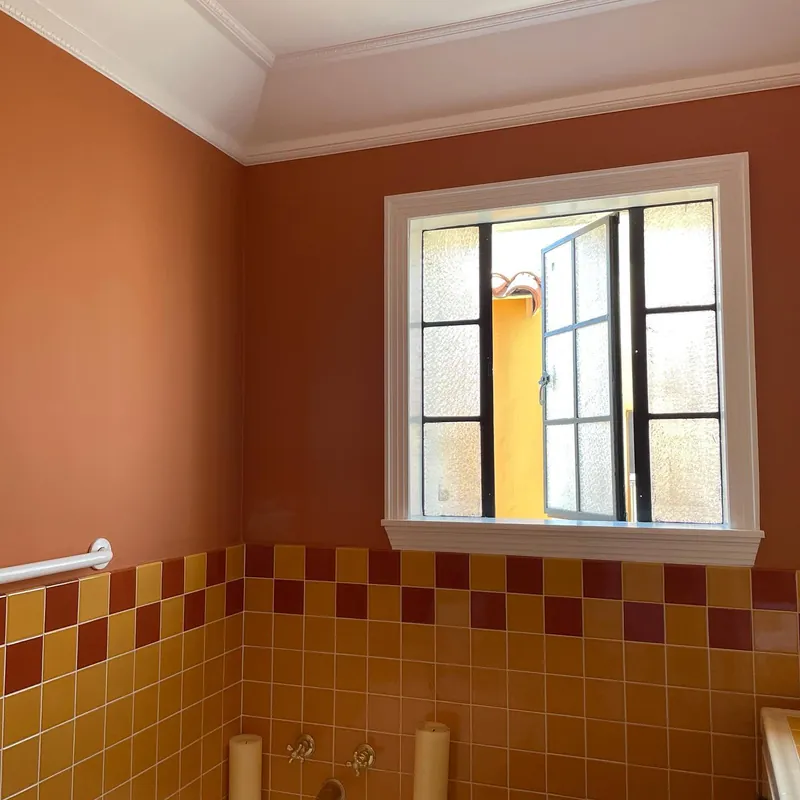 After
House Painting in Norwalk for Postwar Walls, Eaves and Ceilings
Four services cover most of what these postwar houses need. Repairs are priced inside the painting, never as separate jobs.
Exterior Repaints for 1950s Boom-Era Houses
Houses put up quickly between 1948 and the late 1950s often show their age the same ways: chalking walls, cracked caulk at windows and paint lifting on the sunniest sides. We wash, scrape, sand and spot-prime, then recaulk before the finish coats. Our exterior house painting also covers doors, shutters and garage doors, and on the basin's occasional very hot days we move to shaded elevations.
Stucco Patching After Decades of Settling
A geotechnical study for the Transit Village site near Imperial Highway placed the Puente Hills fault half a mile away and the Whittier fault 5.4 miles off. Shaking and settling leave their mark on stucco over the years. Our stucco repair and painting opens each crack, fills it with a flexible patch, blends the texture and then applies elastomeric coating where cracks keep moving or breathable acrylic where walls have stabilized.
Fascia and Trim Dry Rot Repair
Where a 1950s house has wood fascia, rafter tails or window trim, those boards have absorbed winter rain for decades, and rot usually starts where paint cracked and water sat. We probe suspect wood, fill sound sections with epoxy and replace soft pieces to match the existing profile. Our dry rot repair is done only to prepare those surfaces for paint, as part of the exterior job.
Popcorn Ceiling Removal in Postwar Interiors
California's Contractors State License Board warns that many buildings built or remodeled from 1945 to 1978 may contain asbestos in sprayed ceiling material, a window that covers most of Norwalk's houses. So the ceiling is lab tested before anyone scrapes it, and a positive result goes to a certified asbestos contractor. If it tests clear, our popcorn ceiling removal wets and scrapes the texture, skims and primes the surface, and the ceiling is painted with the room.
Norwalk Permits, Inspections and Preservation Policy
Norwalk's Building & Safety Division, in Room 12 of City Hall, requires permits to build, alter, repair, move or demolish a building, along with most plumbing, mechanical and electrical work. Inspectors visit at set stages, and the Citizen Access Portal handles inspection requests and certain permits; call (562) 929-5733 to confirm counter hours.
The permit information we reviewed does not single out repainting, so check with the division if your project adds stucco replacement or new wood. Norwalk has no historic preservation ordinance; its General Plan simply encourages preserving the city's cultural heritage. No fire hazard zone acres are mapped here, so California's Wildland-Urban Interface Code (Title 24, Part 7), which replaced CBC Chapter 7A on January 1, 2026, has little to say about a Norwalk repaint.