Three residential historic districts shape much of the house painting in Pomona: Lincoln Park, Wilton Heights and Hacienda Park together hold 1,608 properties, from Victorian-era houses near Holt Avenue to postwar homes west of Garey Avenue. Citywide, 59 percent of homes were built before 1970, and 13.3 percent before 1940.
Painting a historic house here needs no city process, because Pomona's preservation guide leaves paint unregulated. That leaves the palette, and the prep, to the owner and the painter. We have painted homes since 1988 and drive in from Simi Valley to walk each house before writing an itemized estimate.
Citrus-Belt Houses in a Hot Inland Valley
By the 1880s, water and rail access had made Pomona the western anchor of the citrus belt, and in the 1920s it was called the Queen of the Citrus Belt. Homes from those decades still stand in the districts, while the 1950s alone produced 24.2 percent of today's housing.
The NOAA station at Fairplex logs about 70 days a year at 90°F or warmer and nearly 11 at 100°F or more, with August highs averaging 92.4°F and a record of 117°F. Paint spread on a hot wall dries before it can level, so we follow the shade around each house and start sunny elevations early.
The city's preservation guide notes that smooth plaster was the usual stucco finish before World War II and sand finish afterward. It also warns that many wood-sided houses were stuccoed over in the 1950s and 1960s, often right over the siding, which can trap moisture. Fall Santa Ana winds from the northeast add dust, which we wipe away between coats.
Lincoln Park, Wilton Heights, Hacienda Park and Phillips Ranch
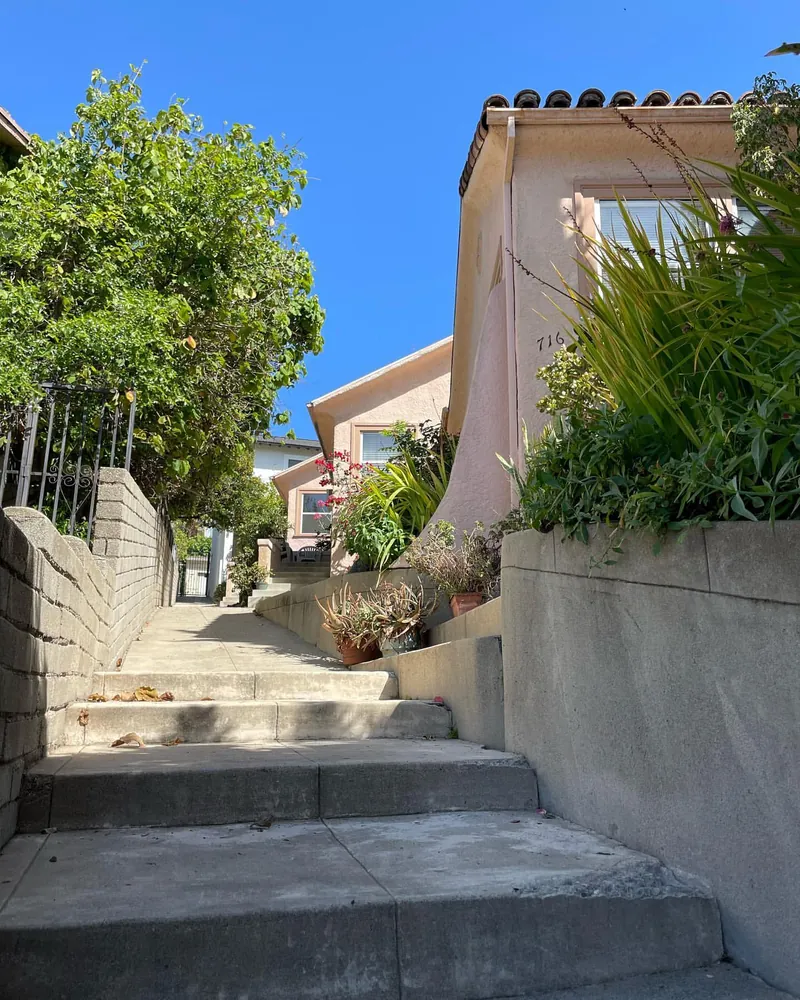
Lincoln Park, designated in 1998 and named for the 1910 park at its center, is Pomona's first and largest residential district, with 802 properties between Garey and Towne avenues. Near Holt Avenue its blocks hold Victorian-era, transitional and early Craftsman bungalow homes, giving way to Craftsman and Revival styles farther north.
Wilton Heights, with 534 properties from the late 1800s to the 1950s, has the most eclectic mix of any district. Hacienda Park counts 272 properties, among them La Casa Primera, one of the city's oldest homes, plus the largest group of post-World War II houses in any district. In the hills toward Diamond Bar, Phillips Ranch has grown since the 1980s and calls for a newer-home approach.
House Painting Services for Pomona's Historic and Postwar Homes
Each service below answers something specific about Pomona houses, from their age to their stucco history. We combine them as needed.
Victorian and Craftsman Exteriors in Lincoln Park
Where a Lincoln Park Victorian or Craftsman house keeps its wood siding and trim, the work is patient and mostly by hand. We wash, scrape to sound paint, sand edges smooth, fill open joints with flexible caulk and prime raw wood before the finish coats. Detail colors are cut in by brush so every band of trim stays crisp. Our exterior house painting also covers porches, railings and front doors.
Period Color Consultation Using the City's Style Guide
Although the city leaves color alone, Chapter 2 of Preserving Pomona lists palettes suited to each architectural style, a handy starting point for any older house. We can fold those suggestions into a color consultation, offered case by case, and test body, trim and accent samples on your walls. Viewing them in morning and late-day light prevents surprises later.
Smooth and Sand-Finish Stucco Repair
Pomona's guidelines ask that historic stucco be repaired or patched before anyone considers replacing it, and that patches match the existing finish. On a prewar house that usually means smooth plaster, and on a postwar one a sand texture. Our stucco repair and painting fills cracks, blends each patch into the wall around it and then coats the surface, choosing elastomeric or breathable acrylic by how the wall behaves.
Dry Rot Repair Where Stucco Covers Old Siding
Stucco laid over original wood siding can hold moisture against the boards, and window trim, fascia and door frames are common places for the damage to surface. Before painting, we probe soft spots, fill sound wood with epoxy and replace pieces too far gone, matching their profiles. Our dry rot and trim repair is done only as preparation within a paint job.
Interior Painting for Postwar Pomona Homes
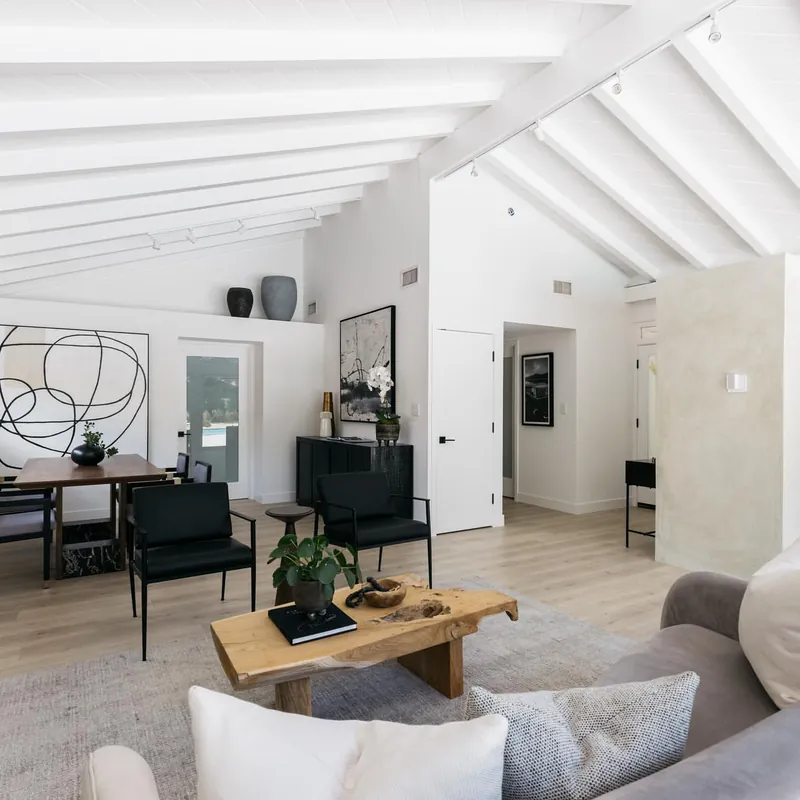
Hacienda Park holds the largest share of postwar houses among the districts, and about 31 percent of the city's homes date from the 1940s and 1950s. Walls of that age often carry old patches and settling cracks. We repair those flaws, prime each patch and lay down even coats on walls, ceilings, doors and baseboards. Our interior house painting moves room by room so the rest of the house stays livable.
Pomona Permits and Historic District Approvals
Building and Safety works out of City Hall at 505 S. Garey Avenue, and city offices close on Fridays. In the historic districts, exterior alterations such as changes to architectural details, fences and walls need a Minor or Major Certificate of Appropriateness unless a property is exempt.
Paint sits outside that process, but replacing trim, siding or a stucco section during prep may not, so check with Planning before work that goes beyond surface repair. Where a parcel falls in a mapped fire hazard zone, building work follows California's Wildland-Urban Interface Code, Title 24, Part 7, which succeeded CBC Chapter 7A on January 1, 2026. Pomona's 2025 recommended map shows 1,682 acres in High and 24 in Very High.