Emergency roof repair in Camarillo usually starts with one of two things: a winter storm that finds a weak spot, or Santa Ana winds that peel shingles and knock tiles loose. If water is coming into the house, call us during business hours and we put active leaks at the front of the line.
Our first job is to stop more water from getting in with a tarp, a sealed patch or temporary flashing. Our second job is to photograph everything, so you have a clear record of the damage before any permanent repair is scheduled.
What Emergency Roof Service Includes
It starts with phone triage: tell us where water is coming in and how fast, and we will help you protect the room while we schedule the visit.
Tarping Damaged Areas
Heavy tarps go over the damaged area and are secured so wind cannot get under them. Where we can, the tarp runs past the damage and over the ridge so water sheds across it instead of underneath, and we clear loose shingles, broken tile pieces and debris that could blow off.
Temporary Sealing and Flashing
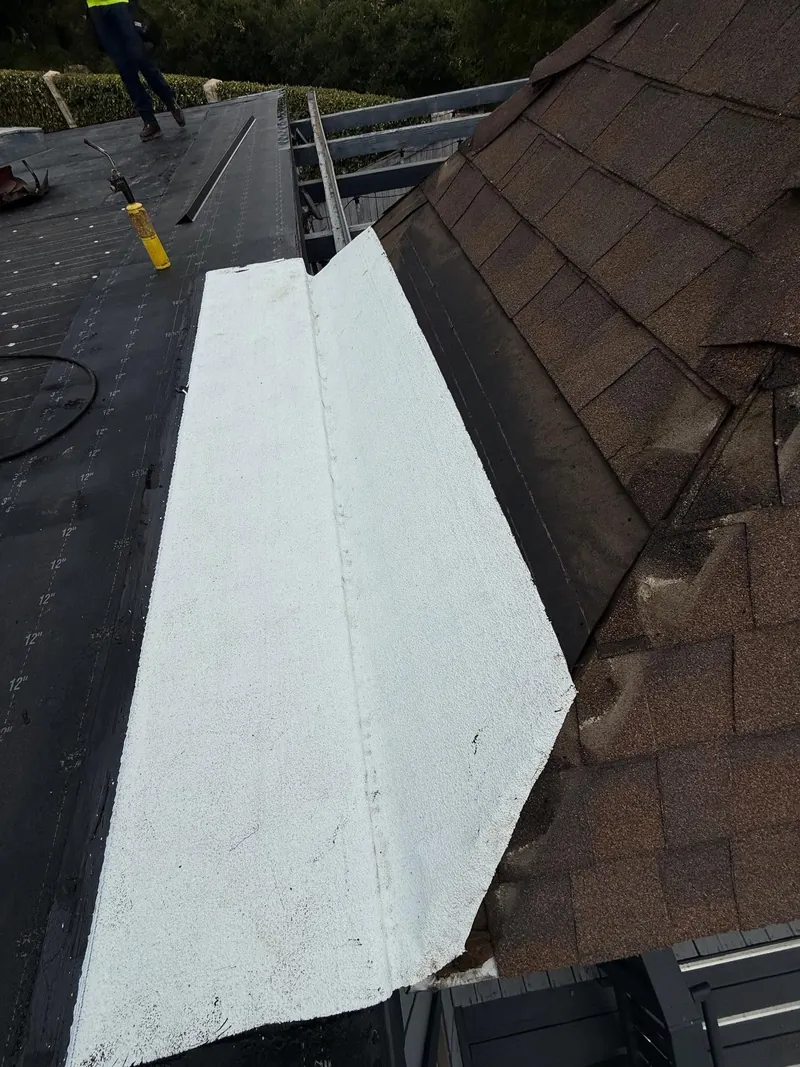
Small openings, lifted flashing and nail holes get sealant or temporary flashing to stop the drip. Peeled-back metal at a wall or chimney is covered until new flashing can be fabricated, which keeps wind-driven rain out of that joint in the meantime.
Photo Records and Written Findings
We photograph the roof and interior stains before touching anything, then photograph the temporary fix. A written summary follows, covering what failed, what we did and what the permanent repair involves.
When a Roof Problem Can't Wait
Call right away if you see any of these:
- Water dripping from a ceiling, light fixture or skylight
- A ceiling that is bulging or sagging with water
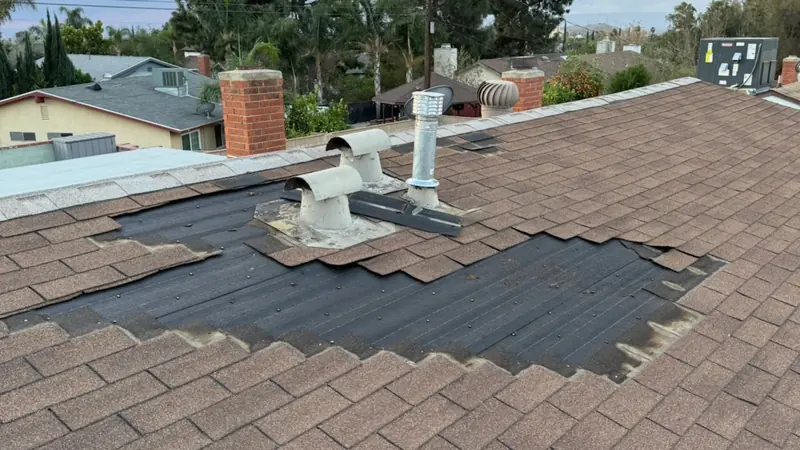
- Bare underlayment or decking where shingles or tiles blew off
- Flashing peeled back at a wall or chimney after high wind
- A tree limb on the roof
While you wait, move valuables, catch water with buckets and keep people out from under a sagging ceiling. Turn off power to any wet light fixture at the breaker, and please do not climb onto a wet or wind-damaged roof.
 During
How Emergency Roof Repair in Camarillo Works
- Call during business hours. Active leaks go to the top of our list.
- Make it safe. We tarp or seal the damaged area to stop more water getting in.
- Document. Photos of the damage, the temporary fix and the interior.
- Inspect the rest. Wind often loosens more than the obvious spot, so we check the whole roof.
- Propose the permanent repair. A written, itemized scope and price.
- Repair and close out. The permanent fix, cleanup and a final photo set.
Temporary Fixes vs. Permanent Repairs
| Fix | What it does | Meant for |
|---|---|---|
| Roof tarp | Covers a damaged area and sheds water past it | Bridging the gap until the permanent repair |
| Sealant patch | Closes small gaps at flashing, nails and cracked tiles | Stopping a drip in the short term |
| Temporary flashing | Covers lifted metal at walls and chimneys | Holding until new flashing is fabricated |
| Permanent repair | Replaces shingles, tiles, underlayment or flashing to code | The actual fix |
A tarp buys time; it is not a repair. Sun and wind wear tarps out, and water can travel under them if they shift. We schedule the permanent work as soon as materials are available, which matters most on tile roofs, where matching pieces can take time to find. See tile roof repair.
What Affects the Cost of an Emergency Repair
- Size of the damaged area. One lifted flashing is very different from a whole slope of missing shingles.
- Roof type. Tile roofs take more care to walk without breaking more tiles.
- Height and pitch. Two-story and steep roofs need more safety setup.
- Wet materials. Soaked underlayment or decking has to be replaced, not covered.
- Matching. Discontinued shingles or tiles may require sourcing or substitutes.
On any emergency roof repair in Camarillo, we price the temporary fix and the permanent repair separately, so you can see what each one costs.
Santa Ana Wind and Storm Damage Around Camarillo
Santa Ana winds are strong, dry winds that descend toward the coast from the inland deserts, most often in autumn. They lift shingle edges, crack ridge caps and slide tiles out of place. Camarillo's rain then arrives mostly between December and March, so damage from a fall wind event often shows up as a leak during the first storm.
Clay and concrete tile roofs are common across Ventura County, and a single slipped tile can leave underlayment exposed. A free roof inspection after a big wind event catches it early.