Wood shake roof replacement in Camarillo is often driven by more than worn shakes. California's Safer from Wildfires insurance standard counts most roof types as Class A but names wood shake as one that does not qualify, and homes in mapped fire hazard zones face Class A rules when they reroof.
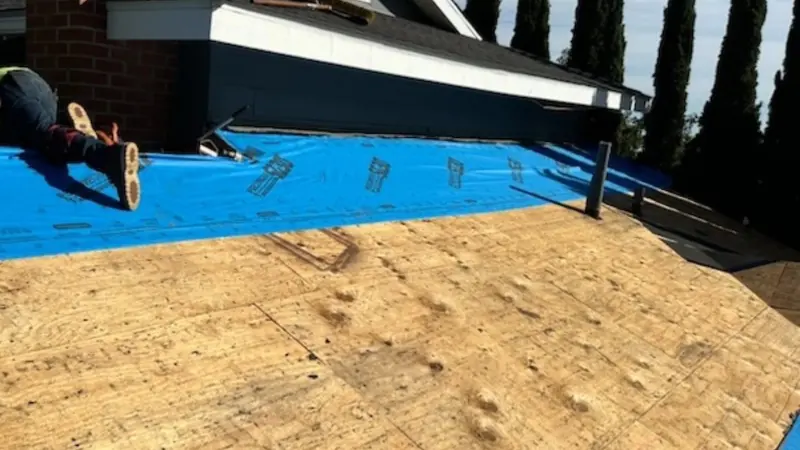
Best Top Roofing replaces shake roofs on houses with Class A materials that keep a textured, layered look. We photograph the old sheathing as it comes off, because shake roofs are often built over spaced boards that most replacement materials cannot use as they are.
What Our Shake Roof Replacement Covers
- Shake removal. Old shakes, felt interlayment and fasteners come off and are hauled away.
- Underlayment. The product required for your new roof's Class A listing, photographed before it is covered.
- Vents and edges. Ember-resistant vents, drip edge and rake trim sized for the new material.
- Valleys and flashing. New valley metal and flashing at walls, chimneys and skylights.
- Cleanup. Shake jobs leave a lot of debris and nails, so we protect landscaping and run a magnetic sweep.
Solid Sheathing Over Spaced Boards
Shake roofs are often nailed to spaced boards with gaps between them, which let the wood breathe but give most replacement materials nothing solid to fasten to. Asphalt shingles and tile need wood structural panels or solid lumber sheathing, so we install new panels over or in place of the old boards and photograph the deck before anything covers it.
Signs Your Shake Roof Has Reached Its Limit
- Shakes that are split, cupped, curled or thin enough to show felt between courses
- Moss, rot or soft spots, especially on shaded slopes
- Pieces of shake in the yard after a windy day
- Leaves and debris lodged between shakes and in valleys
- Ceiling stains, or daylight visible from the attic
- Your insurer asking about roof material at renewal
A small area of storm damage can sometimes be handled as a roof repair, but in a fire hazard zone any new covering applied in a repair must be Class A, which limits patching with new shake.
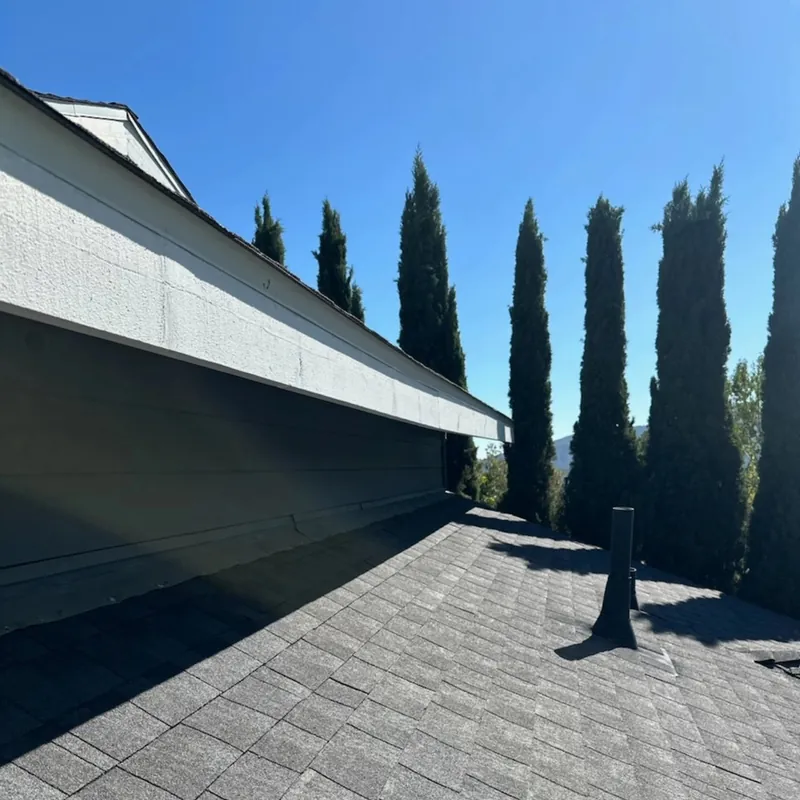 After
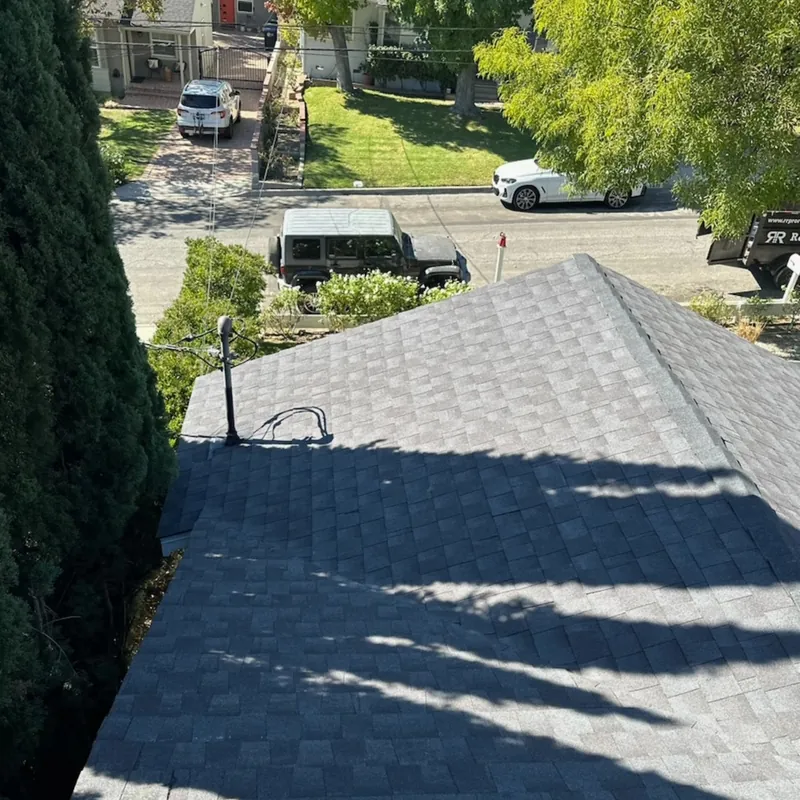 After
Our Wood Shake Roof Replacement in Camarillo, Step by Step
- Free inspection. We photograph the shakes, the attic side of the sheathing and any leaks.
- Pitch and structure check. We measure slope and look at framing, especially if you are considering concrete tile.
- Material choice. You compare samples of shake-look options side by side.
- Proposal and permit. An itemized scope, then the permit and any HOA submittal.
- Tear-off and sheathing. Shakes come off, new panels go on, and both stages are photographed.
- New roof. Underlayment, flashing, vents and the new covering, installed to its Class A listing.
- Closeout. Cleanup, nail sweep, permit final and your photo file.
Class A Replacements That Keep a Shake Look
Each option below can be installed as a Class A assembly while keeping a textured, layered look from the street.
Composite Shake
Composite shake is molded into tapered, irregular pieces that imitate split wood, and it is light enough that framing built for shake rarely needs work. Before we specify a product, we confirm that its listing shows a Class A assembly and install the underlayment that listing names.
Stone-Coated Steel Shake
Steel panels are pressed into a shake profile and finished with stone chips, so the roof reads as traditional from the ground. The steel is noncombustible and light, homes near the coast need the right coating, and we match fasteners to the panel metal.
Concrete Shake Tile
Flat concrete tile with a split-wood texture gives the most uniform version of the look. It is far heavier than wood shake, so we check the rafters before recommending it and may suggest an engineer's review.
Architectural Shingles
Dimensional asphalt shingles are the least shake-like choice but often the simplest swap, and they carry a Class A rating as a listed assembly.
Fire-retardant-treated shakes exist, but they must be listed by the State Fire Marshal and installed as a Class A assembly, and the Safer from Wildfires standard still lists wood shake as not qualifying. More on materials: fire-resistant Class A roofing and tile roofing.
What Affects the Price of Replacing a Shake Roof
- Sheathing. Converting spaced boards to a solid deck can be a significant line item.
- Material. Composite shake, stone-coated steel, concrete tile and shingles all price differently.
- Structure. Concrete tile may call for an engineer's review and framing upgrades.
- Fire zone items. Vents, eave protection, valley metal and gutters required in hazard zones.
- Roof size and shape. Steep pitches, dormers and multiple valleys add labor.
- Disposal. Shake tear-off produces bulky debris.
Every proposal for wood shake roof replacement in Camarillo that we write separates required code items from optional upgrades.
Shake Roofs in Camarillo: Local Factors
Shake roofs here sit in a region with recent fire history. The 2024 Mountain Fire was driven by wind into the Camarillo Heights and Camarillo Estates areas, and CAL FIRE's 2025 map update rated more than 88,000 acres of Ventura County as very high fire hazard. If your home is in a mapped zone, a reroof has to meet Class A requirements.
Many neighborhoods also have HOA rules on roof appearance. We bring samples and product data so the shake-look option you choose can go through architectural review before anything is ordered.