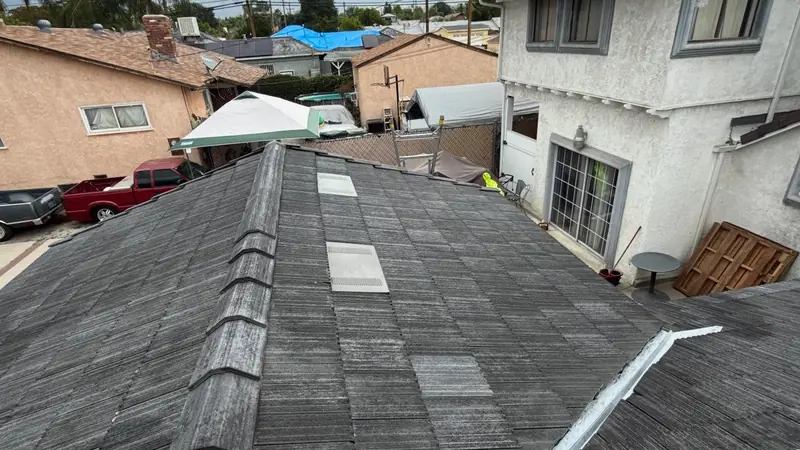
Tile roof repair in Camarillo is mostly about catching small failures early: a cracked tile over a valley, a row that slipped after a Santa Ana wind, a ridge cap with crumbling mortar, or flashing rusting out at a wall. Fixed while they are small, these problems rarely turn into ceiling damage.
Tile is hard to break from above and easy to break underfoot, and older profiles can be hard to match. Good repair work comes down to three things: walking the roof correctly, finding replacement pieces that fit, and fixing the underlayment and flashing beneath, not just the tile you can see.
Tile Repairs We Take On
Our tile roof repair in Camarillo covers both clay and concrete tile.
Cracked and Slipped Tiles
Chipped, cracked and broken tiles get replaced, and tiles that slid out of line because a nail or clip failed are re-set on new corrosion-resistant fasteners. While each one is out, we check the underlayment it was protecting. Eave closures and bird stops at the first row are repaired on the same visit.
Ridge and Hip Caps
Ridge and hip lines are the high points the wind hits first, and on older roofs the mortar holding them cracks and falls away. We remove loose caps, rebuild the attachment beneath them and reset each piece in line with the rest of the run, replacing broken caps with matched tile.
Flashing Leaks on Tile Roofs
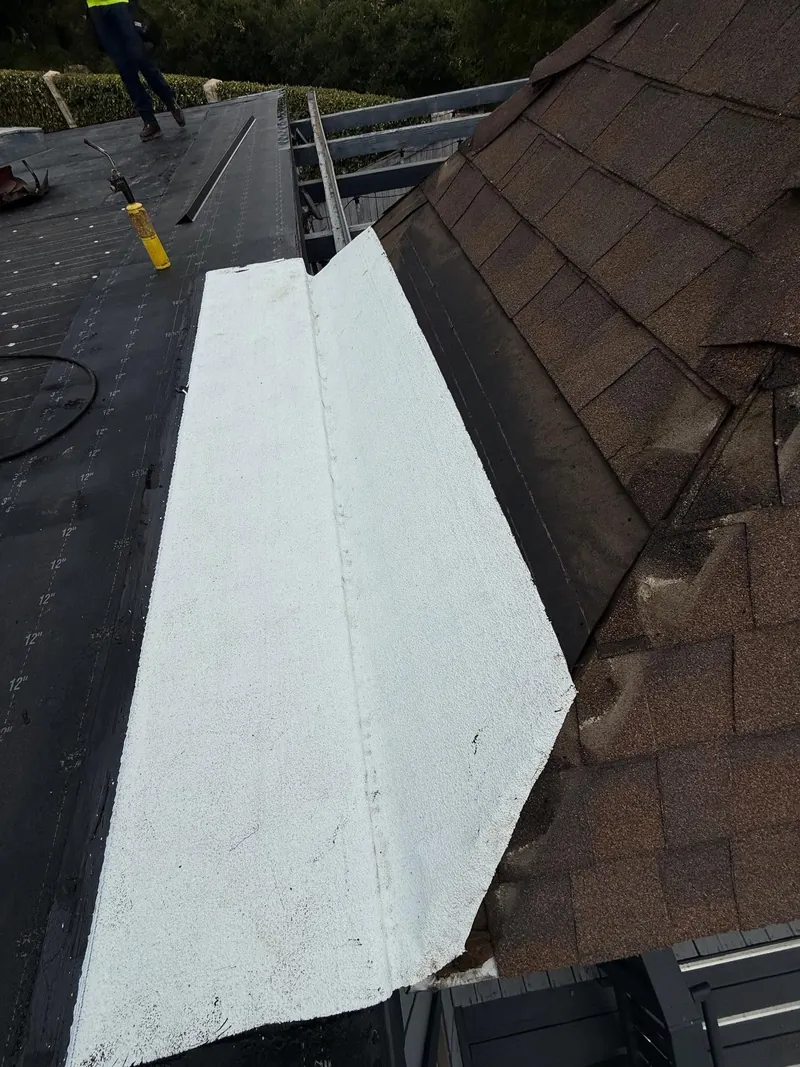
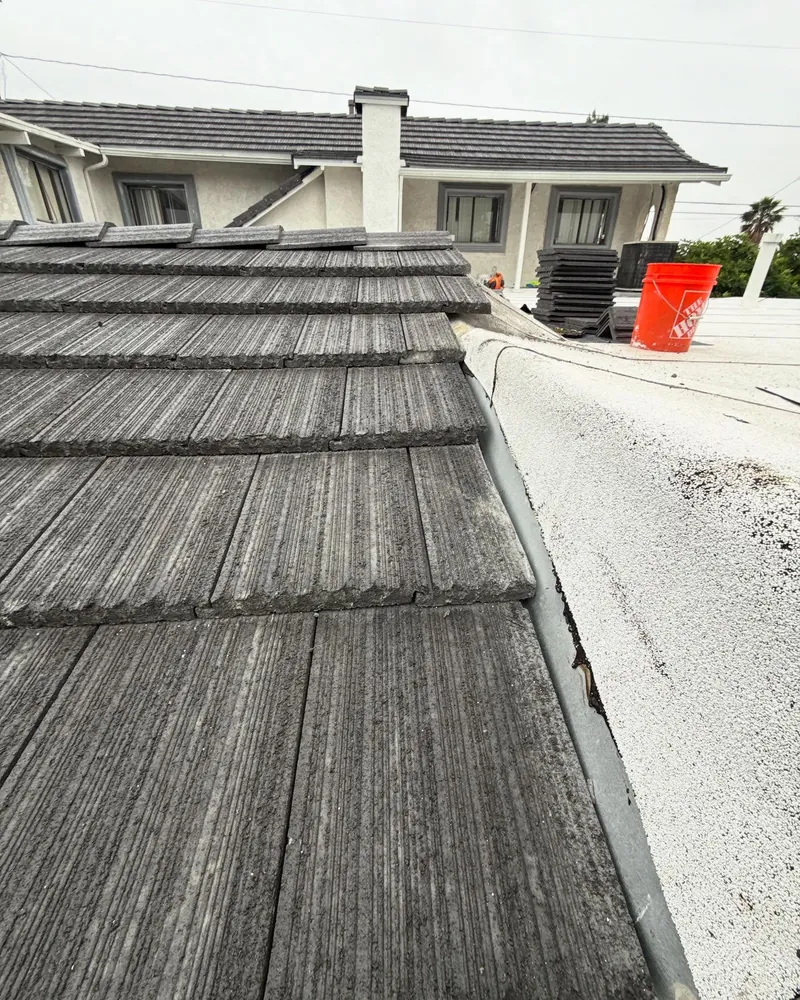
Walls, chimneys, skylights, valleys and vents are where tile roofs usually leak, because that is where metal flashing has to carry water past a joint. We lift the surrounding tile, replace rusted or misshapen flashing, patch the underlayment at the leak and relay the tile over the new metal.
If the underlayment is worn out across a large area, spot repairs will not hold. In that case we show you photos and explain tile underlayment replacement as the longer-term fix.
Clues That a Tile Roof Needs Repair
- Pieces of tile in the gutters, flower beds or driveway
- A row that looks out of line when you view the roof from the street
- Gaps or crumbling mortar along ridges and hips
- Rust streaks running down from flashing
- Stains on a ceiling below a valley, chimney or skylight
- Dark, torn underlayment showing where a tile has slipped
A cracked tile does not always leak right away, because the underlayment below is the backup layer. Once that layer is exposed to sun and rain, though, it breaks down quickly, so a broken tile is worth replacing before the rainy season.
How We Repair a Tile Roof
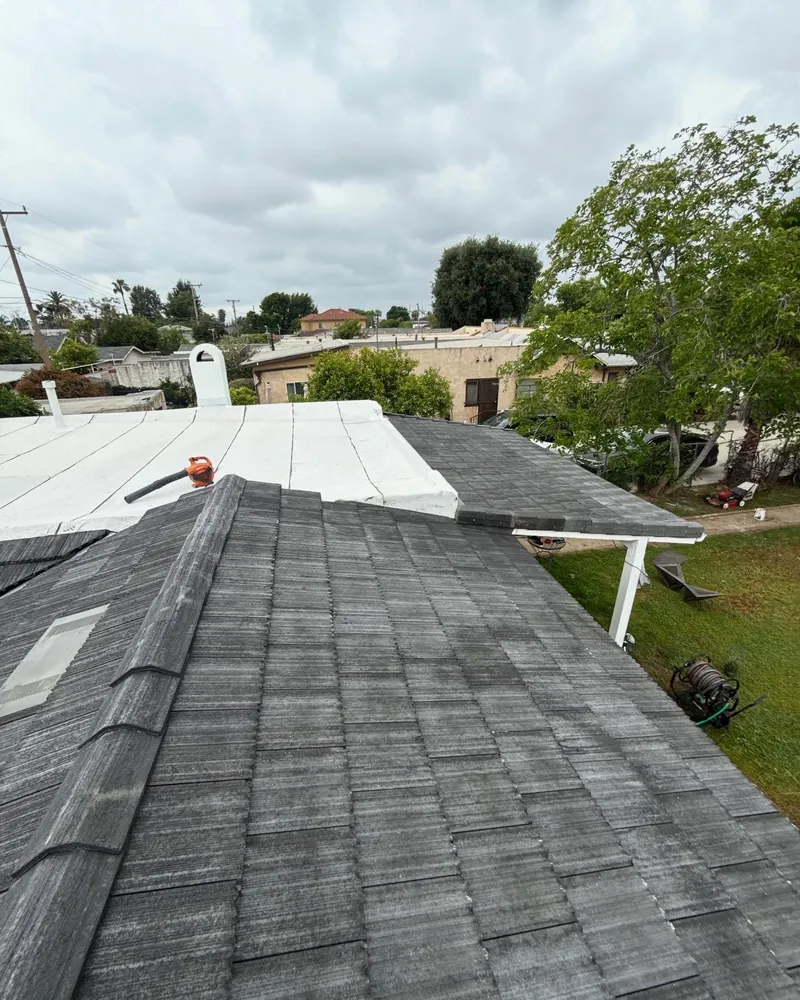
- Inspect and photograph. Including any tiles already cracked before we step on the roof.
- Walk it the right way. We step where tiles overlap and are supported by the course below, never on the unsupported crown, and use pads where needed.
- Lift and look underneath. Surrounding tiles come up so we can check the underlayment, battens and fasteners.
- Repair the layers below. Underlayment patched and flashing replaced where needed.
- Set matching tile. Salvaged or new pieces fastened with corrosion-resistant nails or clips.
- Finish ridges and hips. Reset and secured to match the profile.
- Photo closeout. Before and after shots of each repair area.
Matching Older or Discontinued Tile
Many tile profiles and colors on older homes are no longer made. Here is how we approach a match, from closest to most practical:
| Option | How it works | Best for |
|---|---|---|
| Salvage from your own roof | Pull sound tiles from a hidden area, such as behind a chimney or on a back slope, use them in visible spots, and fill the hidden area with the closest new tile | Repairs on the street-facing side |
| Reclaimed tile | Used tile from salvage suppliers, matched by profile, size and color | Discontinued clay profiles |
| Closest current tile | New tile in the same profile, blended so the color difference reads as natural variation | Back slopes and larger areas |
Salvaged tile has to pass inspection too. California's reroofing rules allow existing clay and concrete tile to be reinstalled, but not damaged, cracked or broken pieces, so every reused tile gets checked.
What Changes the Price of a Tile Repair
- Number of tiles and locations. Ten tiles in one spot is faster than ten scattered across the roof.
- Tile availability. Current production tile usually costs less than tracking down reclaimed pieces.
- Ridge and hip length. Longer runs take more time and material.
- Flashing work. Chimney and skylight flashing take more time than a vent.
- Damage underneath. Worn underlayment or soft decking adds scope.
- Height and pitch. Steeper, taller roofs need more safety setup.
The inspection is free, and the written proposal lists each repair separately so you can decide what to do now and what can wait.
Tile Roof Repair in Camarillo: Wind, Salt and Older Profiles
Santa Ana winds blow through Camarillo mostly in fall and winter, and they find the weak points on tile roofs first: perimeter tiles, ridge caps and hips. After a strong wind event, a look from the ground for displaced tiles can prevent a leak in the next storm.
Closer to the ocean in Oxnard, Port Hueneme and Ventura, salt air corrodes older nails and flashing, so a tile that looks fine may be held by a fastener that has rusted through. California code calls for corrosion-resistant nails on tile roofs, and that is what we use on every tile roof repair in Camarillo and along the coast.