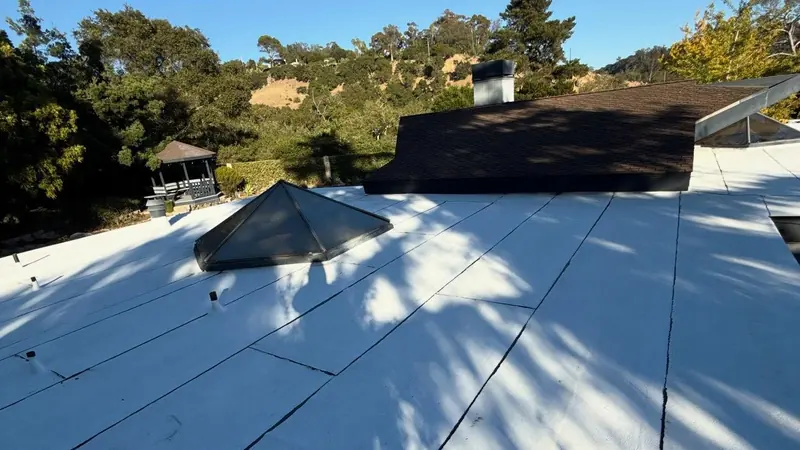
Flat roof repair and replacement in Camarillo usually means a low-slope section on a house: a patio cover tied into the main roof, a family-room addition, a garage or a porch. These roofs are not truly flat, and when they lose their slope or their seams open, water sits and finds a way in.
Best Top Roofing works on residential low-slope roofs only. We find out why the roof is failing, photograph it, and tell you in writing whether a repair will hold or the membrane needs to come off.
What Our Low-Slope Roof Work Covers
- Membrane repairs. Patching open seams, blisters and punctures when the rest of the membrane is sound.
- Full replacement. Tear-off to the deck, replacement of wet or rotted sheathing and a new membrane system.
- Edges and outlets. New edge metal, scuppers, drains and the gutters they feed when the roof is replaced.
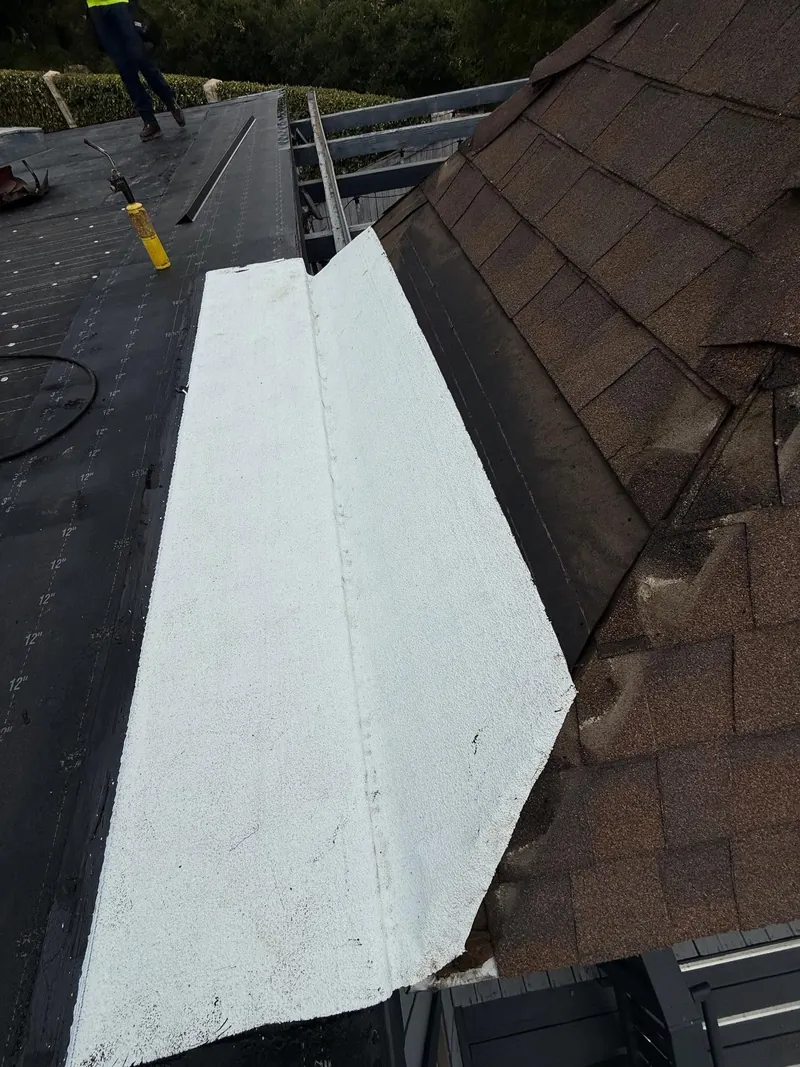
- Wall and curb flashing. Proper flashing where the roof meets walls, skylights and equipment curbs.
Ponding Water and Drainage Corrections
Water left standing on a low-slope roof wears down the membrane and works its way into every weak seam. We fix the cause rather than the symptom, using crickets, tapered insulation or re-sloped framing to move water toward the outlets, and we clear or replace scuppers and drains that have been holding it back.
Patio Cover and Addition Tie-Ins
The joint where a patio cover, family-room addition or porch roof meets the main pitched roof is a common leak point, so we check seams, penetrations and that tie-in first. When we replace the low-slope section, the new membrane is lapped under the roofing above it and flashed so water runs onto it rather than behind it.
Warning Signs on a Flat or Low-Slope Roof
The National Roofing Contractors Association defines ponding as water that stays on a roof more than 48 hours after rain under drying conditions. If you see standing water two days after a storm, the roof has a drainage problem, not just a leak.
- Standing water, or dirt rings where puddles dried
- Blisters, bubbles or soft spots underfoot
- Cracked or crazed surfacing
- Seams lifting at the edges
- Algae or plant growth near drains
- Ceiling stains where an addition or patio cover meets the house
Interior stains do not always sit under the leak, so we trace water from above and below. See roof leak repair for how that works.
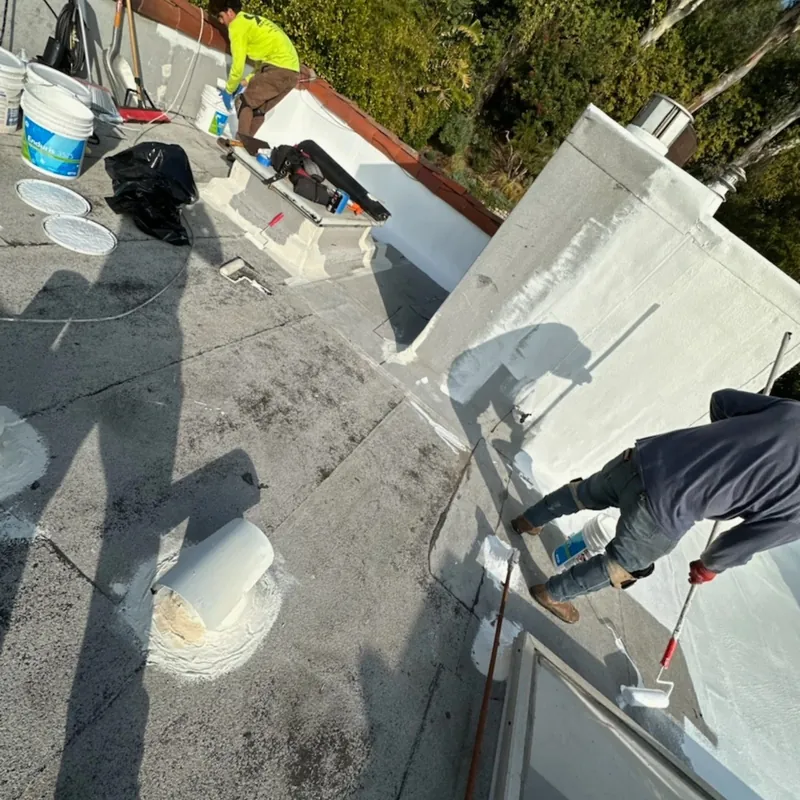 During
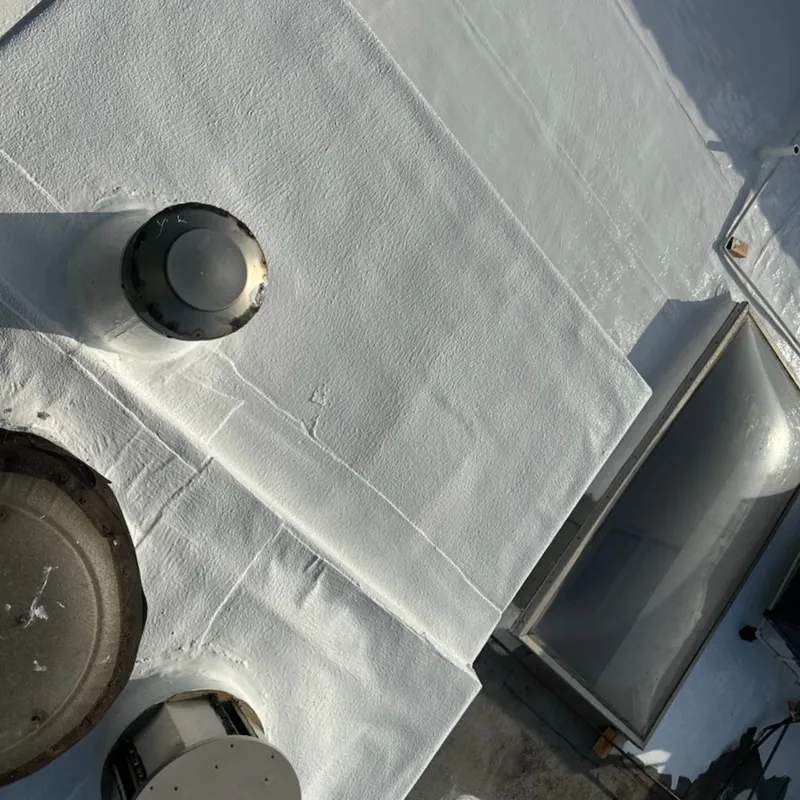 After
How Flat Roof Repair and Replacement in Camarillo Works
- Free inspection. We photograph the surface, seams, drains and interior stains, and probe for soft or wet areas.
- Repair or replace. Your written findings explain which, and why. If the membrane is sound and the problem is local, we repair it.
- Permit. We pull the permit for replacements and confirm any cool roof rule for your climate zone.
- Tear-off and deck. We remove the old system, replace wet sheathing and correct slope where water has been sitting.
- Membrane and flashing. The new system goes down with edge metal, wall flashing and outlets, each photographed.
- Water check and closeout. We confirm water moves to the outlets, clean up and send your photo set.
TPO, Modified Bitumen, Built-Up and Coatings Compared
The California Residential Code requires a design slope of at least 1/4 inch per foot for modified bitumen and single-ply membranes, and the Asphalt Roofing Manufacturers Association recommends the same minimum so roofs drain freely.
| System | How it goes on | Where it fits |
|---|---|---|
| TPO | Single-ply sheet with heat-welded seams | Larger open low-slope areas that need a reflective surface |
| Modified bitumen | Rolls applied by torch, cold adhesive or self-adhesion, with a granule cap sheet | Patio covers, porches and additions with roof-to-wall tie-ins |
| Built-up roofing | Alternating layers of felt and asphalt with a gravel or cap surface | Repairs to existing built-up roofs |
| Roof coating | Liquid applied over an existing membrane | Sound, dry membranes that need surface renewal only |
On houses, we favor self-adhered or cold-applied modified bitumen over torch-down near wood framing and eaves. Coatings do not fix wet insulation, open seams or ponding, so we only recommend them where the membrane underneath is still sound.
Cost Factors for Low-Slope Roofs
- Size and access. A small porch roof and a full addition are different jobs, and second-story sections need more setup.
- Layers and wet material. Old built-up layers and wet insulation add tear-off and disposal.
- Deck replacement. Sheathing that has been holding water often needs to come out.
- Slope correction. Crickets and tapered insulation add material but solve ponding at the source.
- Transitions. Every wall, skylight and pitched-roof tie-in needs its own flashing.
- Energy Code. Cool roof requirements on reroofs vary by climate zone and slope.
A proposal for flat roof repair and replacement in Camarillo from us itemizes each of these, so you can see where the money goes.
Flat Roofs in Camarillo: Local Factors
Camarillo goes months without meaningful rain, then gets most of its yearly total between December and March. A low-slope roof can look fine all summer and then pond and leak after the first real storm, when leaves and dust collected over the dry months block a scupper. A fall check of drains and outlets catches that before the rain does.
Closer to the coast in Oxnard and Port Hueneme, salt air works on metal edge flashing and fasteners, so we use corrosion-resistant metal there. Farther inland, strong summer sun is harder on the membrane surface itself.