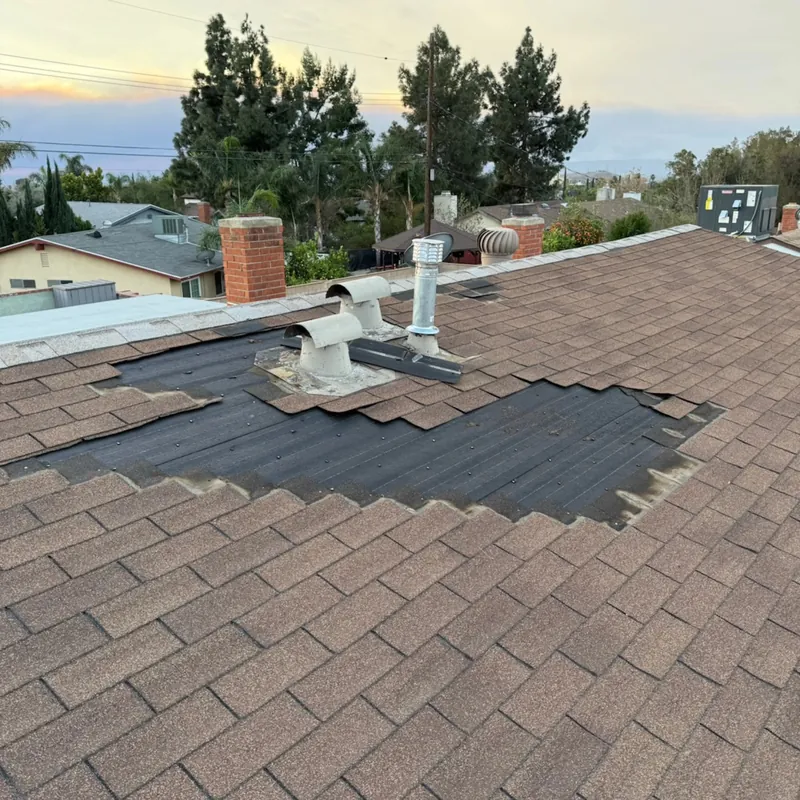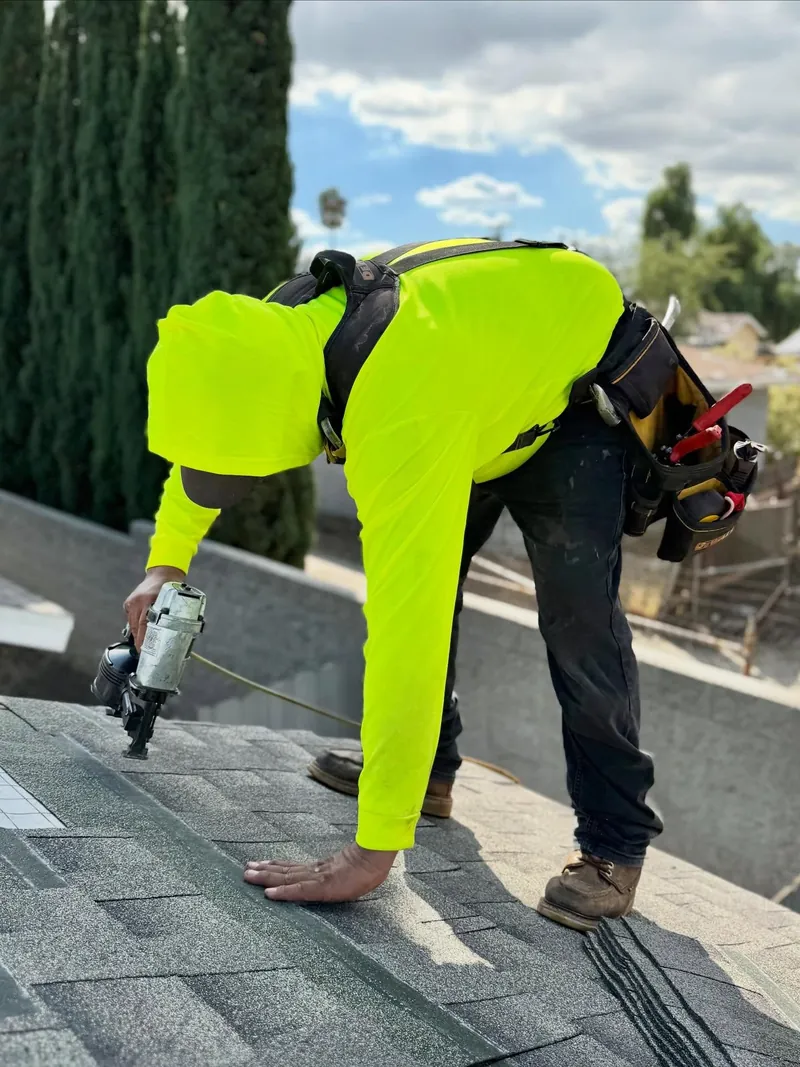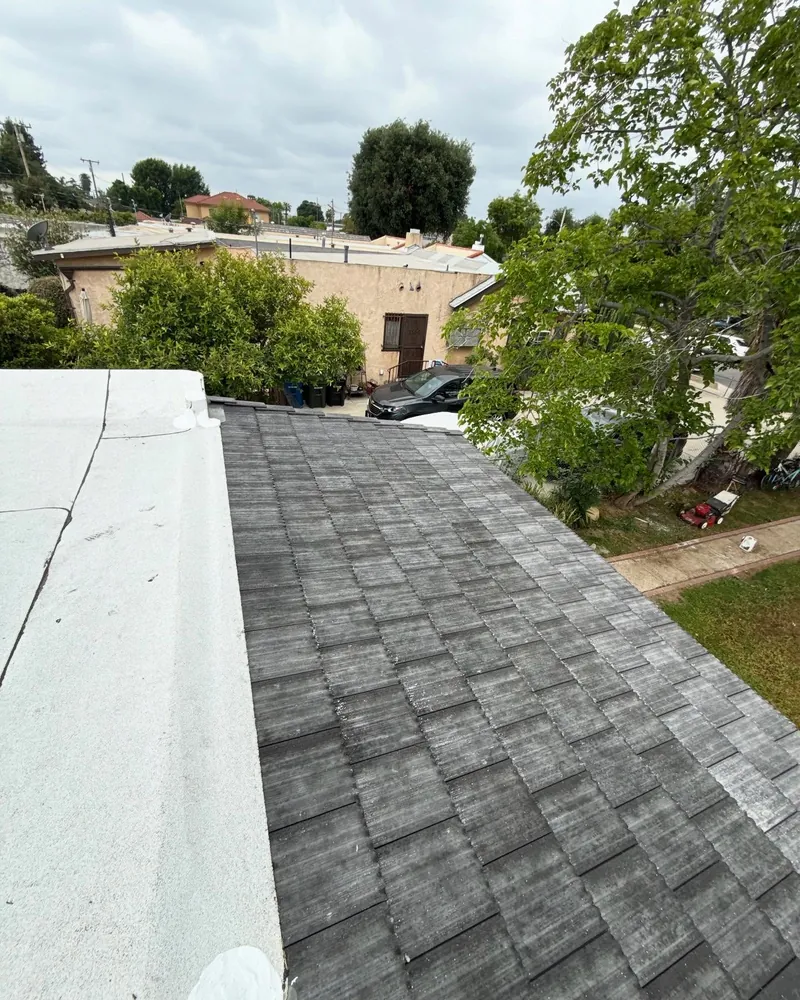
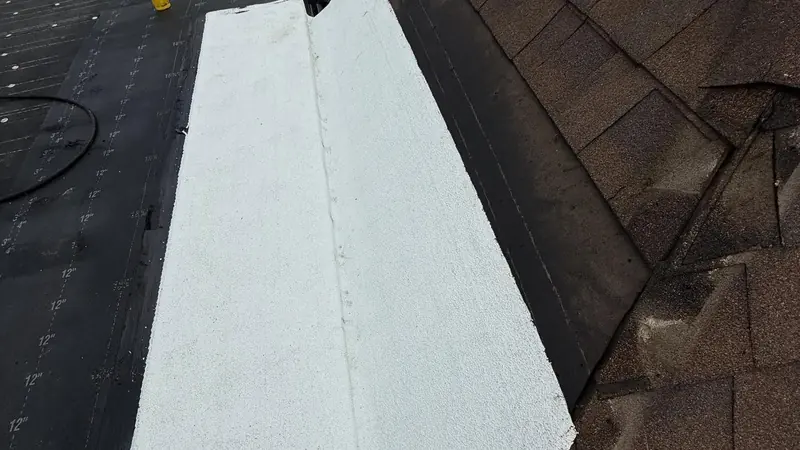
Roof leak repair in Camarillo starts with one question: where is the water actually getting in? A ceiling stain is rarely right below the hole, because water runs along underlayment and rafters before it drips. We trace that path back to the entry point, fix the cause, and photograph each step.
Leaks usually start at the details. Eaves, hips, ridges and penetrations such as vents and chimneys are the spots most exposed to wind-driven rain, along with skylights, valleys and worn underlayment under tile. Patching the ceiling without fixing those details just resets the clock.
What Our Leak Repair Service Covers
Every leak call covers the whole path of the water, not just the drip.
Source Tracing From Attic to Roof
We start at the stain, then check the attic above it for wet framing, damp sheathing and daylight. On the roof we work uphill from that spot through the flashing, penetrations, valleys and tiles or shingles, because water usually enters well above the place it finally shows up.
Hose Testing for Hidden Leaks
When the path is not obvious, we run a controlled hose test one section at a time while someone watches from inside. Starting low and working up the slope isolates the single detail that lets water through, so the repair targets that spot instead of a guess.
Flashing and Valley Failures
Rusted, bent or poorly lapped flashing at walls, vents, chimneys and skylights is behind many of the leaks we trace. Valleys packed with leaves overflow onto the layers beside them. We replace the failed metal, clear or rebuild the valley, and swap any broken tiles or shingles around it.
Worn Underlayment at the Entry Point
On a tile roof, the underlayment is the layer that actually stops water. Where it has torn or turned brittle at the entry point, we lift the tiles, patch or replace that section and relay them. Each repair ends with a photo report: before, during and after shots with a short written summary of the cause and the fix.
Signs Water Is Getting Past Your Roof
Some leaks announce themselves with a drip. Others show up slowly:
- Brown rings or bubbling paint on ceilings, especially near exterior walls
- Dark, damp sheathing or rafters in the attic, or a musty smell after rain
- Stains around skylight wells, chimney chases or bathroom fan housings
- Peeling paint or swollen wood along the eaves and fascia
- Cracked, slipped or missing tiles or shingles you can see from the yard
Speed matters once water is inside. The EPA advises drying water-damaged areas and items within 24 to 48 hours to prevent mold growth, which is why we move active leaks to the front of the line.
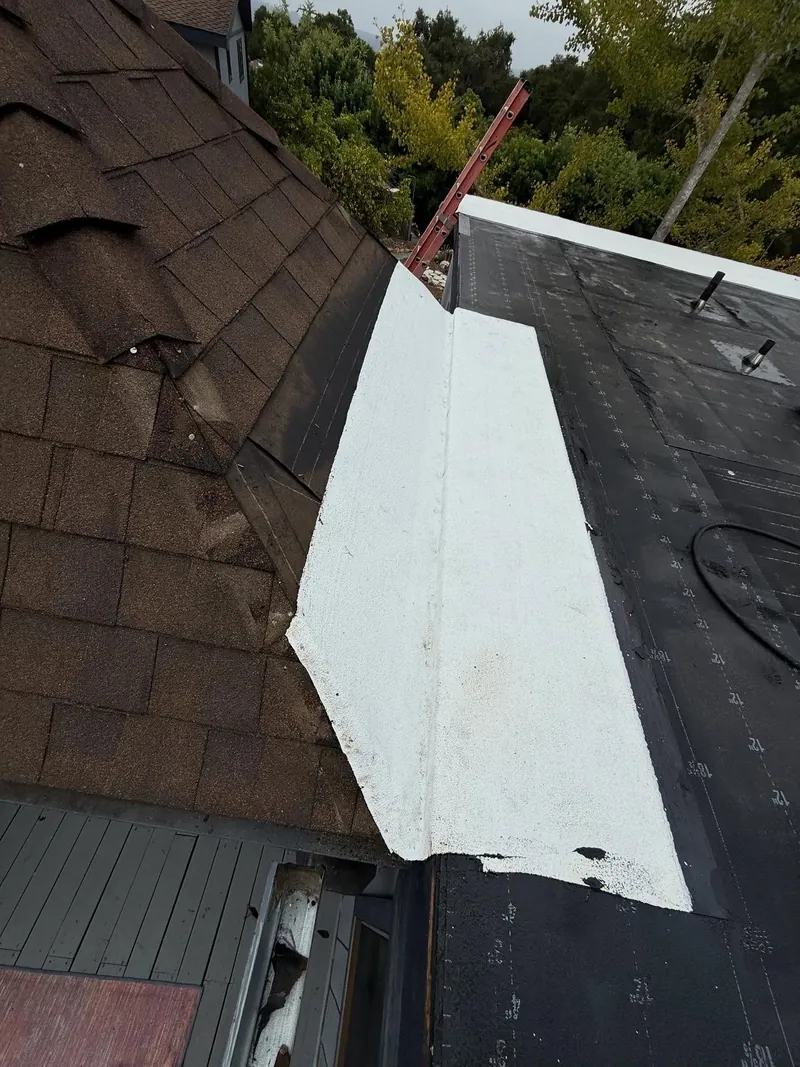 During
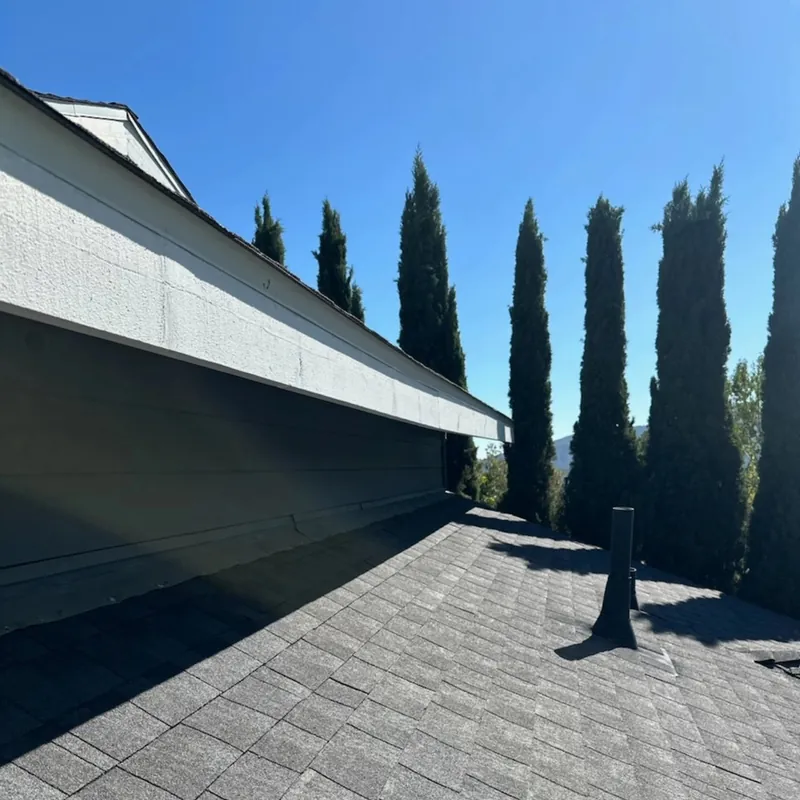 After
How We Find and Fix a Roof Leak
- Call and triage. Tell us where the water shows up. Call us and we prioritize active leaks during business hours.
- Protect the inside. We point out what to move and which drywall may need drying.
- Trace the source. Attic first, then the roof uphill of the stain, then a hose test if needed.
- Temporary cover if weather is coming. If the permanent fix needs parts or dry weather, we tarp or seal the area so it holds until we return.
- Permanent repair. We fix the actual entry point, including any flashing, tile, shingle or underlayment work it needs.
- Photo closeout. You get the photos and a plain-English summary of what failed.
Temporary Tarps, Patches or a Permanent Fix?
Not every roof leak repair in Camarillo can be finished on the first visit, especially mid-storm. How the options compare:
| Fix | What it is | When it makes sense | Meant to last |
|---|---|---|---|
| Tarp | Heavy tarp secured over the leak area | Active leak with more rain on the way | Until the permanent repair |
| Flashing replacement | New metal at a wall, vent, chimney or skylight | Rusted, bent or poorly lapped flashing | Permanent fix for that detail |
| Tile or shingle swap with underlayment patch | Broken pieces replaced and the layer below repaired | Isolated damage on an otherwise sound roof | Permanent fix for that spot |
| Section re-underlay | Tiles lifted over an area and new underlayment installed | Worn underlayment on one slope | Long-term fix for that section |
If leaks keep appearing in different places, the whole system is usually the problem, and we will tell you so. Our tile underlayment replacement and roof replacement pages explain the bigger fixes.
What Drives the Cost of a Leak Repair
Leak repairs are priced after we find the source, because a resealed vent and a rotted valley are very different jobs.
- Where the leak is. A vent boot is quick; a chimney or skylight with failed flashing takes more.
- Roof material. Tile must be lifted carefully and may need replacement pieces.
- Hidden damage. Rotted sheathing at the entry point is replaced before the roof is closed.
- Timing. A temporary cover before a storm followed by a permanent repair means two visits.
The inspection that finds the leak is free, and every roof leak repair in Camarillo we quote comes with a written price before any work starts.
Roof Leak Repair in Camarillo: Rain, Wind and Salt Air
Camarillo's rain arrives in a short window. NOAA normals for the city show about 14 inches a year, and more than 80 percent of it falls from December through March. Leaks that stayed hidden through the dry months show up all at once with the first big storm.
Fall Santa Ana winds can lift tiles and loosen flashing right before the wet season, and homes closer to the ocean in Oxnard and Port Hueneme see salt air corrode metal flashing and fasteners. A fall check before the first storm is the least expensive leak repair there is.