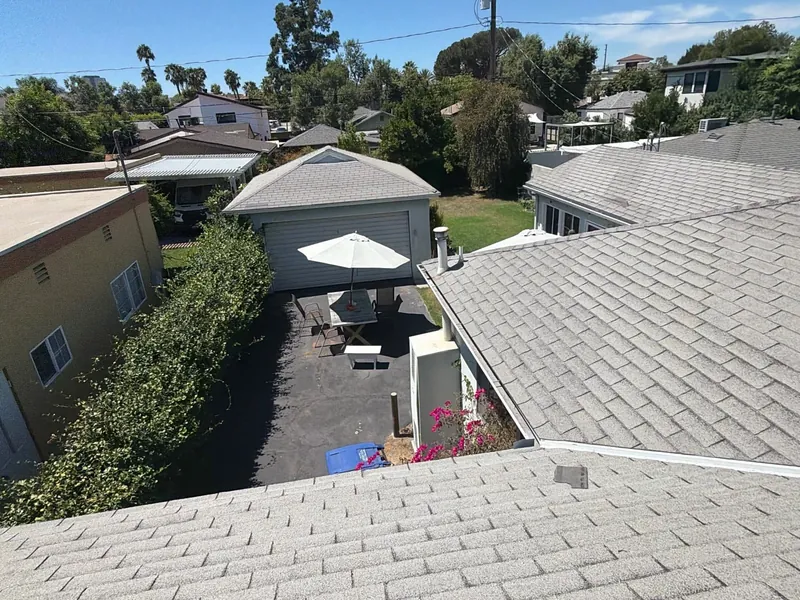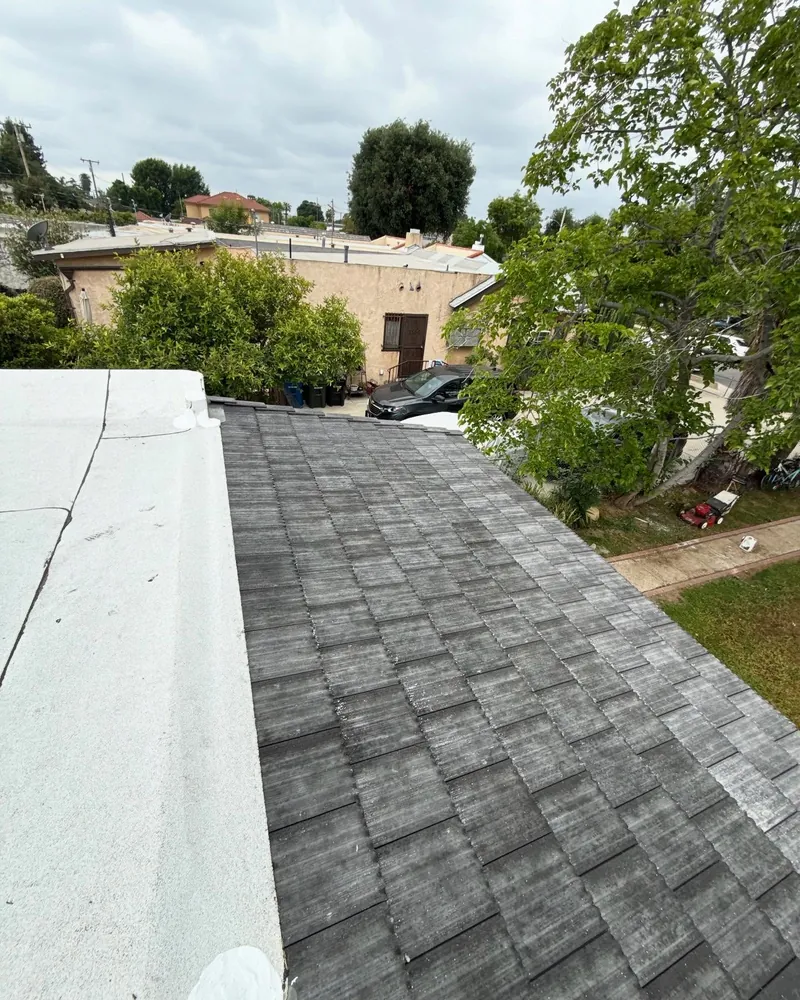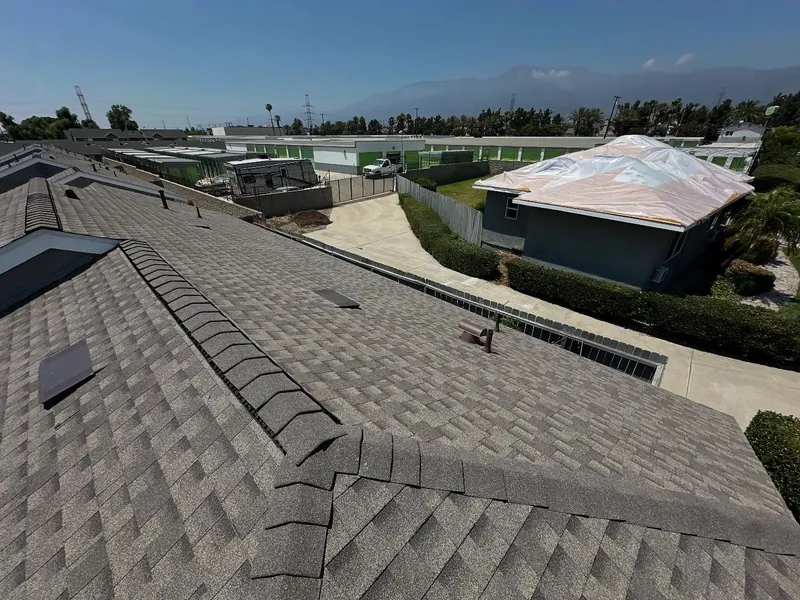
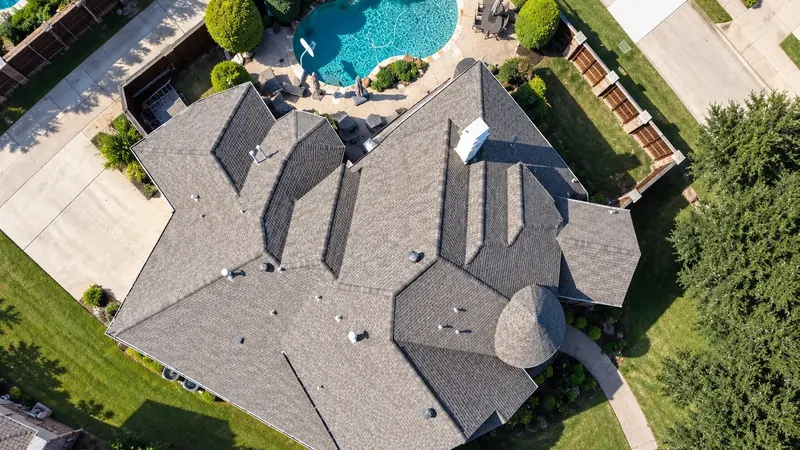
A roof replacement in Camarillo is a big decision, and it should rest on what is actually happening under your roofing, not on the age of the house alone. We start with a free inspection, photograph the problems we find and tell you plainly whether replacement is the right call or whether a targeted repair will do.
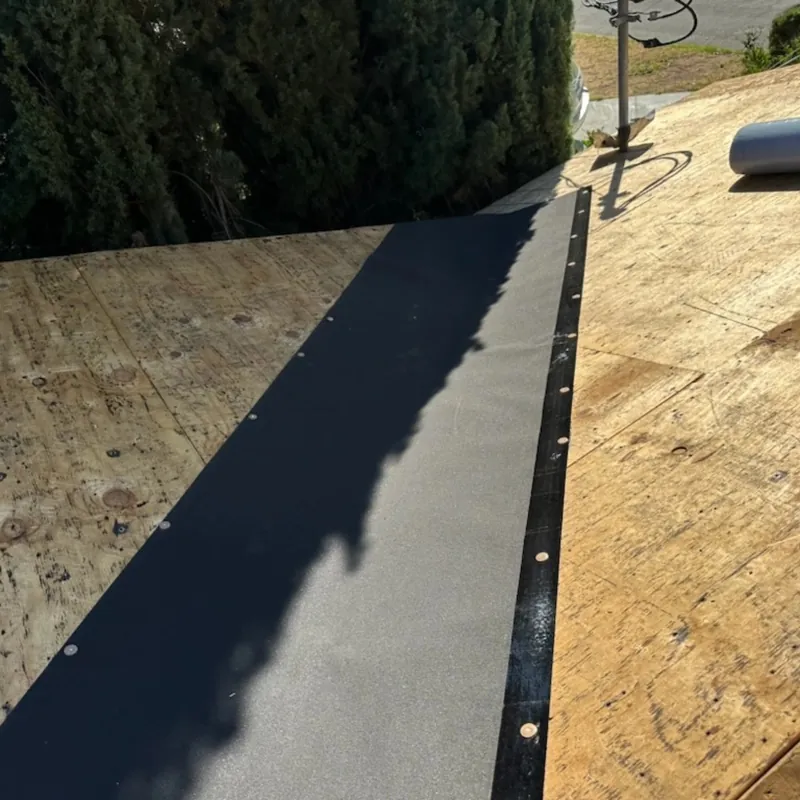
When replacement is the answer, we tear off to the decking, repair the structure and rebuild with new underlayment, flashing and ventilation before the finished roofing goes on. You receive photos of each layer before it disappears.
What Every Roof Replacement Includes
Full Tear-Off to the Deck
Old roofing and underlayment come off down to the sheathing, so nothing is hidden under the new roof. Stripping it also shows how the old roof failed, which shapes the details we build back. Debris leaves the site daily, and the job ends with a magnetic nail sweep of the yard and driveway.
Decking Repair
With the deck bare, we look for soft, delaminated or dry-rotted boards and replace them with new sheathing. Each replaced board is photographed, and the proposal lists the price per board up front, so rot found at tear-off never becomes an open-ended charge.
New Underlayment and Flashing
Underlayment is matched to your material and slope, including the double layer code requires on shingle roofs pitched 2:12 to 4:12. New flashing goes in at walls, chimneys, skylights and valleys, with drip edge along the eaves and rakes of shingle roofs.
Attic Ventilation
A tear-off is the easiest time to fix how an attic breathes. We balance intake at the eaves with exhaust near the ridge so heat and moisture can escape, and we use ember-resistant vents where fire exposure calls for them.
Permits and Inspections
We pull the reroof permit, schedule each required inspection, meet the inspector on site and hand you the permit final with your photo file at closeout.
Signs It Is Time for a New Roof
Age alone does not decide it. These conditions usually point to replacement rather than another repair:
- Leaks in several places, or leaks that return after repairs.
- Granule loss, curling or cracking across most of a shingle roof.
- Soft or sagging areas that suggest rotted decking.
- Tile underlayment that has failed across most of the roof.
- Wood shake, which the state's Safer from Wildfires program does not count as Class A. See our wood shake replacement options.
- Two existing layers of shingles, which rules out another overlay.
If only one area is failing, a repair is usually the better value, and our report will say so.
 During
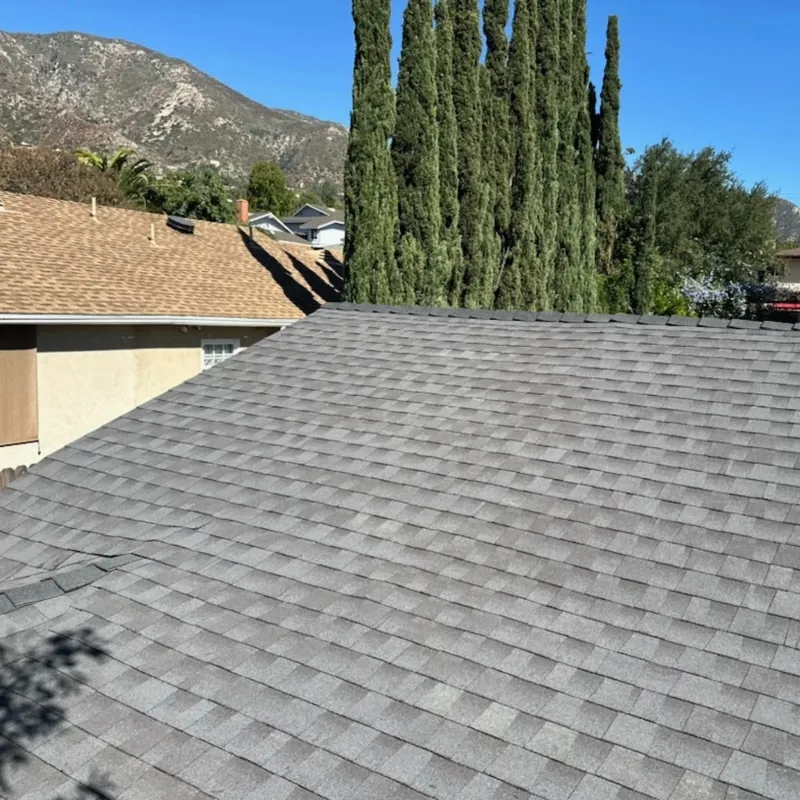 After
How a Roof Replacement Works, Step by Step
- Free inspection. We inspect the roof and attic and photograph every problem area.
- Written, itemized proposal. Materials, tasks, decking prices, permit and schedule, listed line by line.
- Permit and HOA approval. We pull the permit and supply product details if your HOA must approve material or color.
- Protection and tear-off. We cover plants and walkways, remove the old roof and haul debris as we go.
- Deck repair. Damaged boards are replaced and photographed.
- Underlayment, flashing and ventilation. Each layer is photographed before it is covered.
- Finished roofing. Tile, shingle or membrane installed to the manufacturer's instructions and code.
- Final inspection and closeout. The inspector signs off, we run the magnetic sweep, and you receive your photo file and permit final.
Roofing Materials Compared for Replacement
| Material | Fire rating | Weight | Best fit |
|---|---|---|---|
| Architectural asphalt shingle | Class A products widely available | Light | Most pitched roofs; cost-conscious replacements |
| Concrete tile | Class A | Heavy | Spanish and Mediterranean styles; existing tile homes |
| Clay tile | Class A | Heavy | Mission and Spanish homes where longevity matters most |
| Metal (standing seam or stone-coated steel) | Class A assemblies available | Light | Fire-exposed hillsides; coastal homes need corrosion-resistant finishes |
| Low-slope membrane (TPO, modified bitumen) | Depends on the assembly | Light | Flat sections, additions and patio covers |
Switching from shingle to tile adds significant weight, so we check the framing first. Our tile roofing and shingle roofing pages cover each option in more depth.
What Drives the Price of a New Roof
Every roof replacement in Camarillo is priced from its own measurements, so we do not quote by phone. The biggest factors:
- Size and pitch. More area and steeper slopes mean more material, labor and safety setup.
- Material. Shingle, tile, metal and membrane systems differ widely in cost.
- Tear-off. Two layers, or heavy tile, take more labor and disposal.
- Decking. Rot is often hidden until tear-off, so the proposal states replacement board pricing up front.
- Details and code items. Chimneys, skylights, valleys, cool-rated products and Class A assemblies.
California law caps the down payment on a home improvement contract at $1,000 or 10 percent of the price, whichever is less, and our proposals follow it.
Roof Replacement in Camarillo: Local Factors
Camarillo and Oxnard sit in California Energy Code Climate Zone 6, where a steep-slope reroof generally carries no cool-roof minimum. In Thousand Oaks, Simi Valley and Moorpark, which are in Zone 9, replacing half or more of a pitched roof usually calls for a cool-rated product.
Near the coast we choose corrosion-resistant fasteners and flashing because salt air is hard on bare metal. On hillside streets like those in Camarillo Heights, where the November 2024 Mountain Fire destroyed dozens of homes, we build Class A assemblies with ember-resistant vents. Permits go through Camarillo Building and Safety inside city limits and through Ventura County for unincorporated areas such as Somis.