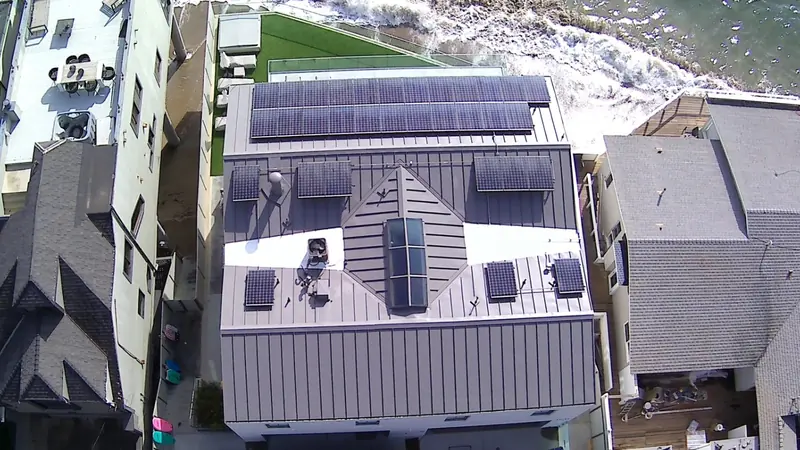
Metal roofing in Camarillo appeals to homeowners who want a noncombustible covering, a clean standing seam line, or a tile or shake look without the original material. The catch is specification: near salt air, the wrong coating or fastener can corrode long before the panels themselves wear out.
Best Top Roofing installs standing seam and stone-coated steel roofs on houses. Your proposal names the metal, the paint system and the fastener material, so you know exactly what is going on the roof and why it suits your location.
What Comes With a Metal Roof Installation
- Tear-off and deck check. We remove the old roof, photograph the sheathing and repair it so panels sit flat.
- Underlayment. The type the panel maker lists for its Class A assembly, photographed before panels go on.
- Panels and trim. Eave, rake, ridge and wall trim in the same metal family as the panels.
- Compatible fasteners. Clips and screws matched to the panel metal, since mixing dissimilar metals invites corrosion.
- Flashing. New flashing at chimneys, skylights, walls and pipe penetrations.
- Ventilation. Ridge and intake vents, with ember-resistant vents in fire hazard zones.
- Closeout. Cleanup, a magnetic sweep for metal scraps and screws, the permit final and your photos.
Is Metal the Right Move for Your Roof?
Metal tends to be a strong fit when:
- You are replacing wood shake and want a Class A roof that keeps a textured look
- Part of the house has a low pitch; standing seam is allowed down to 1/4 inch per foot
- You live in or near a fire hazard zone
- You want a reflective finish to cut heat on the attic
On an existing metal roof, call for an inspection if you see rust at screw heads or panel edges, loose exposed fasteners, failed sealant at laps or panels that rattle in wind. Many of those problems are a roof repair, not a replacement.
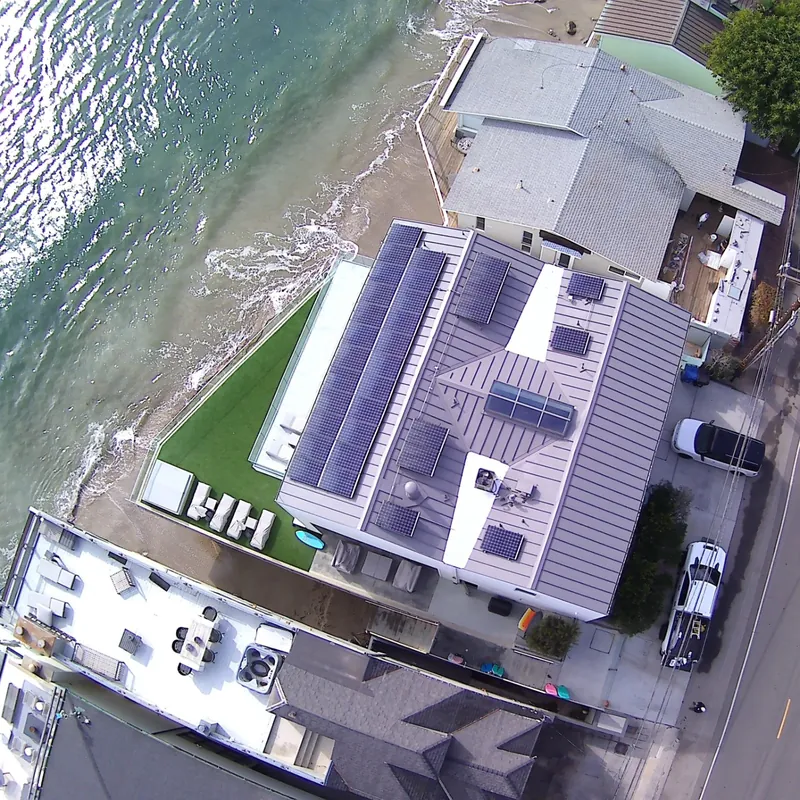
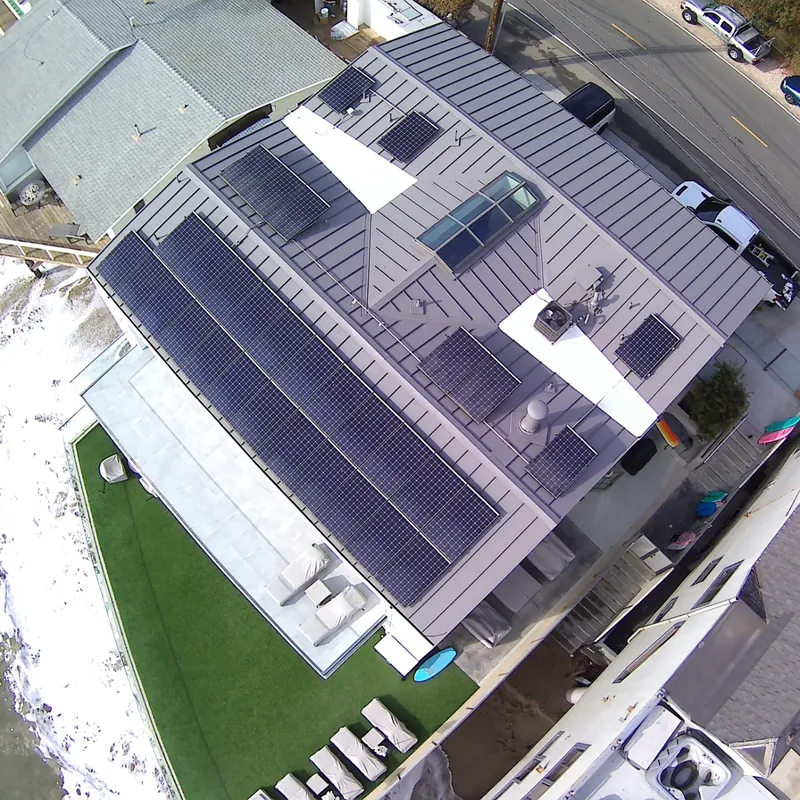
How We Plan and Install Metal Roofing in Camarillo
- Free estimate visit. We measure, photograph the roof and note your distance from the ocean.
- Specification. We check the panel maker's published guidance for your exposure and pick metal, coating and fasteners to match.
- Written proposal. Panel profile, gauge, paint system, underlayment and fasteners are all listed by name.
- Permit and HOA. We pull the permit and supply color samples and specs if your HOA reviews roof changes.
- Install. Tear-off, deck repair, underlayment and flashing, each photographed before panels cover it.
- Closeout. Final walk, cleanup and your photo set with the permit final.
Standing Seam, Stone-Coated Steel and Aluminum Compared
| Type | Look | Best fit |
|---|---|---|
| Standing seam steel | Flat panels with raised seams and concealed clips | Inland homes, modern and farmhouse styles, low-pitch sections |
| Standing seam aluminum | Same profile as steel | Homes near salt water; aluminum handles salt spray well but is softer than steel |
| Stone-coated steel | Shingle, shake or tile profiles with a textured stone-chip surface | Replacing shake or blending into a tile neighborhood |
Coastal Paint Systems and Stainless Fasteners
Paint matters as much as the metal. Two-coat, coil-applied PVDF finishes are commonly recommended for harsh coastal exposure, and industry guidance steers away from exposed carbon steel fasteners near the ocean in favor of stainless steel or, on aluminum panels, aluminum.
What Sets the Price of a Metal Roof
- Metal and gauge. Steel or aluminum, and the panel thickness, set the base material cost.
- Paint system. Coastal-grade finishes cost more up front in exchange for slower corrosion.
- Profile. Standing seam panels run long; stone-coated steel installs in smaller pieces with more trim.
- Roof shape. Hips, valleys, dormers and skylights mean more custom flashing.
- Fasteners. Stainless clips and screws for coastal homes.
- Tear-off and deck repair. Removing tile or shake and replacing sheathing adds labor.
California caps a home improvement down payment at $1,000 or 10 percent of the contract, whichever is less, and our payment schedule ties every later payment to work and materials actually delivered.
Metal Roofs From the Coast to the Inland Valleys
Distance to salt water drives the specification. Panel suppliers define a marine environment by distance from salt water, anywhere from 1,000 feet to one mile depending on the supplier. Homes near the beaches in Oxnard, Port Hueneme and Ventura need that conversation, while most Camarillo neighborhoods sit well inland of that range.
In Moorpark, Simi Valley and Thousand Oaks, heat is the bigger factor, and a reflective finish helps the attic. Those same cities hold the largest share of Ventura County's very high fire hazard acreage, where a Class A metal assembly is a practical choice.