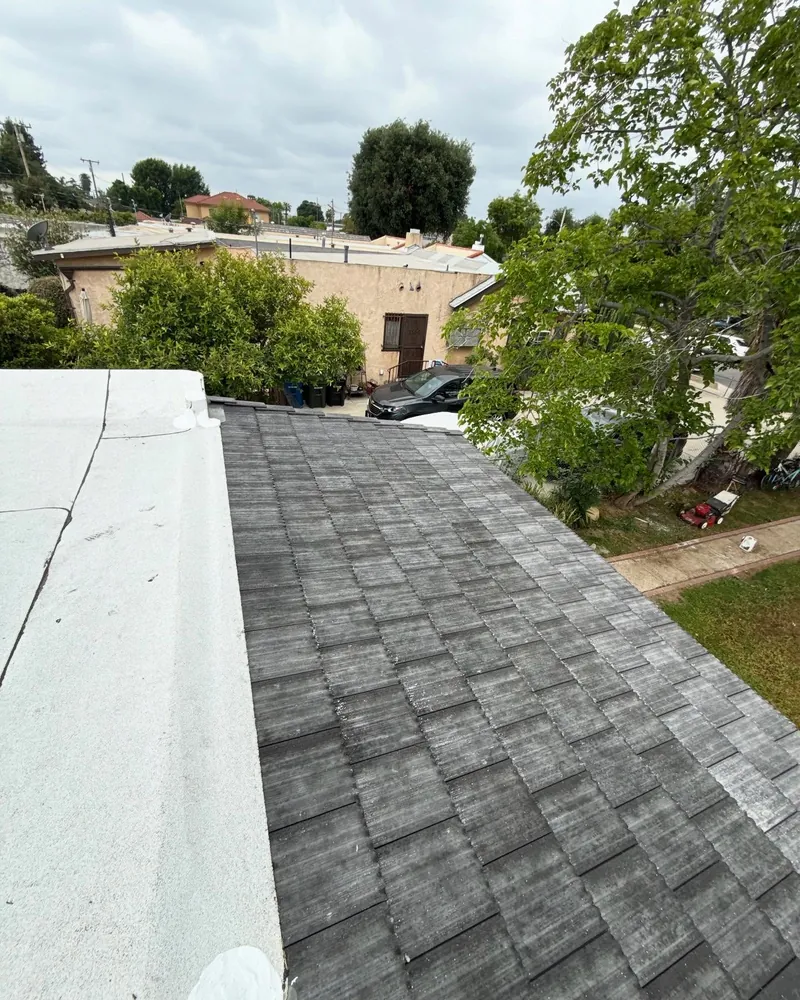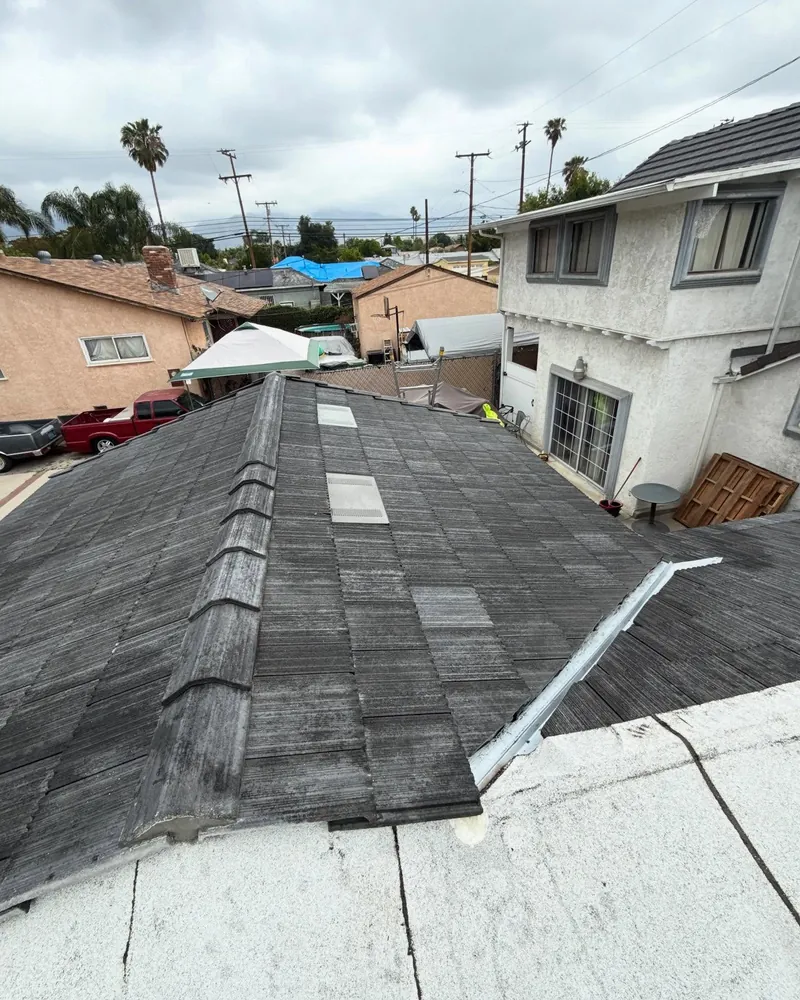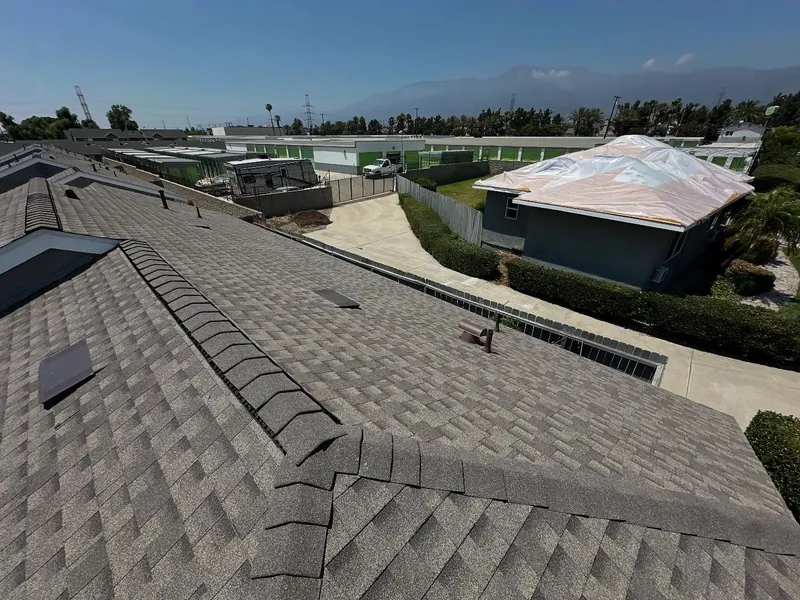
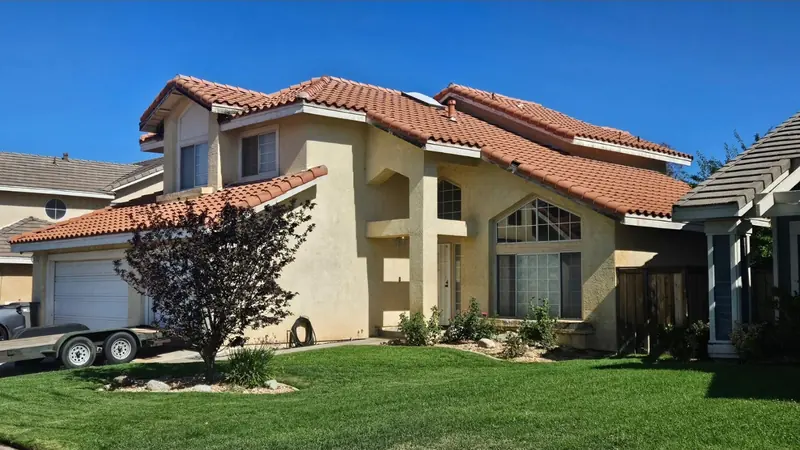
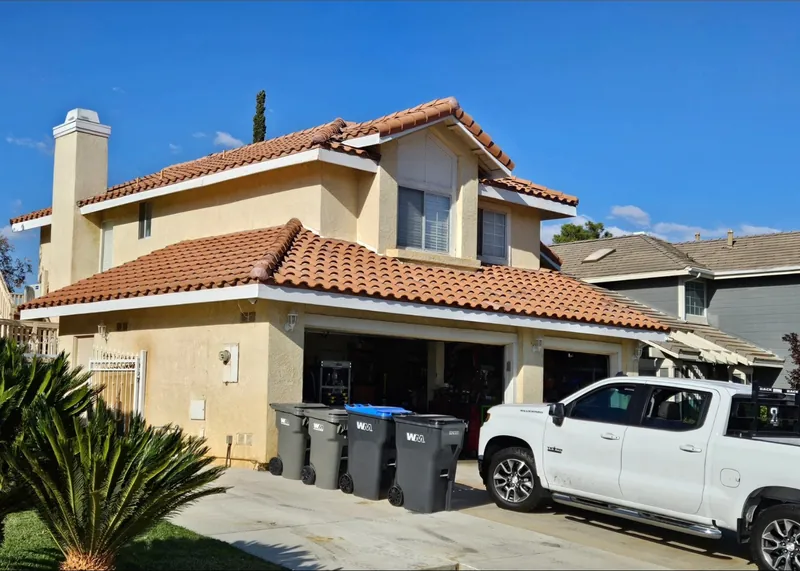
Tile roofing in Camarillo suits the area's stucco homes and long, dry summers, and it holds up for generations when it is built right. We install new clay and concrete tile roofs and replace worn-out tile roofs from the deck up, photographing the decking, underlayment and flashing before tile covers them.
Tile is heavy, long-lived and noncombustible, but it is only as good as what sits under it. The tiles shed most of the water, and the underlayment beneath is the backup layer that stops wind-driven rain. We build both to last, and we check that your framing can carry the load before anything is ordered.
What a Tile Roof Project Includes
- Structure check. We confirm the framing can carry the tile you choose, especially when switching from shingles or shake.
- Tear-off and deck repair. Old roofing removed to the deck, with damaged sheathing replaced.
- Underlayment. Installed for your slope. California requires two layers on tile roofs pitched from 2.5:12 up to 4:12.
- Flashing and battens. New flashing at walls, valleys, chimneys and vents, with battens where the tile system calls for them.
- Tile installation. Fastened with corrosion-resistant nails, as code requires, and ridges and hips finished to match the profile.
- Permit and closeout. Permit, inspections, cleanup with a magnetic nail sweep, and a photo record of every hidden layer.
Is Tile the Right Roof for Your Home?
Tile roofing in Camarillo is a strong choice when:
- You want a covering with a very long service life
- Your home is in or near a fire hazard area and you want a noncombustible covering
- The architecture calls for it, as on Spanish, Mission and Mediterranean-style homes
- Your current tile roof needs replacing and you want to keep the look
Think it through first when:
- Some roof sections are flatter than 2.5:12, the code minimum for tile
- The framing was designed for lighter shingles and would need reinforcement
- Budget is tight and a lighter Class A material would do the job
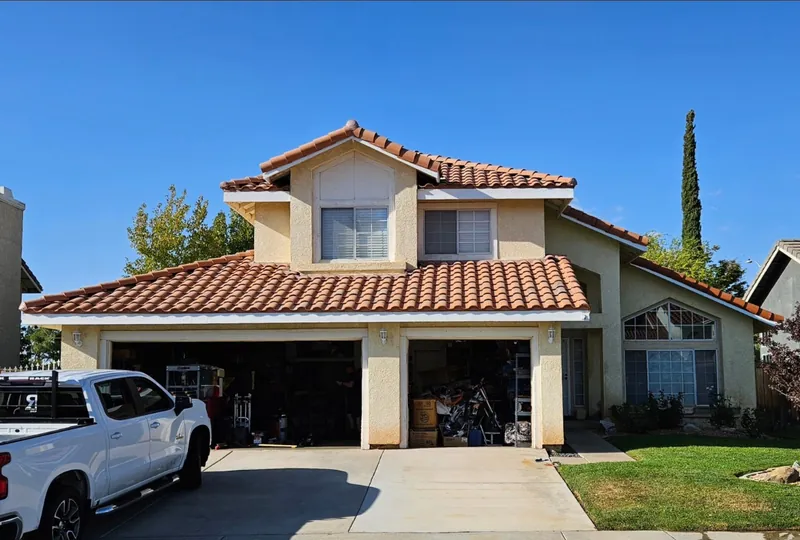
How We Install or Replace a Tile Roof
- Free estimate. We inspect the roof and attic, measure every plane and photograph current conditions.
- Material and structure review. You choose clay or concrete and a profile; we confirm the framing and slope work for it.
- Permits and approvals. We pull the permit and provide the material details your HOA needs.
- Tear-off and deck inspection. Bad sheathing is replaced and photographed.
- Underlayment, flashing and battens. Installed and photographed before any tile goes on.
- Tile, ridges and hips. Laid, fastened and finished.
- Final inspection and cleanup. Permit final, nail sweep and your photo set.
Clay vs Concrete Tile, and Which Profile
| Clay tile | Concrete tile | |
|---|---|---|
| Made from | Fired natural clay | Cement, sand and water, molded and cured |
| Typical weight per 100 sq ft | About 788 to 840 lb for one-piece S-tile; about 1,050 lb for two-piece mission (NIST) | About 900 to 970 lb for standard weight; lightweight lines from about 550 to 720 lb (manufacturer specs) |
| Service life | Many clay roofs have lasted more than 100 years | The tile itself can last a century; underlayment is replaced sooner |
| Look | Classic terracotta and blended colors | Wide range of colors, including flat profiles that mimic slate or shake |
| Relative cost | Higher | Lower |
One-piece S-tile
The familiar wave shape, and the most common clay profile. Lighter than two-piece barrel for the same coverage.
Two-piece barrel or mission
Separate pans and covers for a deeper, hand-laid look. Heavier, with more pieces per square.
Flat tile
A clean, low-profile line in concrete or clay that suits contemporary and ranch-style homes.
What Shapes the Price of a Tile Roof
- Clay or concrete. Clay generally costs more per square than concrete.
- Profile. Two-piece barrel uses more pieces and labor than one-piece S-tile or flat tile.
- Roof shape. Hips, valleys, dormers and chimneys add flashing and cutting.
- Structure. Reinforcing framing for a first-time tile roof adds engineering and carpentry.
- Underlayment system. Two-ply systems cost more than one layer.
- Deck condition. Rotted sheathing found at tear-off is priced per sheet in the proposal.
- Fire-zone and HOA requirements. These can narrow your material choices.
Every proposal we write for tile roofing in Camarillo is itemized, so you can compare it line by line with any other bid.
Tile Roofing in Camarillo: Fire, Wind and Coastal Air
Class A Tile Assemblies in Fire Zones
The Mountain Fire started near Somis in November 2024, burned 19,904 acres and destroyed 243 structures, according to CAL FIRE. In designated fire hazard severity zones, California code requires a roof covering rated at least Class A. Clay and concrete tile are noncombustible, but the rating applies to the full assembly, so we confirm a Class A listed assembly for your address before ordering.
HOA Color and Profile Approvals
Camarillo's planned neighborhoods add another layer. Many have HOAs with architectural review, and some set approved tile colors and profiles, so we collect those requirements before you choose a tile and supply the specifications your committee asks for.