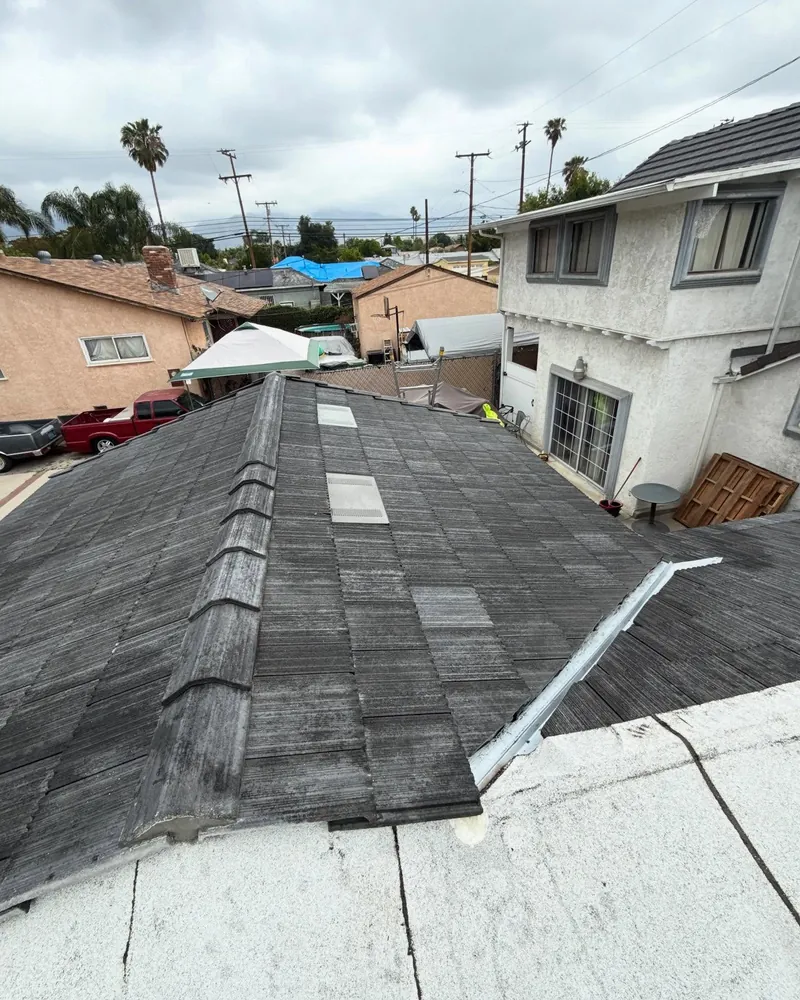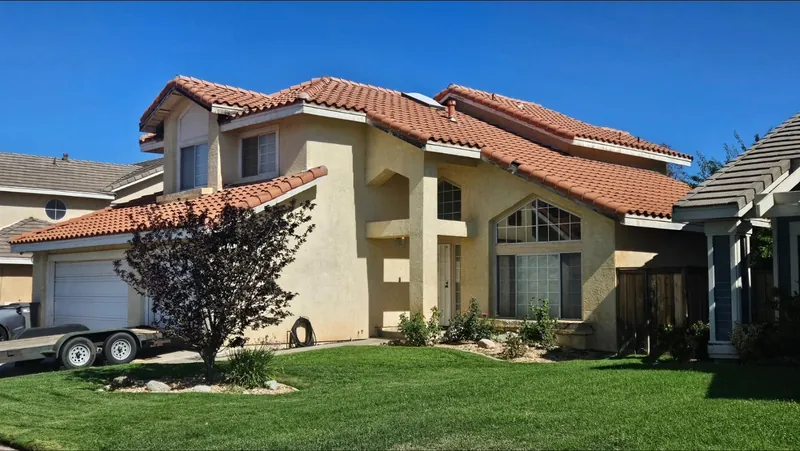
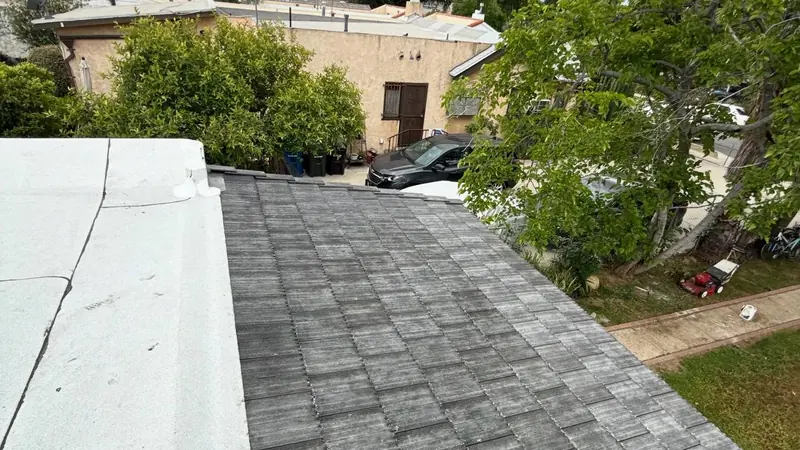
Tile roof underlayment replacement in Camarillo is the fix for a common situation: the tiles look fine, but the roof leaks anyway. Clay and concrete tile shed most of the water, and the underlayment underneath is the backup that stops whatever gets past them. When that layer dries out, cracks or tears, water that slips under the tile has a direct path into the house.
The tile itself usually does not need replacing. We lift and stack your existing tile, strip the old underlayment, repair the deck and flashing, install new underlayment and relay the tile. The trade calls this a lift and relay or a tile reset.
What a Lift and Relay Includes
- Tile removal and staging. Tiles lifted by hand, stacked and sorted so they go back where they belong.
- Tear-off to the deck. Old underlayment, worn battens and failed flashing removed.
- New underlayment. Installed for your slope, with two layers where code requires them.
- Tile relay. Sound tile reinstalled, broken pieces replaced with matched or salvaged tile, and ridges and hips reset.
- Permit and final. Inspections, cleanup and a photo closeout.
Deck Repair Under the Tile
Stripping the old underlayment exposes the sheathing for the first time since the roof was built. We check it for soft spots, replace rotted or delaminated boards at the per-sheet price stated in the proposal, and photograph every replaced section before new underlayment covers it.
New Battens and Flashing
California's reroofing rules require rusted or damaged flashing to be replaced, so new metal goes in at walls, valleys, chimneys and vents. Battens that have rotted, split or pulled loose come out as well, and new ones go in where the tile system calls for them, giving each relaid tile a straight, solid line to hang from.
How to Tell the Underlayment Is Failing
- Leaks during heavy or wind-driven rain with no broken tiles in sight
- Several leaks in different rooms, or leaks that return after spot repairs
- Brittle, cracked or crumbling felt visible at the eaves or under a lifted tile
- Water stains on attic sheathing below tile that looks intact
- A tile roof still on its original underlayment after 20 or more years
Published estimates for underlayment life vary widely. A NIST life-cycle summary for clay tile notes that felt underlayment may need replacing after 10 to 15 years, while other industry references put standard underlayment at roughly 20 to 30 years. Either way, it wears out long before the tile.
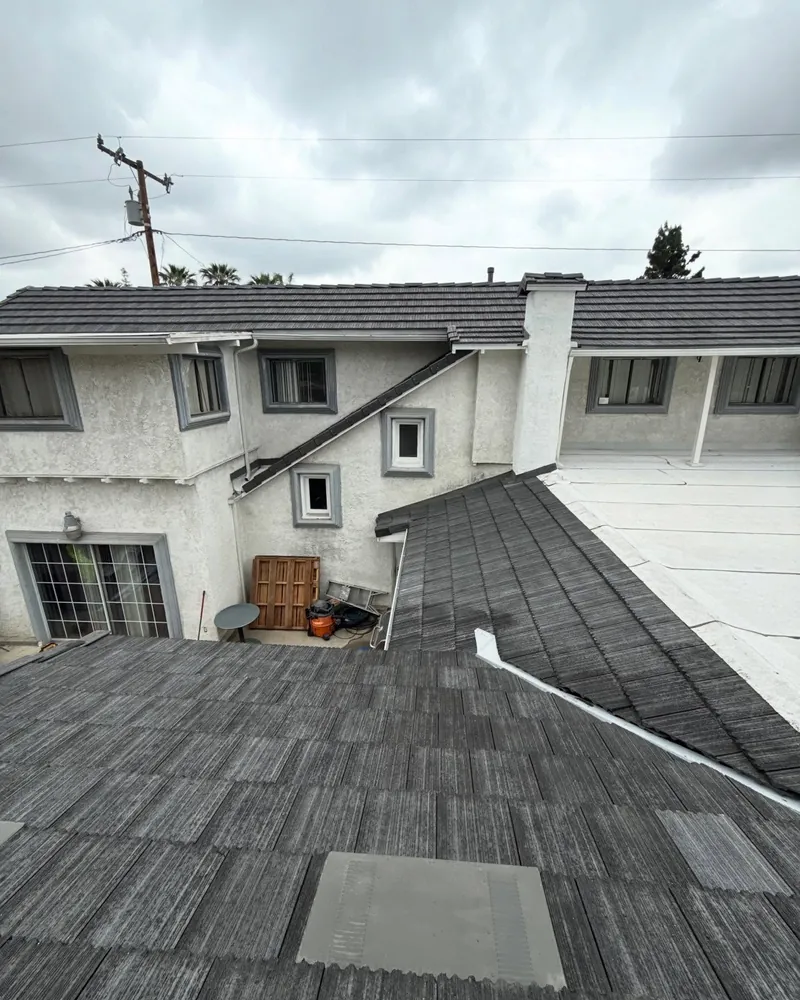
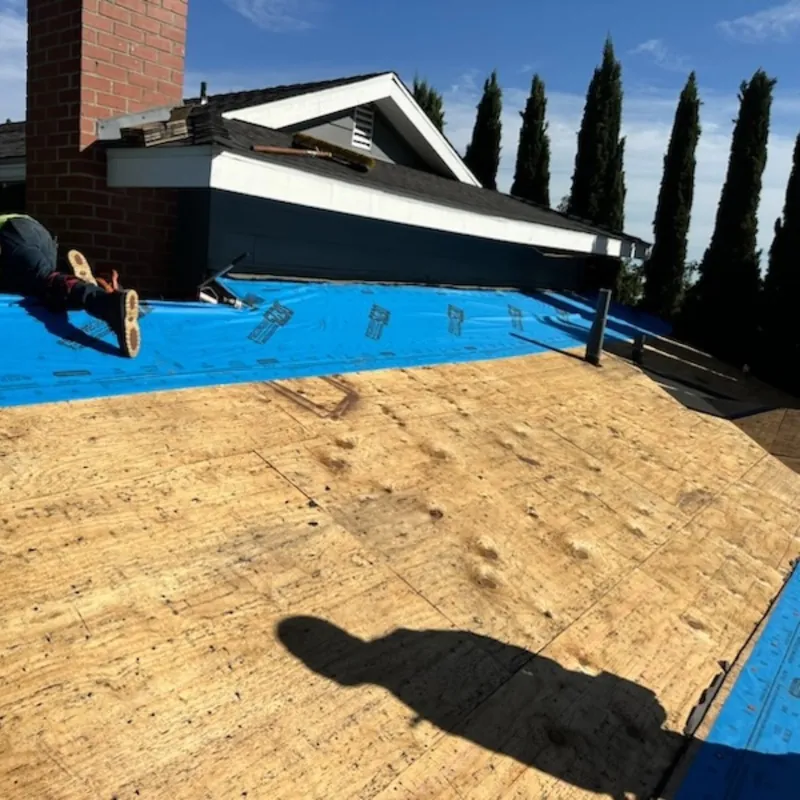 During
Step by Step: New Underlayment Under Old Tile
- Free inspection. We lift tiles in several spots to see the underlayment, then give you photos and an itemized proposal.
- Permit. Underlayment replacement is reroofing work, so we pull the permit.
- Lift and stack. We work in sections and cover any open area at the end of each day.
- Strip and inspect the deck. Photos of the bare deck and any replaced boards.
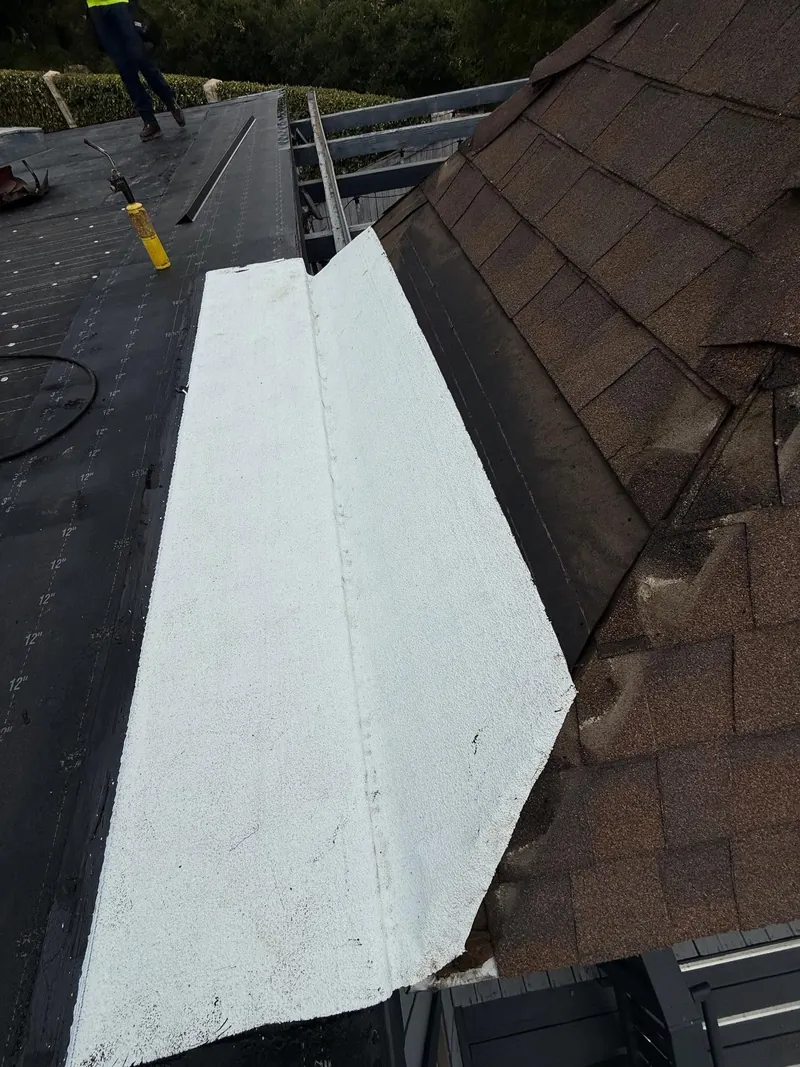
- Underlayment and flashing. Installed and photographed before tile covers them.
- Relay the tile. Sound tile goes back with corrosion-resistant fasteners; cracked tile is swapped out.
- Final inspection and closeout. Permit final, magnetic nail sweep and your photo set.
Felt, Synthetic or Two-Ply: Choosing the New Layer
| Type | What it is | Strengths | Trade-offs |
|---|---|---|---|
| Asphalt-saturated felt | Traditional No. 30 organic felt | Low cost and a long track record under tile | Dries out and turns brittle; shortest life in published estimates |
| Synthetic sheet | Woven polymer underlayment | Light, tear-resistant, easy to install cleanly | Long-term life under tile is less established; the product must be rated for tile |
| Two-ply system | Two layers, such as a base sheet plus a cap sheet | Built-in redundancy; required on tile slopes from 2.5:12 up to 4:12 | More material and labor |
| Self-adhered membrane | Peel-and-stick modified asphalt | Seals around nails; generally expected to outlast plain felt | Higher cost; often used at valleys and eaves rather than the whole roof |
We choose based on your slope, sun exposure and tile system, and every proposal for tile roof underlayment replacement in Camarillo names the exact products so you can compare bids fairly.
Cost Factors for Underlayment Replacement
- Roof area. Measured in squares of 100 square feet.
- Pitch and height. Steeper and two-story roofs need more staging.
- Replacement tile. How many pieces break or are already cracked, and whether matches are still made.
- Deck repair. Rotted sheathing is replaced at a per-sheet price stated up front.
- Underlayment system. Two-ply and self-adhered systems cost more than single-layer felt.
- Flashing and battens. Full replacement versus selective replacement.
Because your tile goes back on, you are paying mostly for labor, underlayment, flashing and replacement pieces, not a full roof of new tile. Our deposits follow California's home improvement rule: no more than $1,000 or 10 percent of the contract price, whichever is less, with later payments only for work completed.
Tile Roof Underlayment Replacement in Camarillo: Local Factors
Clay and concrete tile is common across Camarillo and the Oxnard plain, and on older homes the tile often outlives the underlayment beneath it. Since more than 80 percent of Camarillo's normal rainfall arrives from December through March, failing underlayment can hide all summer and show up in the first big storm. Scheduling tile roof underlayment replacement in Camarillo between late spring and early fall avoids working with the roof open in the rain.
The permit comes from the City of Camarillo for homes inside city limits and from Ventura County for unincorporated areas such as Somis. Fire-zone homes may need a Class A rated assembly, which we confirm before ordering materials.