Because San Fernando is a separate city, completely surrounded by Los Angeles, a roofing contractor in San Fernando pulls permits from its own Building and Safety Division rather than from LADBS. The city incorporated on August 31, 1911, the second in the Valley after Burbank, and stayed independent in 1915 because it kept its own water supply.
Its houses are older than most in the Valley, with 67.6 percent built before 1970 by SCAG's count. Best Top Roofing travels from Camarillo to inspect roofs here for free and records each finding in photos and written notes.
An Early Valley Town With a Pre-1970 Housing Stock
San Fernando was founded in 1874, and its street grid still runs at about 45 degrees to the compass, following the Southern Pacific line built in the 1870s. The automobile brought Craftsman and period revival houses to new neighborhoods, and the Golden State Freeway in the mid-1960s pushed housing onto former farmland.
The climate is inland Valley through and through. August averages a 93 degree high, records of 114 degrees have been set in June and September, and almost no rain falls from May through October. The year's 18.58 inches or so arrives mostly from December through March, peaking in February at 4.52 inches, and that is when cracked tiles and tired flashing give themselves away.
On February 9, 1971, the San Fernando earthquake struck the city at MMI X from an epicenter about seven miles north, breaking water, sewer and gas lines in countless places. Many houses and commercial buildings collapsed or caught fire, and many were later demolished, including some historic resources.
Lopez Adobe, Maclay Avenue and the Citywide Historic Survey
The city's 2025 to 2026 reconnaissance survey, prepared by staff with Rincon Consultants, evaluated 324 properties and identified 221 as potential historic resources. Its styles run from Folk Victorian and Craftsman through Mission Revival and Spanish Colonial to Ranch and Mid-Century Modern.
The Lopez Adobe, built in 1882 at 1100 Pico Street, is declared a historical site in the Municipal Code and opened as a museum in 1975. Brand Boulevard opened in 1912, and Maclay Avenue, home of the San Fernando Library, is a district of the San Fernando Corridors Specific Plan. Mission San Fernando Rey de España, which gave the city its name and its nickname, actually sits just outside the line in Mission Hills.
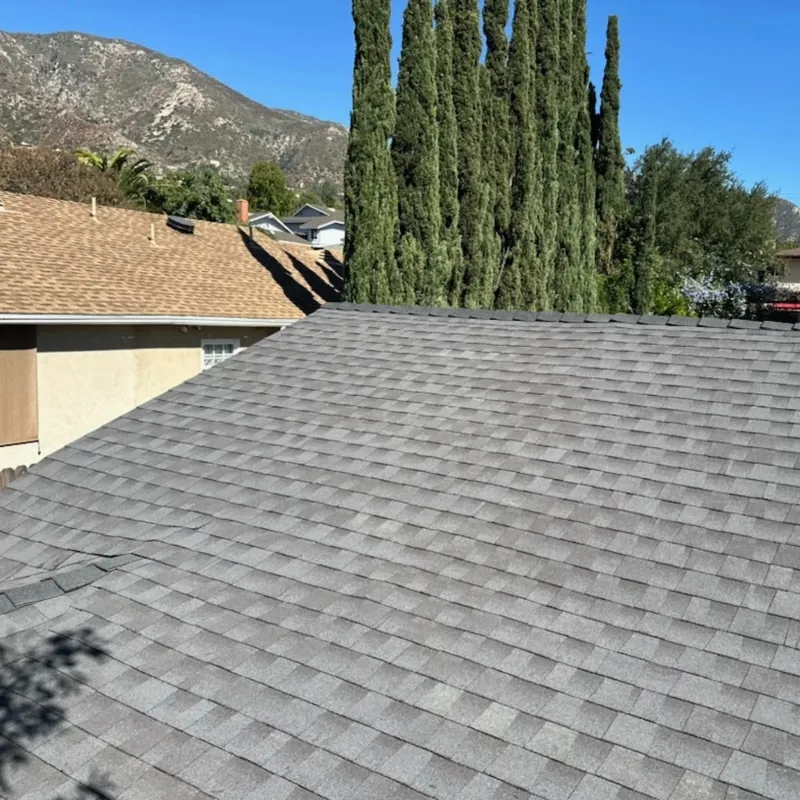 After
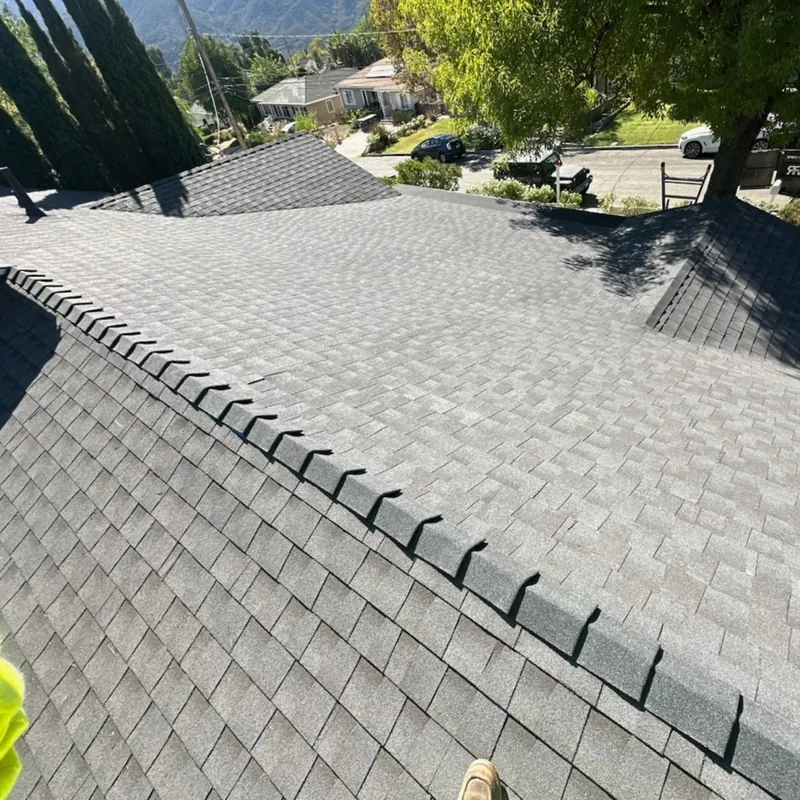 After
The Roofing Contractor in San Fernando for Tile, Tear-Offs and Leaks
Older roofs, historic styles and a short, wet winter shape the work in San Fernando. These five services cover most of it.
Historic Tile Repair for Spanish Colonial and Mission Revival Homes
Where a Spanish Colonial or Mission Revival house wears clay tile, the goal is to keep as much of the original tile as possible. Our tile roof repair work replaces cracked pieces, resets slipped ones, rebuilds ridge and hip details and finds close matches when a profile is no longer made. Check your home's historic status with the city first.
Underlayment Replacement Beneath Older Tile
Clay and concrete tile can last much longer than the underlayment beneath it, so a leak under an intact tile roof often points to that hidden layer. We remove and stack the tiles, install new underlayment, battens and flashing as needed, and relay them, replacing any that break. The tile underlayment replacement page explains each stage.
Pre-1970 Tear-Offs and Decking Repair
With roughly two in three homes built before 1970, many San Fernando roofs may still rest on original decking. A roof replacement starts by stripping every layer so we can photograph the boards, replace any that are soft or split, and add new underlayment, flashing and ventilation. On a Craftsman or period revival house, we protect exposed rafter tails and eave trim where they exist.
Winter Leak Tracing Before the February Peak
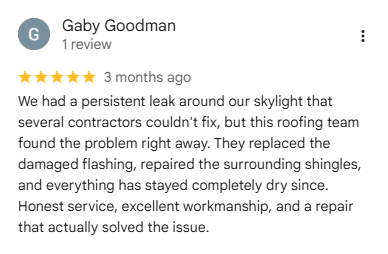
Months of dry heat crack sealant and loosen flashing, and the first December storm finds every gap. Our roof leak repair visits follow the water from the stain back to its entry point, which on older roofs is often a chimney, a wall junction or a valley. We fix that point and photograph the repair.
Free Inspections Before You Buy, Sell or Repair
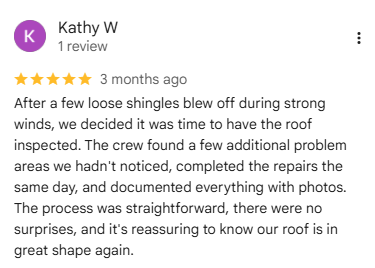
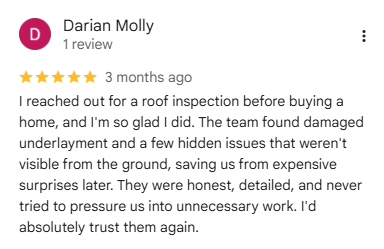
A free roof inspection is the simplest way to learn what an older San Fernando roof needs. We check the covering, flashing, vents and any visible decking, photograph each problem and give you written findings. Those notes help before buying a house, after a hard winter or when weighing repair against replacement.
Building and Safety Permits at San Fernando City Hall
The City of San Fernando Building and Safety Division, part of the Community Development Department at City Hall, 117 Macneil Street, issues permits and handles plan check, with an Online Permit Counter and a front counter open Monday to Thursday mornings. LADBS serves only property inside the City of Los Angeles, so we file with San Fernando directly and schedule the city's inspections.
The division's page cites the 2022 California Building Code, but the 2025 edition of Title 24 took effect on January 1, 2026, so we confirm which edition applies. That date also moved the state's wildfire rules into the Wildland-Urban Interface Code (Title 24, Part 7), replacing CBC Chapter 7A; whether it reaches a San Fernando parcel depends on zone status, which we check by address.
Historic preservation has its own framework here: a Historic Preservation Element adopted April 5, 2005, and a preservation ordinance adopted in 2008. If your home is a potential historic resource, ask the city whether a roof change needs review before choosing a new material.