Working as a roofing contractor in Altadena today means working mostly on rebuilds. A UCLA analysis of CAL FIRE damage inspection data counts 4,959 single-family homes in the community with half or more of the main structure destroyed in the January 2025 Eaton Fire, and each one that is rebuilt will need a roof built to the current wildfire code.
Best Top Roofing comes from Camarillo to inspect at no charge, whether the house is a rebuild still on paper or a survivor that needs a careful post-fire look. We photograph what we find and put it in a written, itemized proposal.
Foothill Weather and an Older Housing Stock
Altadena sits at about 1,358 feet on the San Gabriel Mountains foothills, between the Arroyo Seco and Eaton Canyon. The mountains push rainfall past 21 inches a year, more than 6 inches above Los Angeles, and the record high is 113 degrees.
Wind is the sharper roofing threat. Red flag warnings went up on January 6, 2025, forecasts called for Santa Ana gusts of 60 to 80 mph, and gusts up to 100 mph were reported on the Mount Lukens Truck Trail. The 2011 windstorm also hit Altadena hard.
Before the fire, the housing stock was among the oldest in the area: a median build year of 1946, 37 percent before 1940 and 83 percent before 1970. Houses that survived often still have original roof framing worth checking at reroof time.
From Janes Village to West Altadena and Eaton Canyon
Janes Village, 160 homes built from 1924 to 1926 with steep roofs and multiple gables, became a heritage area in 2002. Those pitches and gable intersections call for careful flashing and safe staging, whatever the material.
Mariposa Street was the early center of estate building, which moved toward Eaton Canyon in the 1910s and 1920s, while West Altadena filled with postwar tracts where farming lasted longest. Lake Avenue runs from the business district up to the Sam Merrill Trail.
Higher up, Kinneloa Mesa and the Eaton Canyon edge have burned before; the 1993 Kinneloa Fire burned dozens of homes in Altadena and Kinneloa Mesa. Case Study House No. 20 on North Santa Rosa Avenue came through the Eaton Fire undamaged.
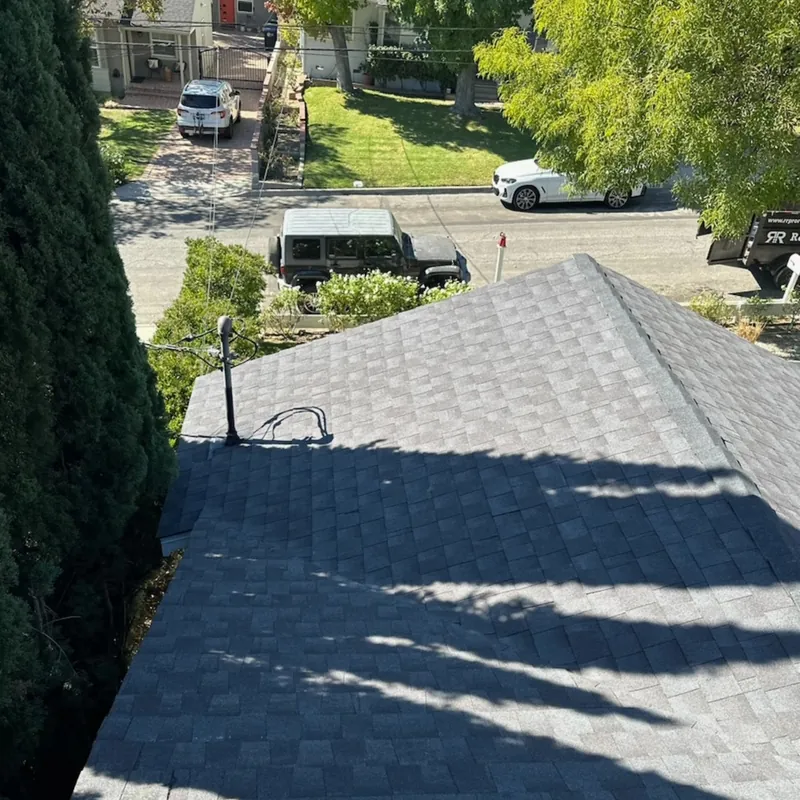 After
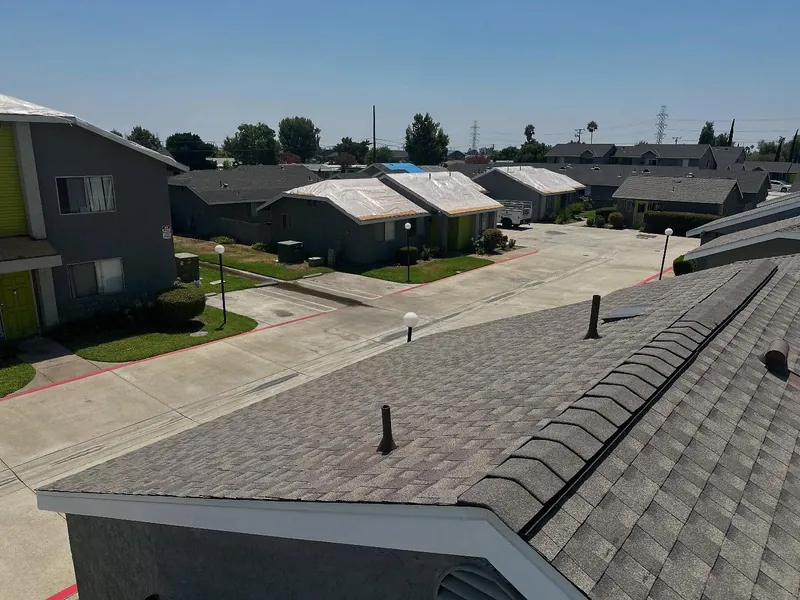
Rebuild and Repair Work From a Roofing Contractor in Altadena
County rebuild rules and the wildfire code shape almost every Altadena roof. These five services cover most of that work.
Like-for-Like Eaton Rebuilds Through the County
Of the county permit applications filed by owners of severely damaged homes from February to September 2025, 68 percent were like-for-like. Those rebuilds may grow by 10 percent or 200 square feet, whichever is greater, and they skip current zoning standards but must meet current building and fire codes. Our roof replacement scope follows the approved plans, with photos of decking, underlayment and flashing for your rebuild file.
Class A Coverings With Ember-Resistant Vents
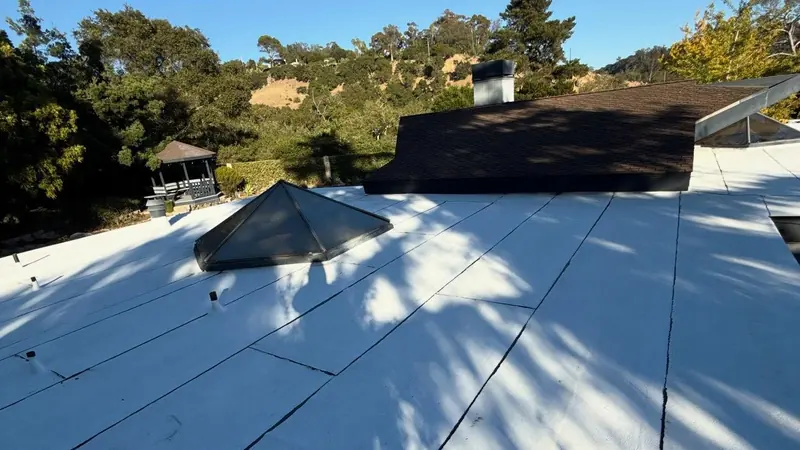
Los Angeles County's 2026 construction notes for fire hazard zones call for Class A roof coverings and vents with 1/16 to 1/8 inch corrosion-resistant metal mesh or listed vent products. They also state that paints, coatings and stains do not count as protection. Our fire-resistant roofing work treats covering, vents and eaves as one system, because an ember that finds a single gap can still reach the attic.
Noncombustible Gutters Installed With the New Roof
The same county notes require noncombustible gutters with protection against debris buildup. We put in gutters only together with a roof replacement or major roof repair. On a rebuild, that means the gutter line, drip edge and fascia are drawn and installed with the roof rather than added after move-in.
Heritage Home Repairs on Surviving Prewar Houses
Altadena Heritage's database covers all pre-World War II homes, and the group's rebuild talks include a session on what makes a Craftsman a Craftsman. If a surviving house sits in a mapped fire hazard zone, any covering used for a repair must be Class A. That makes roof repair on an old gable a search for a Class A material that still suits the house.
Post-Fire Leak Checks Before Debris Season
Burned watersheds above the community drain toward county debris basins such as Lincoln, Fern, Rubio and Gooseberry, and Public Works placed K-rails and sandbags ahead of storms. Heat and wind can also loosen flashing on houses that look intact from the street. A free roof inspection before the rains, with photos of every valley and penetration, shows where water could get in.
One-Stop Permit Center, County Review and the Wildfire Code
Altadena is unincorporated, so Los Angeles County handles permits: Public Works Building and Safety issues them, Regional Planning handles zoning, and applications run through EPIC-LA. Eaton Fire rebuilds have their own One-Stop Permit Center at 464 West Woodbury Road, Suite 210, where Public Works, Regional Planning, Public Health and Fire staff work side by side.
For like-for-like single-family and duplex rebuilds in the Eaton area, the county has suspended the cool roof requirement, along with EV-ready and graywater-ready rules. Fire sprinklers and electric-ready construction are still required, and South Coast AQMD now allows wood-burning chimneys in fire rebuilds, which puts chimney flashing back into some roof plans.
Fire-zone roof rules now live in Part 7 of Title 24, the California Wildland-Urban Interface Code, which replaced CBC Chapter 7A on January 1, 2026. Some county rebuild guides still cite Chapter 7A, so we build each scope to the current code.