For a roofing contractor in La Cañada Flintridge, no lot sits outside the fire zone. The city's Building and Safety page says the entire city lies in the Very High Fire Hazard Severity Zone, and the State Fire Marshal's 2025 recommended maps list 5,489 acres Very High and none Moderate.
Best Top Roofing drives from Camarillo for free inspections across the city. Every proposal we write here starts from a Class A covering and lists the vents, edges and gutters that go with it.
1950s Homes Between Two Mountain Ranges
La Cañada Flintridge sits in the Crescenta Valley between the San Gabriel Mountains and the San Rafael Hills, rising from about 970 feet near Devil's Gate Dam to about 2,400 feet in its highest neighborhood. Roughly 21 inches of rain falls in a typical year, mostly from December to March.
The 1950s were the busiest building decade by far, with 35.1 percent of homes built then and about 80 percent before 1970. Very little has been built since, so most reroofs here are on pre-1970 houses.
Santa Ana winds descend hot and dry off the mountains, and during the January 2025 windstorm gusts up to 100 mph were reported on the Mount Lukens Truck Trail north of the city. California live oaks are abundant, and the city cites its topography and oaks for its fire zone status.
Flintridge, Paradise Valley and the Arroyo Edge
Flintridge covers the southern part of the city on the north flank of the San Rafael Hills, plus areas south of Foothill Boulevard, with Descanso Gardens and the 1915 Lanterman House among its landmarks. Hillside lots with an average slope of 15 percent or more need a Hillside Development Permit for any project that requires a building permit.
At the top of Ocean View Boulevard, Paradise Valley took the worst of the February 2010 debris flows, which also reached Manistee Drive, Escalante Drive and Arroyo Summit Drive. JPL sits at the city's eastern end near the Arroyo Seco.
The Station Fire and the 2010 Debris Flows
The Station Fire ignited August 26, 2009 off the Angeles Crest Highway and burned about 160,577 acres, the largest wildfire in modern Los Angeles County history. La Cañada Flintridge was listed among the threatened communities.
On February 6, 2010, rain on the burned slopes sent mud and boulders into the northernmost neighborhood. Reports counted 40 to 43 damaged homes, and one listed nine red-tagged in the city as the Mullally Debris Basin overflowed.
What a Roofing Contractor in La Cañada Flintridge Handles
A whole-city Very High zone and the city's own reroof worksheets shape most of the work. Five services matter most here.
Citywide Class A Coverings
Under the state wildfire code, any covering applied in a repair must be at least Class A, and replacing 50 percent or more of the roof within 12 months brings in the full roof requirements. Because the entire city is mapped Very High, that applies to every house. Our fire-resistant roofing proposals name the Class A covering, underlayment and edge details up front for plan check.
Vent Hardening With the City's Worksheet
The city publishes a Fire Hardening Vents worksheet, and county notes on Part 7 call for ember-resistant vents with 1/16 to 1/8 inch corrosion-resistant metal mesh or listed vent products. On a roof not yet due for replacement, swapping vents is a focused roof repair that closes one of the easiest ember paths into the attic.
Shake-Look Conversions for Ranch and Cape Cod Homes
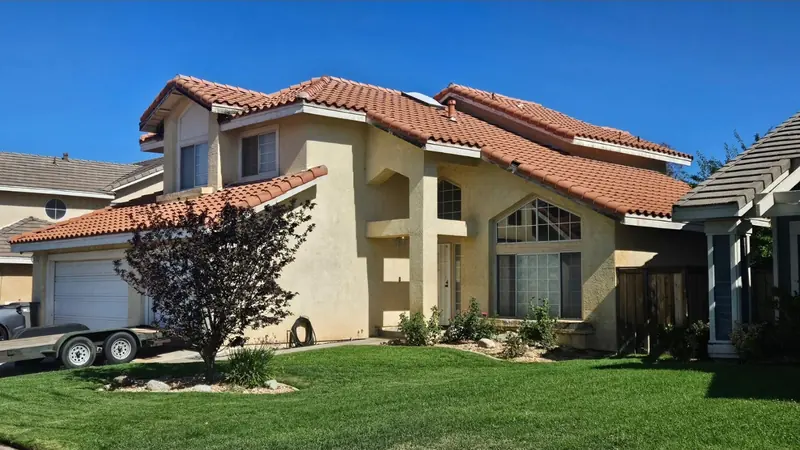
The city's Residential Design Guidelines pair shake with Ranch and Cape Cod homes and slate or shake with Tudors. Because every covering here must reach Class A, wood shake roof replacement usually means a Class A material with a shake profile. That keeps the look the guidelines expect while meeting the fire code.
Torch-Down Low-Slope Sections
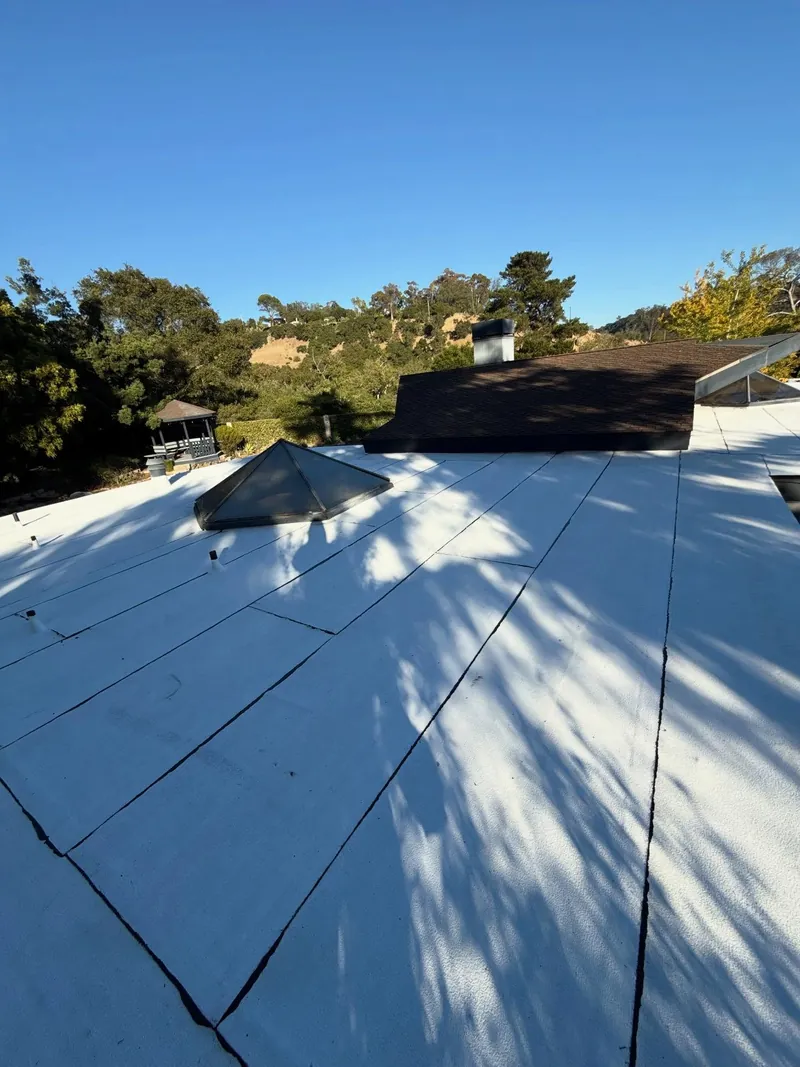
Where a house has a flat or low-slope section over a porch, addition or garage, the city's separate torch-down and membrane reroof worksheet applies. Our flat roofing work replaces those sections with a membrane suited to the slope and ties the flashing cleanly into the main pitched roof, a common leak point when the two were built at different times.
Debris Season Inspections in Paradise Valley
Less than six months after the Station Fire, rain on burned slopes sent debris into foothill streets. Rain season here runs December through March, so a free roof inspection in the fall, with photos of valleys, flashing and gutters, finds weak spots before the heaviest storms. It also gives you a dated record of the roof's condition.
m6 Consulting Plan Check, Hillside Permits and Part 7
The Building and Safety Division at One Civic Center Drive runs applications, plan check and permit printing through the ConnectLCF portal. Since October 1, 2024, plan check and inspections have been handled by the third-party firm m6 Consulting rather than Los Angeles County, so older guidance about county plan check no longer applies.
The city adopts the county Building and Fire Codes by reference, plus the 2025 Energy Code, CALGreen and the 2025 California Wildland-Urban Interface Code. That wildfire code is Part 7 of Title 24 and took the place of CBC Chapter 7A on January 1, 2026.
Construction runs weekdays from 7 a.m. to 6 p.m., or 7 p.m. during Daylight Saving Time, and Saturdays from 9 a.m. to 5 p.m. Oaks 12 inches or more in diameter are protected on R-1 lots, which we keep in mind when staging.