A roofing contractor in San Gabriel needs a city permit for every reroof, and in most cases a planning approval before that permit can issue. In the Mission District, the specific plan even names the roof material that suits each architectural style.
Best Top Roofing travels from Camarillo to inspect, repair and replace roofs on San Gabriel homes. Each job begins with a free inspection, photos of every issue and a free written quote.
Mission-Era Styles, Older Housing and a Dry Summer Climate
From 1910 through the 1920s, new buildings in the city core went up in Mission Revival and then Spanish Colonial Revival, built with manufactured brick, cement plaster and concrete in place of adobe. About 64.9 percent of San Gabriel's housing predates 1970, and roughly 36.5 percent predates 1950.
The climate is hot-summer Mediterranean, with August highs averaging about 87.6 degrees and a 112 degree record. Rain totals about 15.67 inches a year on roughly 33 days, with February the wettest at 4.22 inches and July through September nearly dry. Long dry stretches followed by a few heavy storms tend to reveal worn underlayment all at once.
According to the National Weather Service, Santa Ana winds rarely reach the San Gabriel Valley floor; the damaging winds here come from less common north to northeast downslope events off the mountains, such as the 2011 windstorm. Earthquakes have left a mark as well: the 1987 Whittier Narrows quake damaged the mission, and its October 4 aftershock collapsed two bell towers at what is now the Mission Playhouse. The State Fire Marshal's 2025 list maps no fire hazard zones in the city.
The Mission District, North of Broadway and the County Pockets
The Mission District is the historic core around Mission San Gabriel Arcángel, founded in 1771 as the fourth of California's 21 missions. Its listed cultural resources include City Hall, the Arcade Shops on South Mission Drive and Smith Park, and the Mission Playhouse was built from 1923 to 1927 in the Mission Revival style. In July 2020 a fire destroyed the mission church's entire wood roof; the church reopened in July 2023.
North of Broadway, land along Padilla Street and Live Oak Street was split into lots in the late 1930s and mostly filled with modern single-family homes after 1945. Some homes with San Gabriel mailing addresses actually sit in unincorporated county territory, usually in the 5000 to 8000 blocks, so we confirm jurisdiction before pulling a permit.
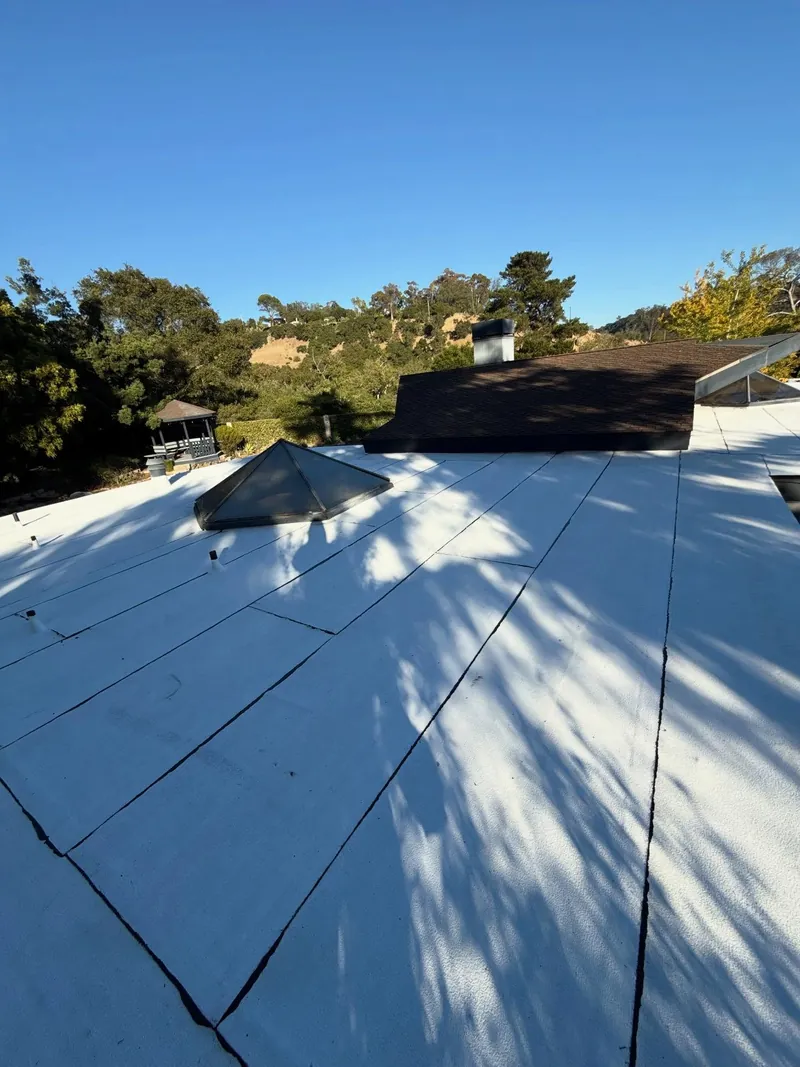
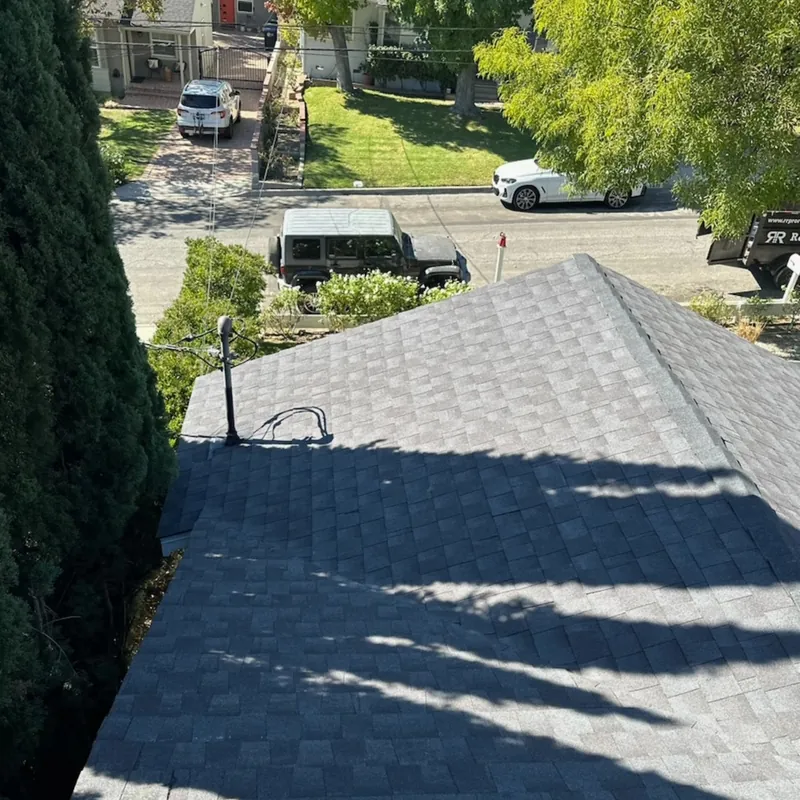 After
Style-by-Style Work From a Roofing Contractor in San Gabriel
San Gabriel's design standards and housing ages point to five kinds of roofing work. Each one is scoped to the style of the house.
Red Clay Tile in the Mission District
Under the Mission District Specific Plan, new buildings and remodels of non-historic buildings must follow Spanish Colonial, Mission Revival or Spanish Colonial Revival style, and Spanish Colonial buildings call for red clay tile roofs over white plaster. Our tile roofing installs clay tile that fits those standards, with the profile and color shown to the city before ordering.
Asphalt Shingles on 1920s and 1930s Bungalows
The same standards treat period bungalows differently: they are wood-sided with gable or hip roofs, and any color of asphalt shingle is acceptable. That gives owners more freedom than tile houses get. Our shingle roofing pairs the shingle with new underlayment, flashing at the siding and attic venting suited to a small bungalow roof.
Tile Underlayment Under Spanish Colonial Revival Roofs
Clay tile on a Spanish Colonial Revival roof can stay sound long after the layer beneath it has worn through. Leaks then tend to show up after the first big February storm, even though nothing looks broken from the street. Tile underlayment replacement means lifting and stacking the tiles, laying new underlayment and flashing, then setting the original tiles back and replacing any that broke.
Comparable-Material Repairs on Designated Homes
For resources on the San Gabriel Register, reroofing with material comparable to the original needs staff administrative clearance, while major alterations go to the Historic Preservation and Cultural Resource Commission. Our tile roof repair keeps the existing profile and sources matching pieces, which fits the comparable-material path. We confirm the clearance with staff before work starts.
Postwar Reroofs North of Broadway
The city's standards describe postwar homes as white, cream or pastel plaster with wood siding and shutters. When one of these 1940s or 1950s roofs has reached the end of its life, a full tear-off is the cleaner fix. A roof replacement lets us replace damaged decking, renew flashing and correct ventilation, with photos of each stage.
Design Review, Permits and Preservation in San Gabriel
The city's Building and Safety Division issues permits at City Hall on South Mission Drive, and its FAQ says a permit is required for reroofing in all cases. Under the municipal code, no building permit is issued until a precise plan of design or site plan review is approved, and the permits page notes that Planning approval usually comes first.
After a design is approved, changes to roofing materials or colors need sign-off from the Design Review Commission chair and the City Architect. In the Mission District, alterations to non-historic single-family homes need a site plan review approved with the City Preservation Architect. San Gabriel adopted its first preservation ordinance in 1965 and updated it in 2017. The Wildland-Urban Interface Code, Part 7 of Title 24, replaced CBC Chapter 7A on January 1, 2026, but its roof rules follow mapped zones, and none are mapped here.