Hiring a roofing contractor in South Pasadena means working inside two sets of rules at once: a fire code that now reaches well below the hills, and historic guidelines that care about how a roof looks from the street. The city adopted the state's 2025 map and layered its own High zone over parcels south of Monterey Road and west of Meridian Avenue.
Best Top Roofing drives over from Camarillo for a free inspection. We photograph the roof, check the parcel's zone and historic status, and write an itemized proposal you can take to the Building Division.
Early Suburb Homes and Their Original Roofs
South Pasadena grew as one of the first suburbs of Los Angeles once the Pacific Electric Short Line arrived. Whole neighborhoods of Craftsman, revival and Art Deco homes built between 1900 and 1939 survive largely intact, and the median home dates to 1953, with about a third built before 1940.
The city's historic design guidelines describe what that means for roofs. Craftsman houses have low-pitched gables and exposed rafter tails, and their original wood shingle roofs have often been replaced with composition shingles. Spanish Colonial Revival homes carry Mission or Spanish clay tile, with clay coping at the parapets.
Wind is the recurring stress. The 2011 windstorm caused an estimated $1 million in damage here, and in January 2025 the city forecast 50 to 80 mph winds with isolated gusts of 80 to 100 mph, while downed lines cut power in the northwest part of town.
Historic Districts, the Arroyo and the Monterey Hills
The city has five locally designated historic districts, among them El Centro/Indiana/Palm, Oak/Laurel, Ramona Street and the Rollin Craftsman Cluster, plus 59 local landmarks. Around Mission Street and Meridian Avenue, the Mission West district on old Route 66 is listed on the National Register.
Arroyo Drive follows the channelized Arroyo Seco past city landmarks such as the Cathedral Oak Monument and the Garfias Spring site. The Monterey Hills, by contrast, bring steep terrain, narrow roads and hillside brush, with areas mapped High and Very High.
In the Southwest Monterey Hills, along streets such as Hanscom Drive, Peterson Avenue and Randolph Avenue, special construction rules apply to all permitted work. The city describes those streets as steep, narrow and deteriorated.
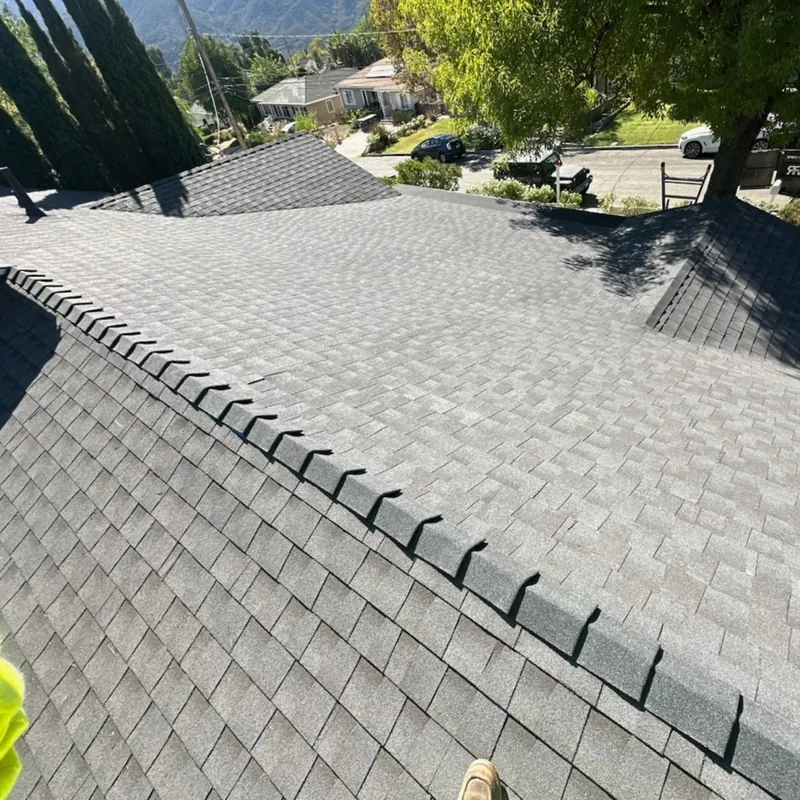 After
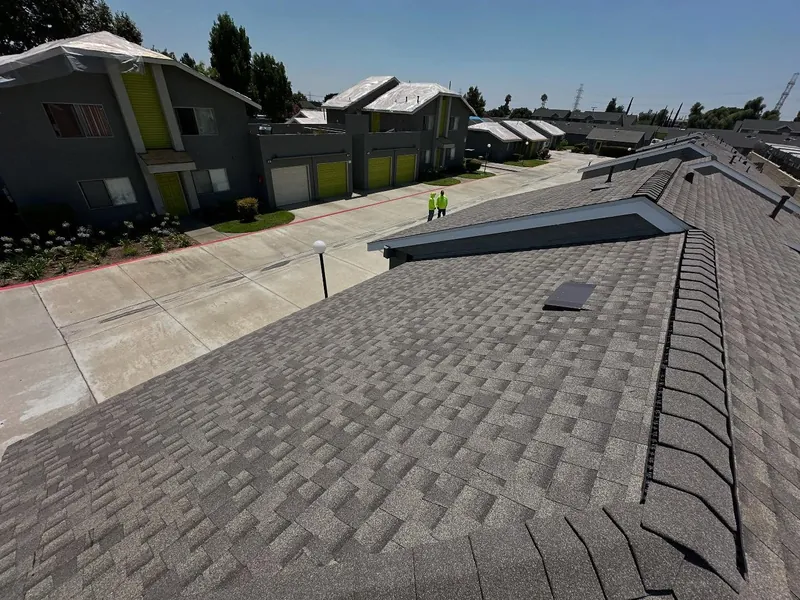
Roofing Contractor in South Pasadena: Services That Fit the Rules
Fire zoning, historic guidelines and hillside logistics decide most South Pasadena roof plans. These five services follow from them.
High Zone Class A Coverings South of Monterey Road
Chapter 14 of the municipal code, as published, treats parcels split between High and Very High as Very High and requires Class A roof coverings in the local High zone. The state map adds 377 acres of Very High land, roughly 17 percent of the city. Our fire-resistant roofing proposals name the Class A covering along with the vent and gutter details that belong with it.
Craftsman Composition Shingles
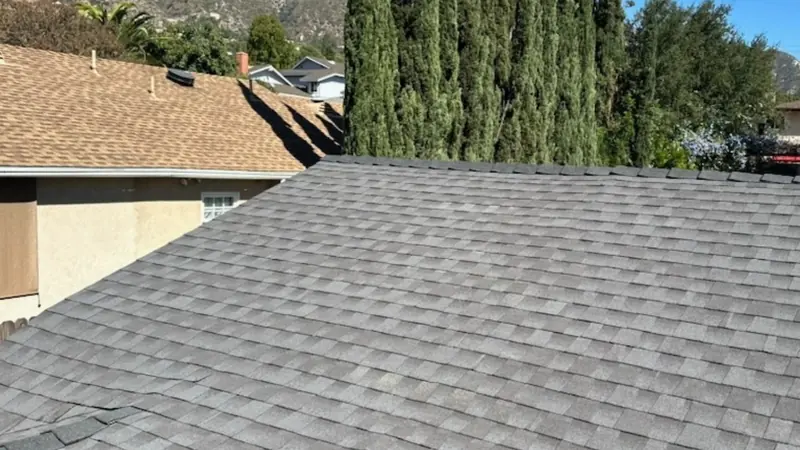
The guidelines list composition shingle among the encouraged materials for historic homes, which suits the many Craftsman bungalows that long ago traded wood shingle for it. On a low-pitched gable with exposed rafter tails, the parts that show are the rake edge, the starter course and the ridge. Our shingle roofing work keeps those lines crisp and close to the original profile.
Clay Tile Salvage on Spanish Colonial Revival Homes
Where possible, the guidelines ask owners to salvage and reinstall clay tile and slate and to match original material, color and profile. A tile re-lay does just that: we lift and stack the tile, replace the worn underlayment and any failed battens, then reset the original pieces and swap in matches for broken ones. Tile underlayment replacement also leaves the parapet coping and Mission profile intact.
Wood Shake Replacement on Historic Houses
Historic South Pasadena roofs were generally wood shingle, shake or clay tile, and the guidelines still allow wood shake where code permits. In a mapped fire zone, though, any covering used for a repair must be Class A. Wood shake roof replacement with a Class A material that keeps a shingled texture is often how owners satisfy both the fire code and the historic look.
Monterey Hills Tear-Offs Under Truck Limits
The Southwest Monterey Hills rules, set in 2007 and updated in 2015, cover roofing like any other permitted work, cap trucks at 8 feet 3 inches wide and require contractors to sign an affidavit at permit issuance. A full roof replacement on those streets means smaller loads, more trips and a debris plan agreed before tear-off day.
Building Division, Cultural Heritage Review and Part 7
The Building Division at City Hall, 1414 Mission Street, takes plans as PDFs through the city's OpenGov permit portal. South Pasadena has used Transtech Engineers under contract for building and safety services since 1997, and its plan checker appointments still book through Transtech.
Exterior changes to inventoried properties, landmarks and district homes can go before the Cultural Heritage Commission, which hears Certificates of Appropriateness monthly. The historic guidelines generally reject rolled membrane where it was not original, along with corrugated, plastic or galvanized metal roofing.
The municipal code adopts the 2025 California Wildland-Urban Interface Code, the Title 24 Part 7 standard that replaced CBC Chapter 7A statewide on January 1, 2026. Under it, replacing 50 percent or more of a roof within 12 months brings in the new-construction roof rules.