The first question a roofing contractor in West Covina has to answer is how much of the roof a job will touch, because the city's code draws a line at 25 percent. Under Section 7-21, replacing or repairing more than a quarter of an existing roof within 12 months means the new covering has to be noncombustible or fire-retardant.
Best Top Roofing drives to West Covina from our Camarillo base to inspect, repair and replace roofs on local homes. Each visit begins with a free inspection, photos of what we find and a written proposal with a measured scope.
Postwar Tracts, Late-Arriving Tile and Dry Inland Summers
Few cities grew faster in the 1950s: West Covina went from 4,499 residents in 1950 to 50,645 in 1960, as walnut and orange groves became whole neighborhoods. Subdivision activity peaked in 1957, and 37.9 percent of today's homes date from that decade, with 55.8 percent built before 1970.
Most tracts are one-story Minimal Traditional, Mid-Century Modern or Ranch houses with stucco or wood clapboard walls. The city's 2019 historic context statement notes that, outside custom homes, clay tile roofs on tract housing show up mainly in mid to late 1970s developments. That splits the city into older tracts not built with tile and a later wave whose tile and underlayment are now roughly five decades old.
Covina City Yard, the nearest NOAA normals station, sits about three miles northeast of City Hall. It logs 16.74 inches of rain a year, with 4.32 inches in February, 3.78 in January and none in an average August.
Sunkist Village, Garvey Avenue, Vine and Lark Ellen, and Shadow Oak
Sunkist Village opened on the west side in 1941 as the city's first subdivision, and city surveys have flagged it as a potential historic district. Postwar building then pushed east along Garvey Avenue, the old Highway 99 route, while a separate pocket of early tracts took shape around Vine and Lark Ellen below Garvey. Some early tracts kept walnut trees from the old groves, so we check valleys and gutters under them for leaf buildup.
From the late 1960s through the 1970s, building moved south into the San Jose Hills. Woodside Village, a master plan begun in 1975 across the Walnut line, and the Shadow Oak area, opened after Fire Station No. 5 was finished in 1978, come from that tile era, so we expect tile there but always confirm on the roof.
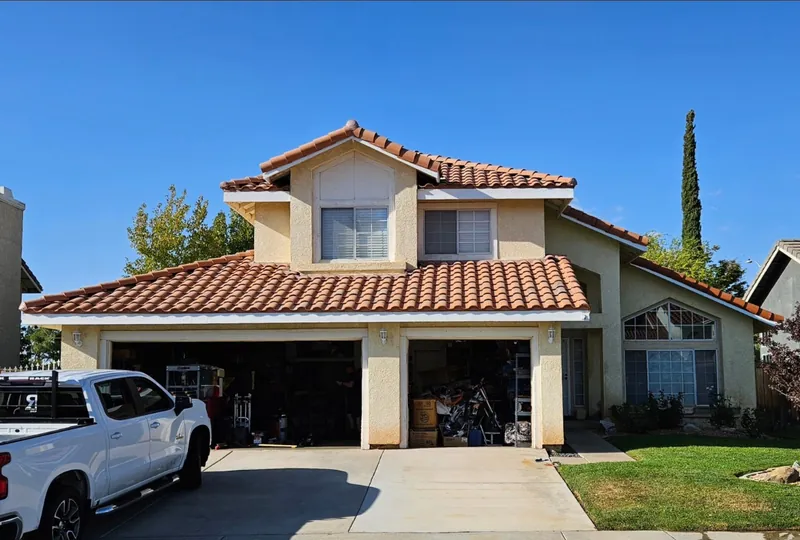
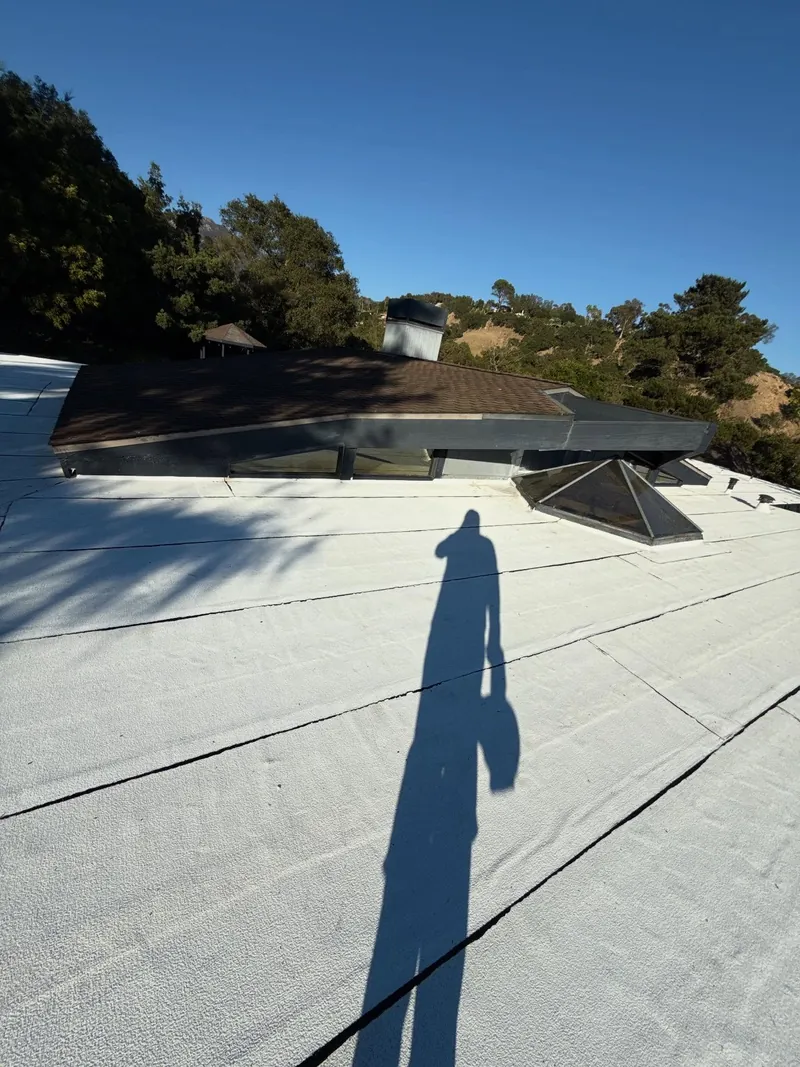
Our Work as a Roofing Contractor in West Covina
The 25 percent rule, pre-tile and tile-era tracts, and winter rain shape the services below. Each starts with a free look at your roof.
Fire-Retardant Coverings Under Section 7-21
Section 7-21 is the city's published rule: when a replacement or repair covers more than 25 percent of a roof's area in a 12 month window, the new covering must be noncombustible or fire-retardant. The code compilation ties that adoption to the 2022 cycle, so we confirm current requirements with the Building Division. Our fire-resistant roofing options are then matched to the standard that applies.
Clay Tile Underlayment on 1970s Tracts
On a mid to late 1970s tract home with clay tile, the tiles may still be sound while the layer beneath them, if original, has been shedding water for close to 50 years. Slipped pieces and ceiling stains are common hints. A tile underlayment replacement lifts and stacks the tile, renews the underlayment and flashing, and relays every usable piece.
Shingles for 1950s Ranch Tracts
The context statement does not record which coverings 1950s builders chose, only that tile was rare on tracts until the 1970s, so we come prepared for other materials. On long, low Ranch roofs with asphalt shingles, we look first for lifted tabs and bare spots near the eaves. A shingle roofing job can also cross the 25 percent line, and we tell you before it does.
Leak Repair for January and February Storms
By the Covina City Yard normals, close to half of the area's yearly rain arrives in January and February. On postwar houses, leaks often trace back to vent pipes, chimney flashing or a valley patched more than once. Our roof leak repair fixes the entry point itself and keeps a contained job well below the 25 percent threshold.
Free Roof Inspections Across the Postwar Tracts
With more than half of the housing built before 1970, many West Covina roofs may still sit on original decking. A free roof inspection records the covering, flashing, vents and attic side, and the photos show how much of the roof truly needs work. That measurement decides whether Section 7-21 applies.
West Covina Permits, the 25 Percent Rule and Fire Maps
Roof permits come from the city's own Building Division on W. Garvey Avenue S., which also inspects the work. Applications go through the One Stop Building Permit Center portal or the in-person counter, not email, and although the city adopts Title 26 of the County Code by reference, it issues the permit itself.
The State Fire Marshal's March 2025 recommended maps put 47 acres of the city in Very High, 862 in High and 233 in Moderate. In mapped zones, the California Wildland-Urban Interface Code (Title 24, Part 7), which replaced CBC Chapter 7A on January 1, 2026, calls for at least a Class A covering on repairs, and replacing 50 percent or more within 12 months brings in new-construction roof rules. We look up your parcel before quoting.
The city's 2007 preservation ordinance allows landmarks and districts, but designation needs the owner's consent. For homes in Sunkist Village, we still ask the city whether any review applies.