Any roofing contractor in Covina has to treat a new roof color as a planning question. The city's residential re-roof handout says every change in roofing material, color included, must be reviewed and approved by Planning, and any roofing job over 200 square feet needs a building permit.
Best Top Roofing travels from Camarillo to repair and replace roofs on Covina homes, from downtown bungalows to 1950s tract houses. We start with a free inspection and photos, then give you a written proposal that already accounts for the city's review steps.
Citrus-Era Roots, 1950s Housing and Covina's Wet Months
Covina began as a citrus town, and in 1907 it claimed to be the third-largest orange shipping point in the world. After World War II the groves gave way to housing, and the population jumped 408.7 percent between 1950 and 1960, from 3,956 to 20,124. That decade produced 41.2 percent of the homes standing today, and 66.3 percent date from before 1970.
With so much housing from one era, many roofs have likely been redone at least once, and some may carry an overlay on older shingles. The city's handout caps asphalt shingles at two layers and bars overlays on water-soaked or deteriorated roofs, so existing layers often decide whether a tear-off is needed.
Rain falls mostly in winter. NOAA normals for the Covina City Yard station show 16.74 inches a year, with 4.32 inches in February and 3.78 in January, and Wikipedia's climate table puts the August mean high at 88 degrees. Covina sits in California energy Climate Zone 9, and the re-roof handout recommends a radiant barrier and R30 attic insulation.
Old Town, Cottage Drive, E. Italia Street and the Postwar Tracts
Near Citrus Avenue, the downtown main street, the 2007 Covina Town Center Historic Resource Survey recorded Craftsman bungalows dated 1909 to 1929 on E. Italia Street and W. Orange Street, Spanish Colonial Revival homes from 1929 and 1941, and a Folk Victorian house from about 1900 on W. Cottage Drive. It recommended Cottage Drive and Orange Street as a potential historic district with 13 contributing homes, a recommendation rather than a designation.
Beyond downtown, most of Covina is the postwar housing that replaced the orchards. Original roof types for those tracts are not documented in our sources, so we identify each covering on site.
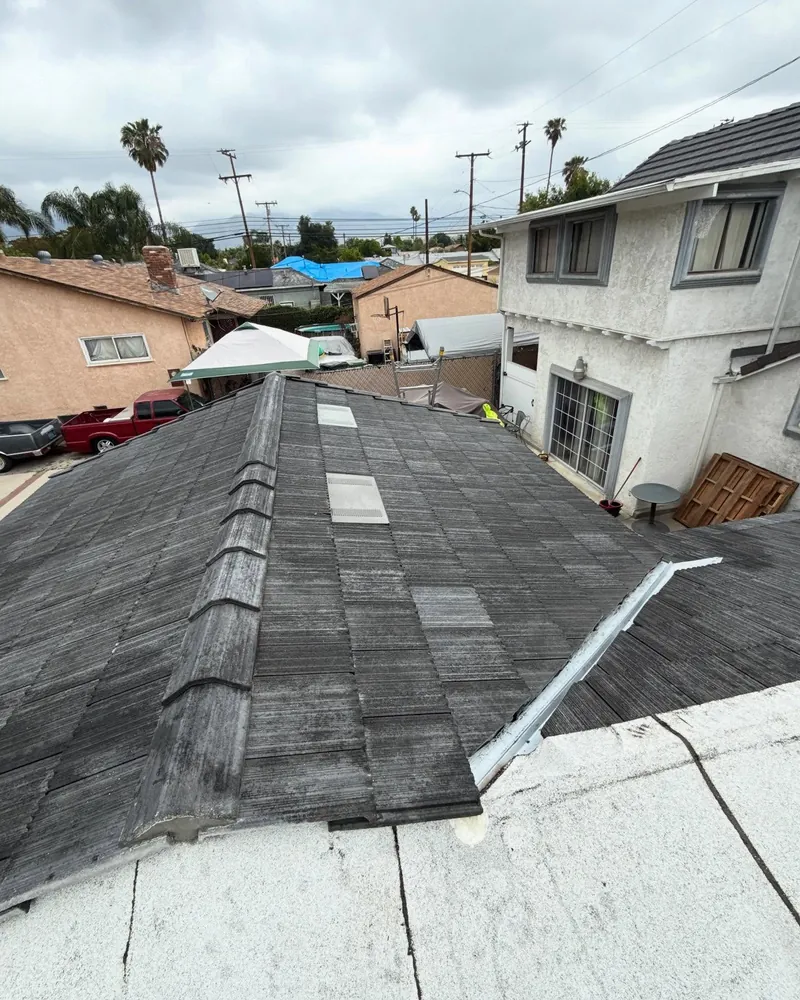
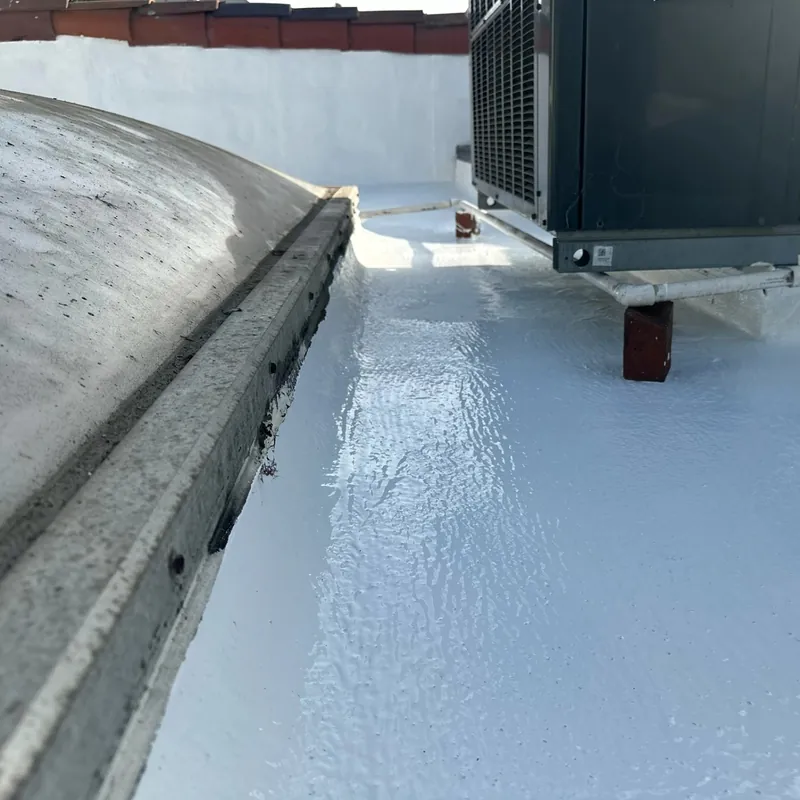 After
Roofing Contractor in Covina: Services Shaped by City Rules
Covina's re-roof handout sets limits that change how a job is scoped. The five services below reflect them.
Planning Approval for Material and Color Changes
Moving from one roofing material to another, or keeping the material but changing its color, needs Planning approval first. Material or pitch changes also go through building plan check rather than an over-the-counter permit. For a roof replacement that alters the look of the house, we gather the product details Planning asks for and build the review time into your schedule.
Shingle Overlay Limits and Tear-Offs
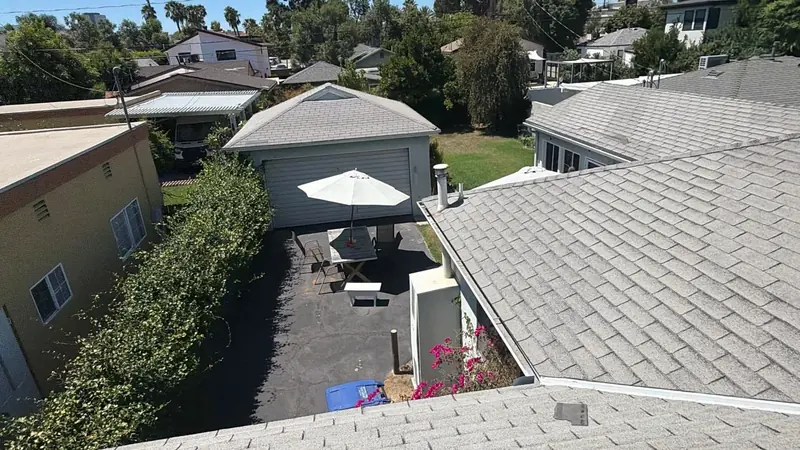
The handout allows one overlay on an existing asphalt shingle roof, two layers at most, and none over a water-soaked or deteriorated roof. It also sets a 2:12 minimum slope for shingles and two underlayment layers from 2:12 to 4:12. Our shingle roofing proposals count your existing layers before stating whether a tear-off is required. These are the city's published rules from the 2022 code cycle, and we confirm current requirements.
Craftsman Bungalow Repairs Near Citrus Avenue
Bungalows on E. Italia Street and W. Orange Street date from as early as 1909, and a roof that old can hide decades of patching. Chimney and wall flashing, worn valleys and soft decking are what we check first. A targeted roof repair that stays at or under 200 square feet falls below the handout's permit line, while larger work goes to the counter.
Flat Roofing for Low-Slope Sections
Because the handout sets a 2:12 minimum for asphalt shingles, porch roofs, patio covers or additions pitched below that need a different system. We look at drainage, ponding marks and the tie-in to the main roof before recommending a membrane. Our flat roofing work keeps those low sections watertight without forcing shingles where the code does not allow them.
Free Pre-Winter Inspections
About half of Covina's average rainfall comes in January and February, going by the City Yard normals. A fall visit leaves time to finish repairs, and any Planning review, before the first big storm. Each free roof inspection includes photos of the covering, flashing and attic, with notes on how many layers the roof already carries.
Covina Re-Roof Permits, Fire Maps and Historic Review
Permits come from the Building & Safety Division at Covina City Hall, 125 E. College Street, which serves Covina addresses only. Like-for-like re-roofs usually qualify for express permits issued over the counter, while material or pitch changes need plan check after Planning signs off. The handout requires Class B or better coverings on every re-roof and limits permits to C-39 roofing contractors, owner-builders, or B contractors doing multi-trade work. Because it cites the 2022 codes, we confirm current requirements with the division.
Fire mapping is light here: the State Fire Marshal's March 2025 recommended maps show no Very High acreage, 7 acres of High and 13 of Moderate. On parcels inside a mapped zone, the Wildland-Urban Interface Code (Title 24, Part 7), which replaced CBC Chapter 7A on January 1, 2026, requires Class A or better for repair coverings. Covina's 1997 preservation ordinance needs owner consent to designate a landmark, and the LA Conservancy reports none designated so far.