Few cities ask a roofing contractor in Culver City to read fire maps as closely as this one does. The state's March 2025 recommendations put just 60 acres, about 2 percent of the city, in Very High, yet in July 2025 the City Council placed added portions of Blair Hills and Lower Culver Crest in zones above the state's recommendation.
Best Top Roofing drives from Camarillo to inspect, repair and replace roofs on Culver City homes, from 1920s studio-era tracts to hillside houses. The inspection is free, and the proposal names every material and permit.
Studio Tracts, Annexations and an Ocean-Moderated Climate
Culver City incorporated in 1917 on 1.2 square miles, and residential tracts filled in during the 1920s as three film studios made it a movie town. After the war, 33 annexations between 1948 and 1977 added land, and the whole city was built out by about 1980.
That history shows in the housing. About 59 percent of homes predate 1970, the 1970s alone account for 25.5 percent, and the General Plan says more than 87 percent of houses were built before 1980. Single-family detached homes make up 39.4 percent of units.
Ocean air keeps summers mild, with August highs averaging 79.1 degrees, though the city can run up to 10 degrees warmer than the beach. Rain averages 14.05 inches, mostly from December through March, with February the wettest at 3.46 inches. A persistent marine layer and the June Gloom pattern shape early summer mornings across the coastal basin.
The Newport-Inglewood Fault Zone crosses the northern part of the city, most of Culver City sits in an elevated liquefaction area, and landslides are largely confined to Blair Hills and Culver Crest. In 1994 the city fell in the very strong shaking band, and the Santa Monica Freeway failed over La Cienega Boulevard.
Blair Hills, Culver Crest, Carlson Park and Fox Hills
Blair Hills, the hillside neighborhood near the Baldwin Hills, is the core of the city's Very High zone and carries elevated landslide risk. Culver Crest shares that slide risk; its eastern portion was Very High on the 2011 map, and Lower Culver Crest was added to fire zones in 2025. On these streets a roof scope covers Class A material, ember-resistant details and keeping the roof clear of debris.
Down on the flats, Carlson Park surrounds the city's first park, dedicated in 1927. Fox Hills was riding stables and golf courses when the city annexed it in 1964, then filled with condo and apartment complexes in the 1970s. Listed historic districts line short stretches of Braddock Drive, Lafayette Place and McConnell Boulevard.
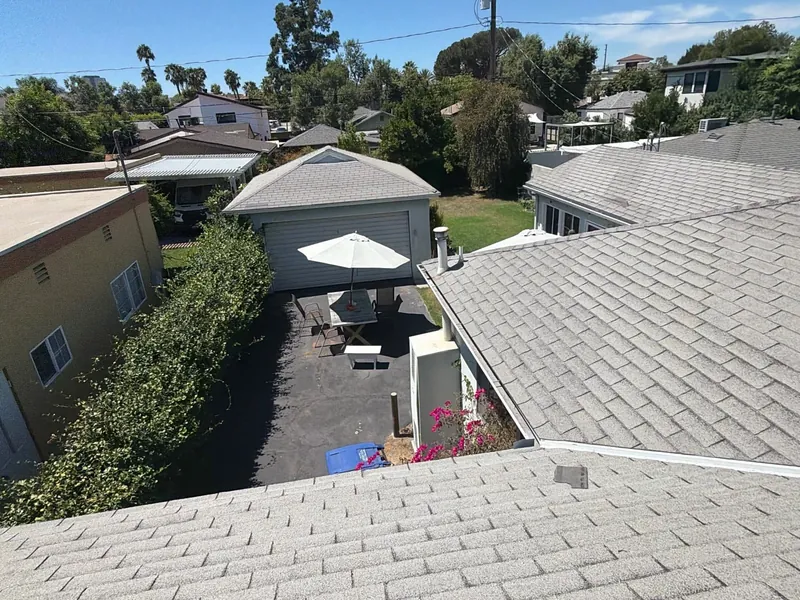
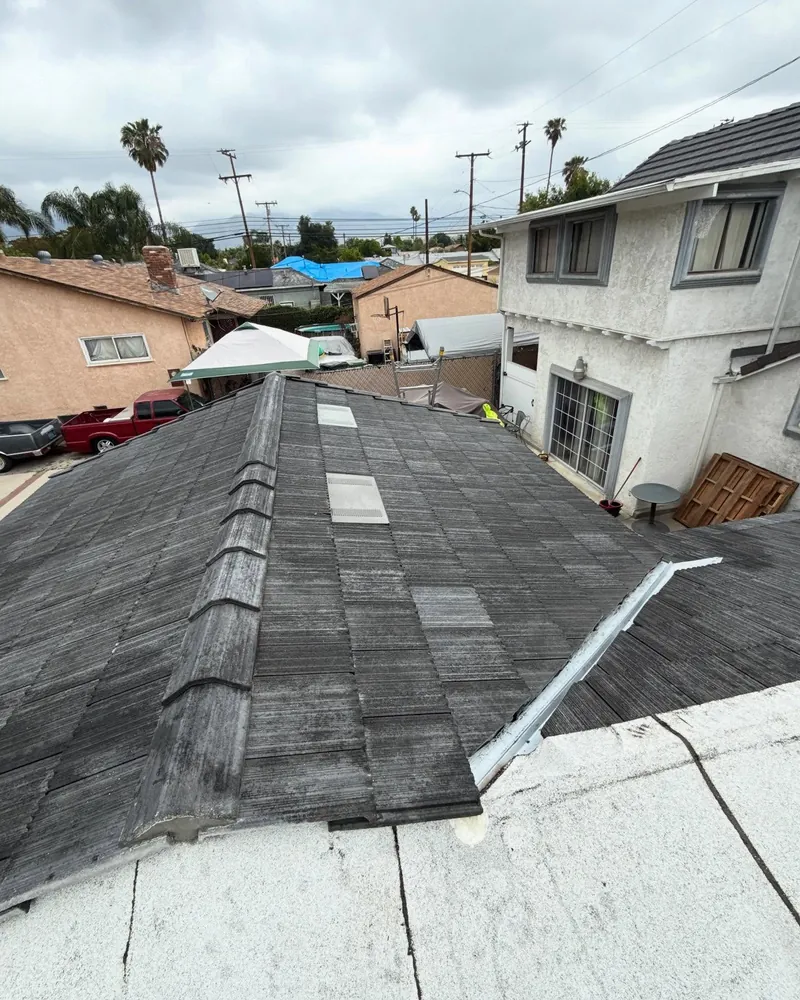
How We Work as a Roofing Contractor in Culver City
Hillside fire zones, a permit for every re-roof and a housing stock mostly built before 1980 shape the work here. Five services cover it.
Class A Coverings for Blair Hills and Culver Crest
The ordinance adopted July 14, 2025, restating CCMC Section 9.02.400, went beyond the state map in parts of Blair Hills and Lower Culver Crest. Part 7 applies on High and Very High parcels, and under its Section 507 any covering used in a repair must be at least Class A. The city's lines differ from the state's, so we look up your parcel before scoping fire-resistant roofing.
Replacement Permits for Pre-1980 Houses
Culver City requires a permit for every re-roof, and the application asks for the contractor's CSLB license number and a Culver City business license number. With most houses built before 1980, a roof replacement can be the first chance in decades to see the decking. We photograph the deck once the old layers are off, and replace damaged boards before new underlayment goes down.
Flat-to-Sloped Conversions and Low-Slope Repairs
The city lists changing a roof from flat to sloped as permit work, alongside ordinary re-roofing. That matters on houses with low-slope sections or additions where ponding keeps coming back. Our flat roofing service can repair or replace the existing low-slope covering, or, when a sloped frame makes more sense, scope the conversion with the structural and permit steps it needs.
Gutter Guards Installed With a Hillside Reroof
In Culver City's Very High zones, roofs must stay free of leaves, needles and twigs, and no tree may stand within 10 feet of a chimney. When we replace a roof in Blair Hills or Culver Crest, guarded gutters can go on at the same time to keep debris off the eaves. Our gutter work comes only as part of a roof replacement or major repair, never as a standalone job.
Free Inspections Before the December to March Rains
Most of Culver City's yearly rain falls from December through March, and July and August are nearly dry. A September or October visit leaves time for small fixes before the first storm. Our free roof inspection checks covering, flashing, vents and drainage, with photos and written notes, and on a hillside lot we also note debris on the roof.
Culver City Permits, 2026 Codes and Historic Review
The Building Safety Division at City Hall, 9770 Culver Boulevard, issues re-roof permits. Its Codes in Effect list, effective January 1, 2026, adopts the 2025 California Building Standards Code with Culver City amendments, including the Residential Code and Part 7, the California Wildland-Urban Interface Code that replaced CBC Chapter 7A. Projects submitted before December 31, 2025 stay under the 2022 codes.
Under Part 7, replacing half of a roof or more within 12 months triggers the new-construction roof rules. Exterior changes to the city's 50 Landmark or Significant structures get Cultural Affairs staff comment and may need a Certificate of Appropriateness.